

The mullet has made a serious comeback, 15 Best Mullet Hairstyles for Boys and it is no longer the over-the-top hairstyle that many people remember from decades ago. Today, the mullet can be playful, modern, neat, textured, or surprisingly subtle. For boys, it can be adapted to suit their age, hair type, personality, and even school environment.
One of the biggest reasons parents and kids are becoming interested in boys’ mullet hairstyles is their flexibility. A younger child can wear a soft, understated version that looks cute and easy to maintain, while an older boy or teenager can choose a sharper fade, textured top, or even a creative hair design.
The basic idea is simple: keep the sides and front relatively shorter while allowing the hair at the back to remain longer. From there, the possibilities are almost endless.
For younger boys, particularly around ages 4 to 10, a softer mullet often works best. Shorter sides combined with a slightly longer back can give the haircut a fun shape without making it look too dramatic. As boys get older and become more interested in expressing their own style, a more defined mullet can create stronger contrast and a more confident appearance.
Of course, the haircut should also fit the child’s everyday life. School rules, grooming requirements, the amount of time available for styling, and the child’s own preference all matter. A hairstyle may look fantastic in a photo but still not be practical for a child who wants to get ready quickly every morning.
Read Also : How to Get a NADRA Vaccination Certificate in Pakistan – Complete Guide
1. Tapered Kids Mullet
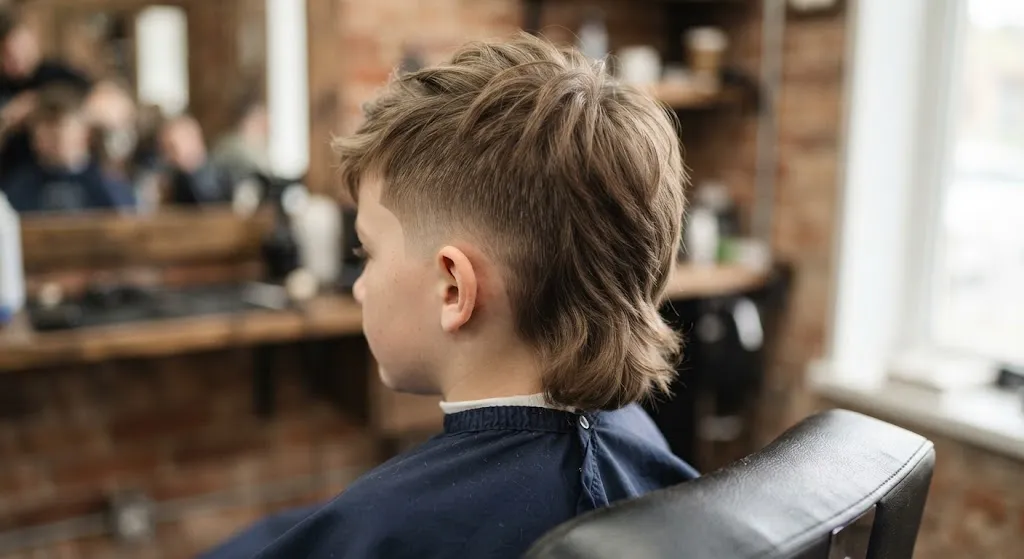
If you want a mullet that feels playful without becoming too bold, the tapered kids mullet is an excellent place to start.
Instead of creating a dramatic fade, the barber gently tapers the hair around the ears and neckline. The top and back are left with more length, creating the familiar mullet shape while keeping the haircut neat.
This is particularly useful for younger boys because it gives them a little personality without making the haircut difficult to manage. The longer back can be allowed to fall naturally, while the top can be brushed slightly backward when the hair is damp.
The result is a haircut that looks polished enough for school but still has that fun, adventurous feeling kids often love.
What to ask the barber
Ask for a clean taper around the ears and neckline, while leaving additional length through the crown and back. The back should have enough length to create a visible mullet shape but shouldn’t be excessively long.
Best for
- Younger boys
- Straight or slightly wavy hair
- Parents looking for a subtle mullet
- Easy everyday styling
2. Low Fade Mullet
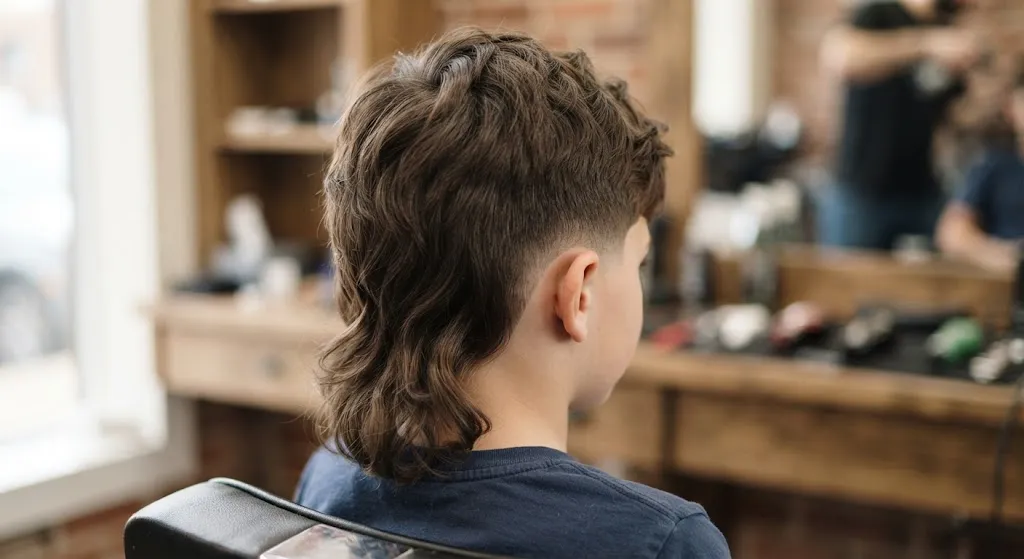
The low fade mullet gives you a little more contrast while still keeping the overall haircut balanced.
The fade begins low around the ears, clearing away some of the bulk without taking the sides extremely high. The back remains longer, allowing the mullet shape to be obvious but not exaggerated.
This style is especially nice for boys with thick or slightly wavy hair. The texture on top can add movement, while the longer back gives the hairstyle its signature character.
One advantage of a low fade is that it can grow out fairly naturally. You don’t necessarily need to rush back to the barber as soon as the fade starts becoming less defined.
What to ask the barber
Ask for a low fade around the ears and sides, with a soft transition into the crown. Leave the back longer and maintain enough length for the mullet shape to remain visible.
Best for
- Thick hair
- Slightly wavy hair
- Boys who want more contrast
- Parents who still want a relatively wearable haircut.
3. Curly Burst Mullet
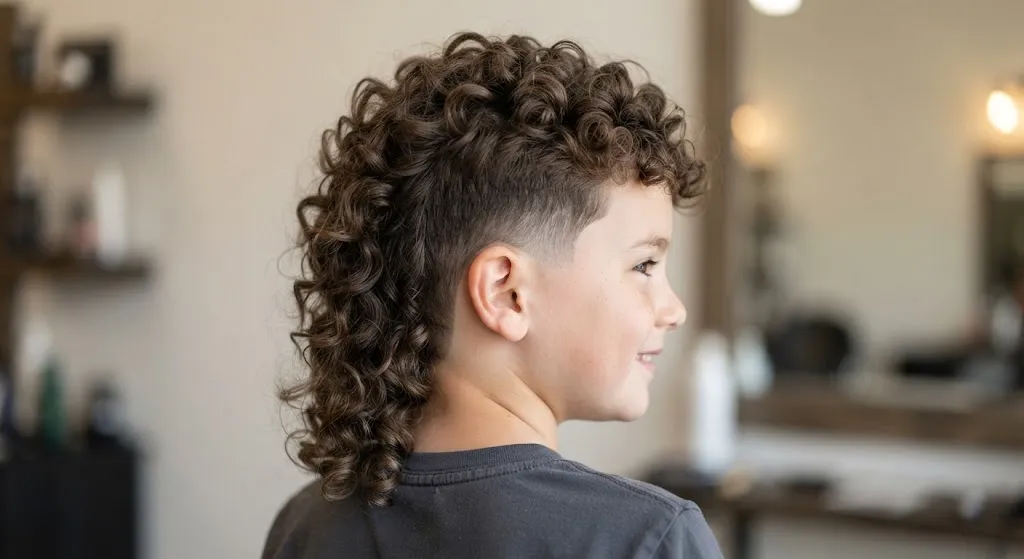
Curly hair and mullets can be a fantastic combination because the natural texture does much of the styling for you.
The curly burst mullet uses a burst-style fade around the ears while leaving the crown and back fuller. Rather than fighting the curls, the haircut works with them.
The sides stay relatively clean, while the curls create volume and movement across the top and back. This can give the haircut a fun, energetic appearance without requiring complicated styling every morning.
For boys with naturally curly or wavy hair, keeping some extra length around the crown is important. Cutting the curls too short can make them lose their natural shape.
A small amount of lightweight curl cream can also help define the curls without making the hair feel stiff or heavy.
What to ask the barber
Ask for a low burst fade around the ears, while keeping the crown and back longer and layered. The layers should allow the curls to form naturally.
Best for
- Curly hair
- Wavy hair
- Naturally thick hair
- Boys who want a distinctive haircut
4. Spiky Kids Mullet
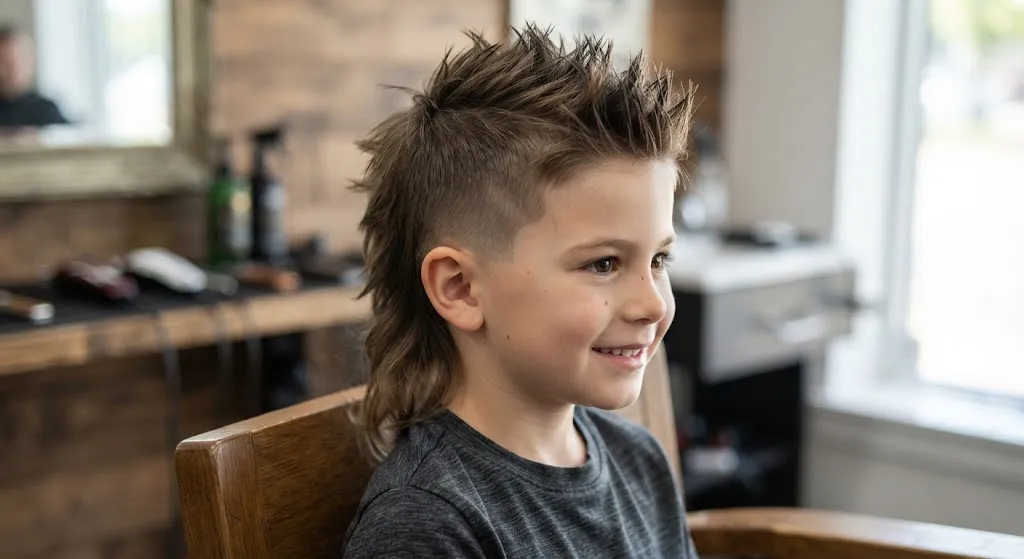
The spiky kids mullet is a fun option for boys who like their hair to have a little extra energy.
The sides can be clipped relatively short while the top is left longer and textured. Instead of allowing the hair to simply fall flat, the top can be styled upward or slightly forward into soft spikes.
The trick is not to overdo the product. A tiny amount of matte paste or clay can provide enough hold to create texture without making the hair look greasy or stiff.
The longer back keeps the haircut recognizable as a mullet, while the spiky top gives it a youthful and modern finish.
What to ask the barber
Ask for shorter sides, a textured longer top, and enough length at the back to maintain the mullet shape. Point-cutting the top can help create natural-looking texture.
Best for
- Straight hair
- Thick hair
- Energetic personalities
- Boys who enjoy styling their hair
5. Soft Fade Mullet
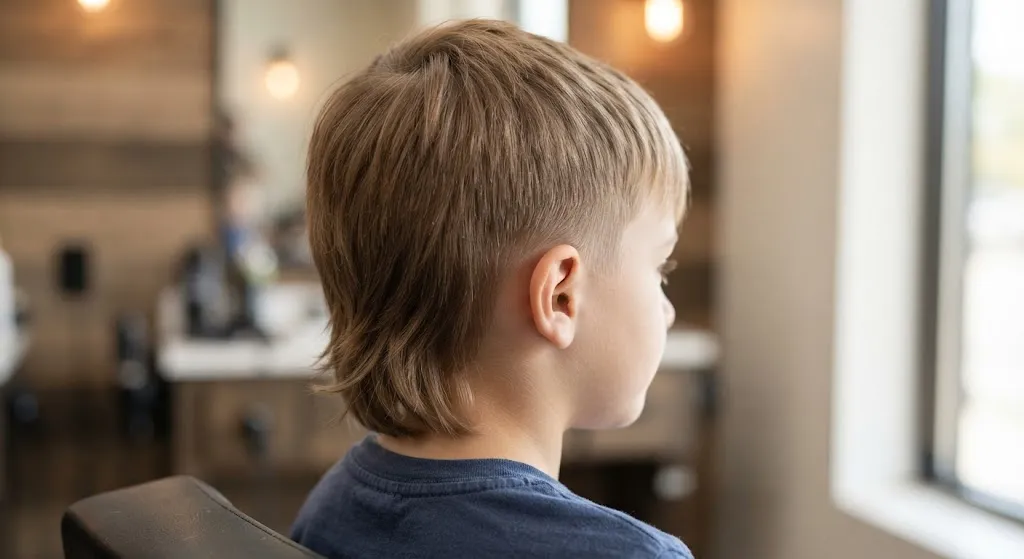
If you want clean sides without creating an overly dramatic contrast, the soft fade mullet is a great choice.
The fade is gentle around the ears and gradually blends into the textured crown. The back is kept slightly longer, giving the haircut its mullet identity without making it look too aggressive.
This style can work particularly well for boys with straight or fine hair. Because the haircut already has structure, it doesn’t require a lot of daily styling.
Scissor work on top can also make a difference. Instead of leaving the hair with blunt edges, the barber can add subtle texture so the haircut grows out more naturally.
What to ask the barber
Ask for a gentle fade around the ears, textured scissor work through the crown, and a slightly longer layered back.
Best for
- Fine hair
- Straight hair
- Younger boys
- Low-maintenance hairstyles
6. Classic Kids Mullet
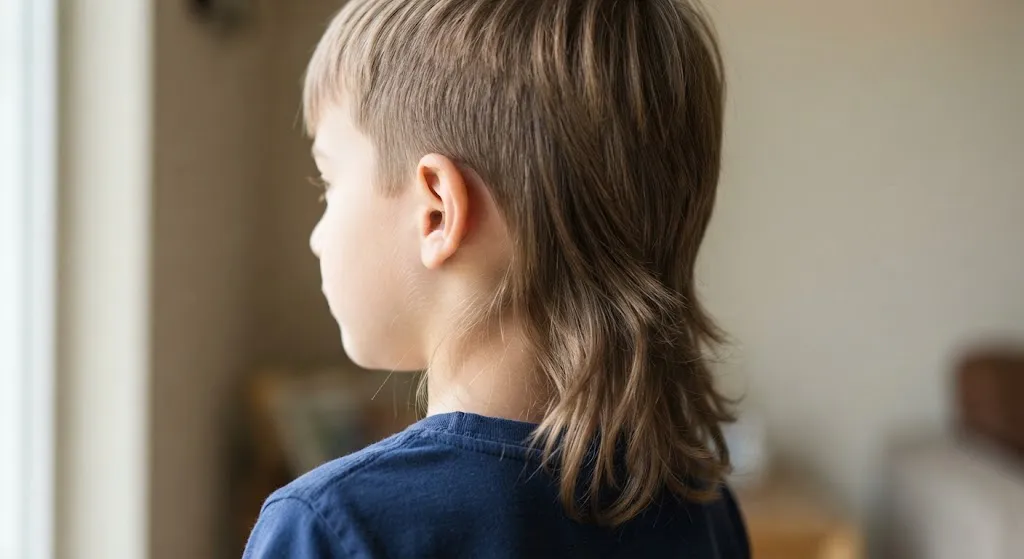
The classic kids mullet is for those who want the traditional shape to be easy to recognize.
The sides and top remain short and tidy, while the back is allowed to grow noticeably longer. This creates the classic contrast that makes a mullet immediately recognizable.
Straight and slightly wavy hair can work particularly well with this style because the longer back can fall naturally rather than becoming excessively puffy.
For a more modern finish, ask the barber to lightly layer the nape. This allows the back to move instead of hanging like one solid block of hair.
What to ask the barber
Ask for a short, tidy crown and sides with noticeably longer hair through the nape. Light layering at the back can add movement.
Best for
- Straight hair
- Slightly wavy hair
- Boys who want a recognizable mullet
- Families comfortable with a more noticeable style
7. Hard Part Mullet
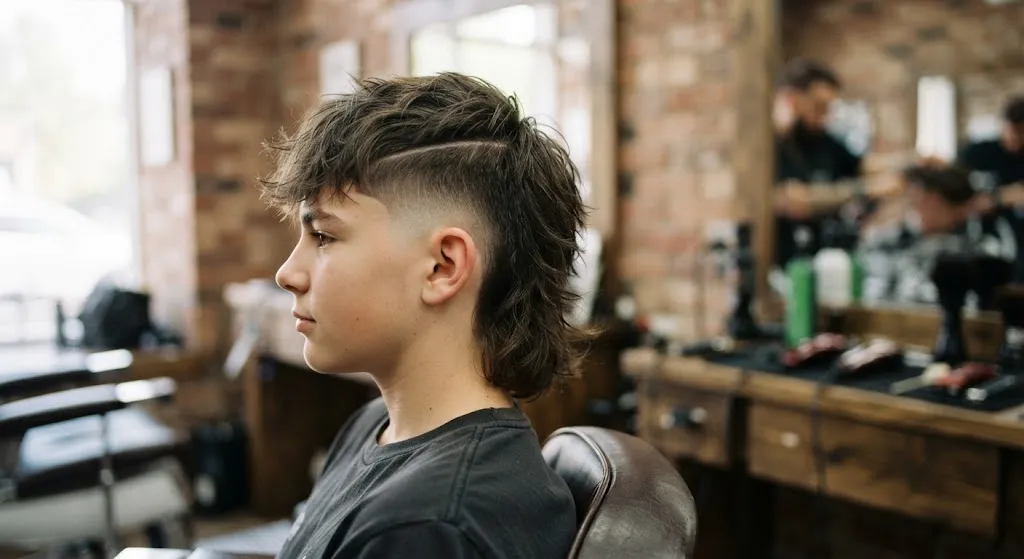
For an older boy or teenager who wants something sharper, the hard part mullet adds a clearly defined detail.
The hard part is a shaved or strongly defined line that separates the shorter side from the longer top. It gives the haircut a deliberate, structured appearance.
A mid or low fade can be paired with the hard part, while the back remains longer to preserve the mullet shape.
This style tends to feel more mature than a soft kids mullet, making it particularly suitable for pre-teens and teenagers who want their haircut to stand out.
What to ask the barber
Ask for a low or mid fade with a clean hard part above the fade. Keep the crown and back longer enough to maintain the mullet shape.
Best for
- Pre-teens
- Teenagers
- Straight or thick hair
- Boys who prefer sharper hairstyles
8. Taper Fade Mullet
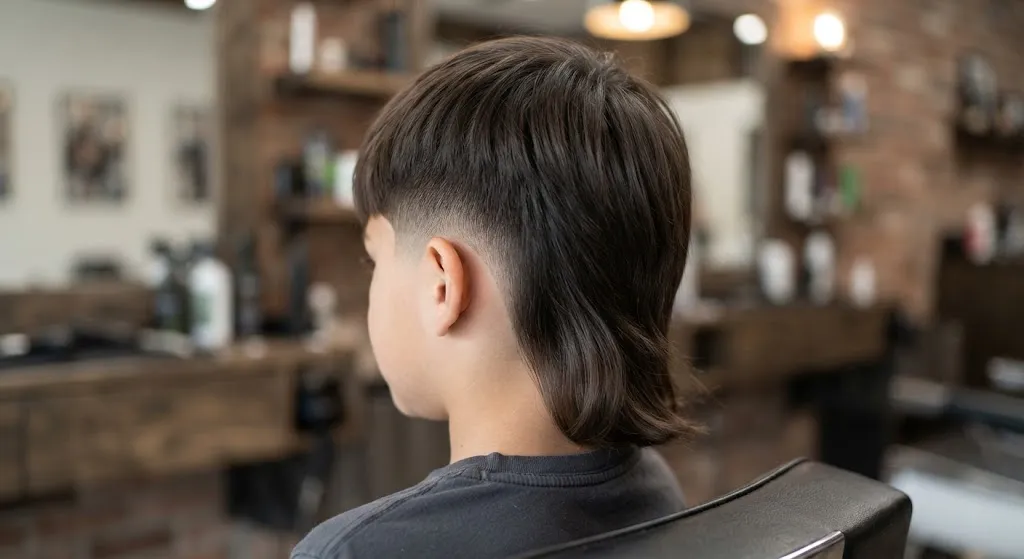
The taper fade mullet is another versatile choice because it creates a clean appearance without completely removing the hair from the sides.
The area around the ears is tapered tightly, while the crown and back retain extra length. This creates a natural flow toward the neckline.
If your child has thick or straight hair, the texture can help the back maintain its shape. Adding a few layers through the top can also prevent the haircut from looking too heavy as it grows.
This is a particularly useful option for boys who want a modern haircut that still feels practical.
What to ask the barber
Ask for a clean taper around the ears and neckline, with a layered crown and longer back.
Best for
- Thick hair
- Straight hair
- Pre-teens
- Boys who want a clean but stylish appearance
9. Drop Fade Mullet
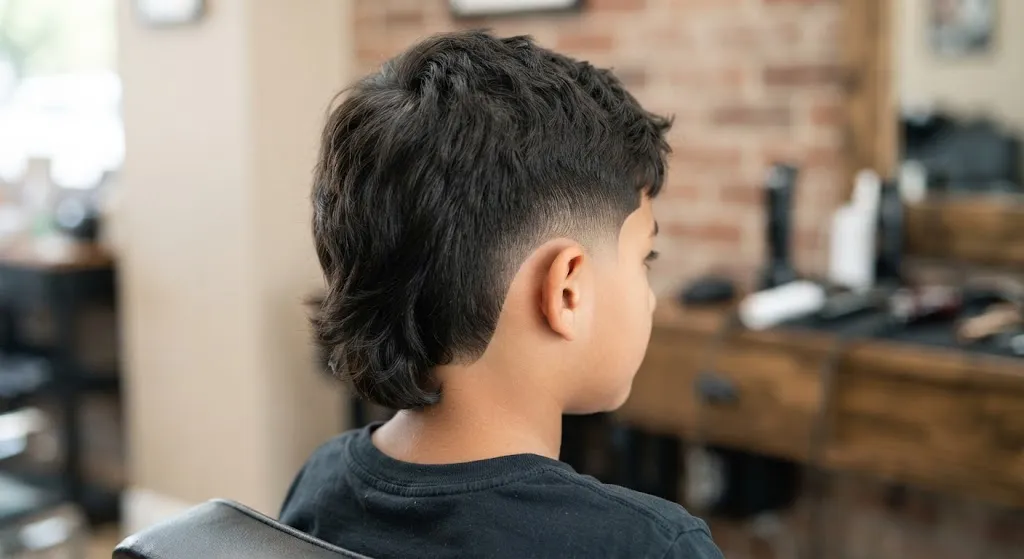
The drop fade mullet has a distinctive shape because the fade drops lower behind the ear instead of following a straight horizontal line.
That curved transition helps create space around the sides while leaving additional length at the back. The result is a balanced mullet that has a modern silhouette without making the sides look excessively disconnected.
A low drop fade is often a good choice if you want to keep the haircut relatively wearable.
What to ask the barber
Ask for a low drop fade that curves naturally behind the ears and toward the neckline. Keep additional length at the nape.
Best for
- Straight hair
- Thick hair
- Older boys
- Modern haircut fans
10. Textured Burst Mullet
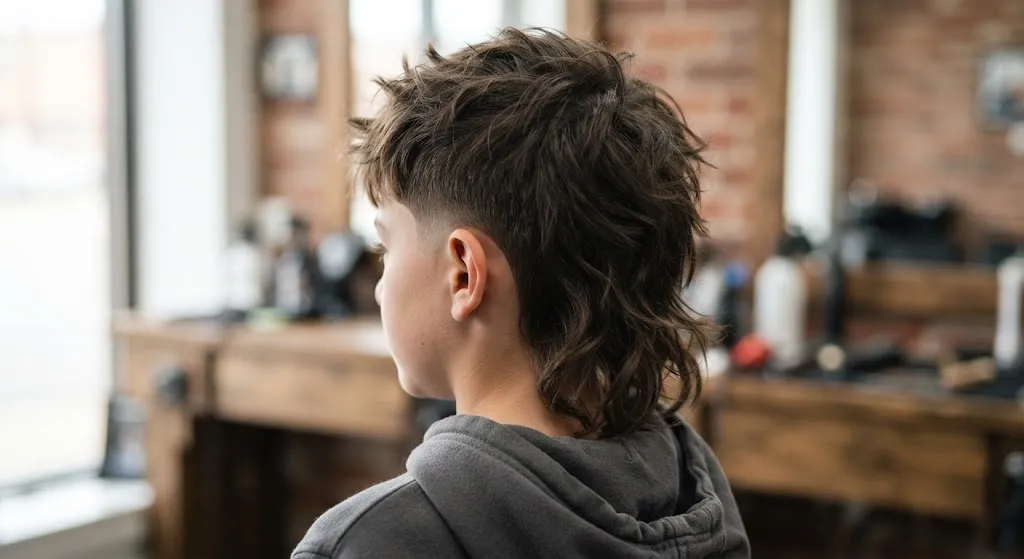
If your child has naturally thick or wavy hair, the textured burst mullet can make excellent use of that natural volume.
The burst fade curves around the ear, while the crown and back are left fuller. Choppy or point-cut layers help create movement, giving the haircut a slightly messy appearance without making it look unkempt.
This is one of those hairstyles where natural texture becomes the main feature.
You don’t need to spend a long time styling it. In many cases, simply working the hair with your fingers after washing is enough.
What to ask the barber
Ask for a low burst fade and point-cut layers through the crown. Keep enough length in the back to maintain the mullet shape.
Best for
- Thick hair
- Wavy hair
- Naturally textured hair
- Boys who like relaxed hairstyles
11. Curly Taper Mullet
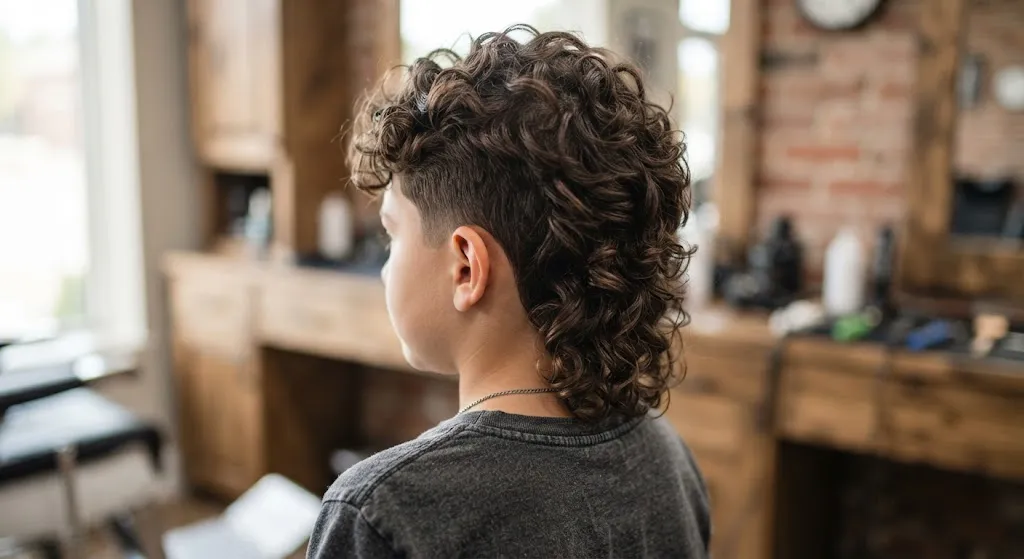
The curly taper mullet is another hairstyle that lets natural curls become the star.
Instead of fading the sides aggressively, the barber can taper them neatly around the ears while preserving the curls through the crown and back.
This creates a nice contrast: clean around the ears but soft and full through the rest of the haircut.
Parents should be careful not to ask for too much length to be removed from the crown if the child has strong curls. Curls naturally shrink as they dry, so keeping additional length can help preserve the desired shape.
What to ask the barber
Ask for a tight taper around the ears while leaving the crown and back long enough for the curls to form naturally.
Best for
- Curly hair
- Wavy hair
- Thick textured hair
- Boys who want a softer mullet
12. Messy Fade Mullet
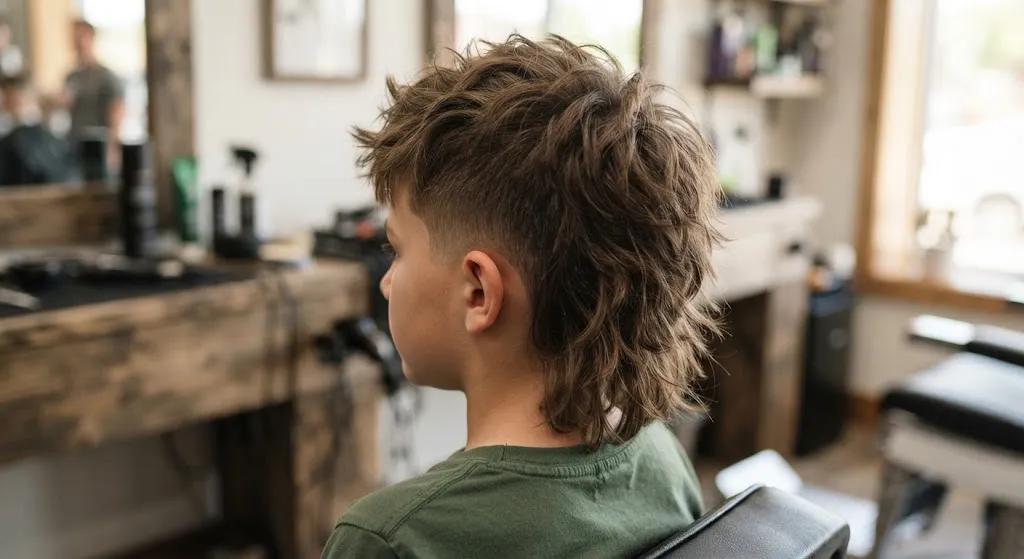
For boys who prefer a relaxed, effortless appearance, the messy fade mullet is worth considering.
The sides are faded neatly, but the crown and back are left longer and intentionally textured. Point-cut layers can help remove excess weight and create the messy movement that gives this hairstyle its personality.
This style is particularly effective on thick hair. Instead of allowing all that hair to become heavy and bulky, layers break it up and make it easier to manage.
A little matte clay or paste can be used when extra definition is wanted, although the haircut should still look good without a complicated styling routine.
What to ask the barber
Ask for a low fade with point-cut layers through the crown and back. Keep the longer sections textured rather than blunt.
Best for
- Thick hair
- Textured hair
- Older boys
- Casual everyday styles
13. Design Fade Mullet
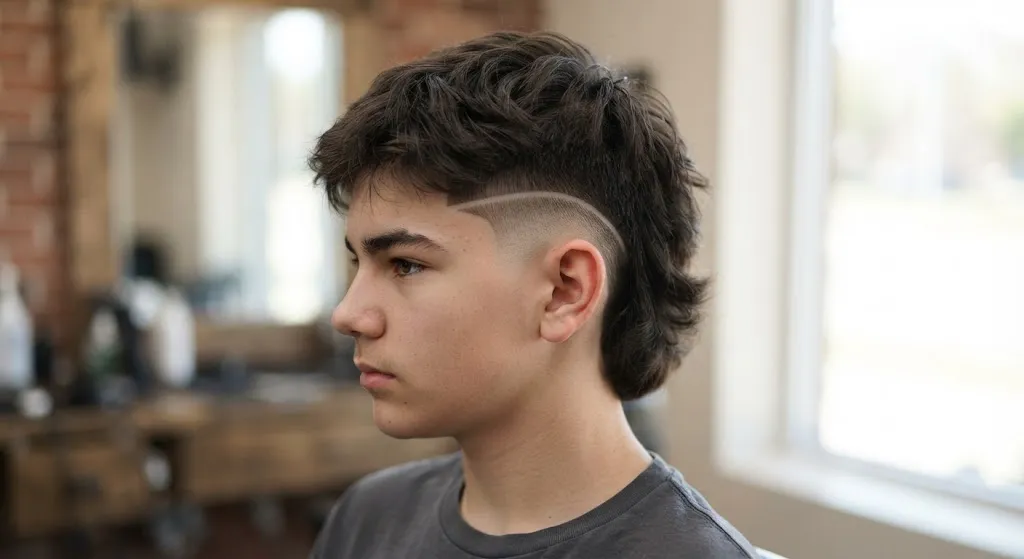
Sometimes one small detail can completely change a haircut.
The design fade mullet combines a clean fade with a simple razor design near the temple or side of the head. The longer back keeps the traditional mullet shape, while the design gives the hairstyle a more creative personality.
This option tends to work better for boys who are comfortable with a more noticeable haircut. It is also worth remembering that shaved designs grow out relatively quickly, so keeping the lines sharp may require regular barber visits.
The design doesn’t have to be complicated. Even two simple lines can make the haircut look dramatically different.
What to ask the barber
Ask for a low or mid fade with a small razor design near the temple. Keep the back longer and layered.
Best for
- Older boys
- Teenagers
- Kids who like creative hairstyles
- Straight or thick hair
14. Subtle Kids Mullet
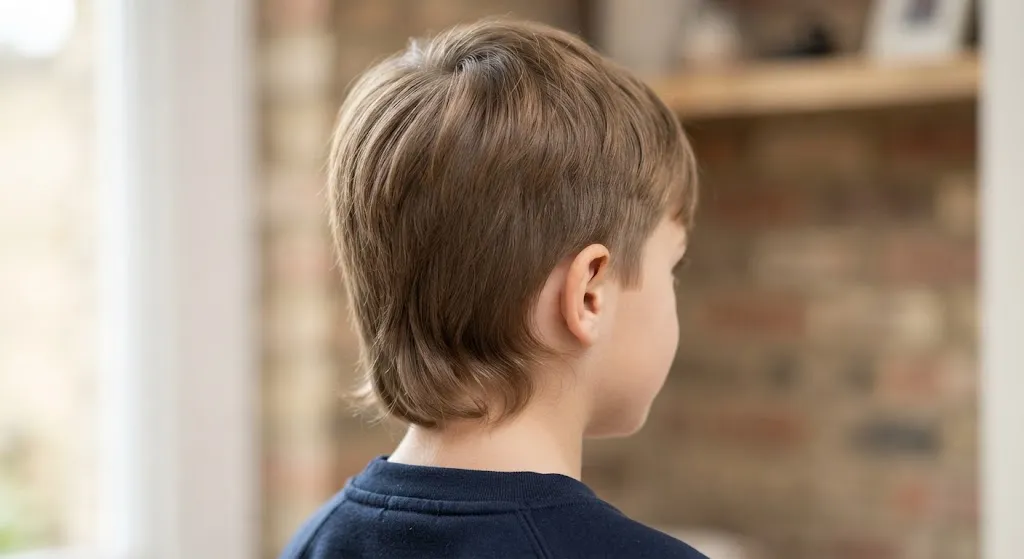
Not every child wants a bold haircut, and not every parent is comfortable with a dramatic mullet.
That’s exactly where the subtle kids mullet comes in.
The sides are softly tapered or scissor-cut, and the top gradually blends into a slightly longer back. From the front, the haircut can look like a fairly conventional children’s hairstyle. Once you see the profile or back, however, the mullet shape becomes more apparent.
This is probably one of the easiest versions to introduce if your child is trying a mullet for the first time.
It also works well when school expectations are stricter and a dramatic haircut might not be appropriate.
What to ask the barber
Ask for scissor-cut sides with a light taper and a gradual transition into a slightly longer back. Avoid an overly sharp disconnect.
Best for
- Younger children
- First-time mullet wearers
- School-friendly hairstyles
- Parents who prefer subtle styles
15. Cross Design Mullet
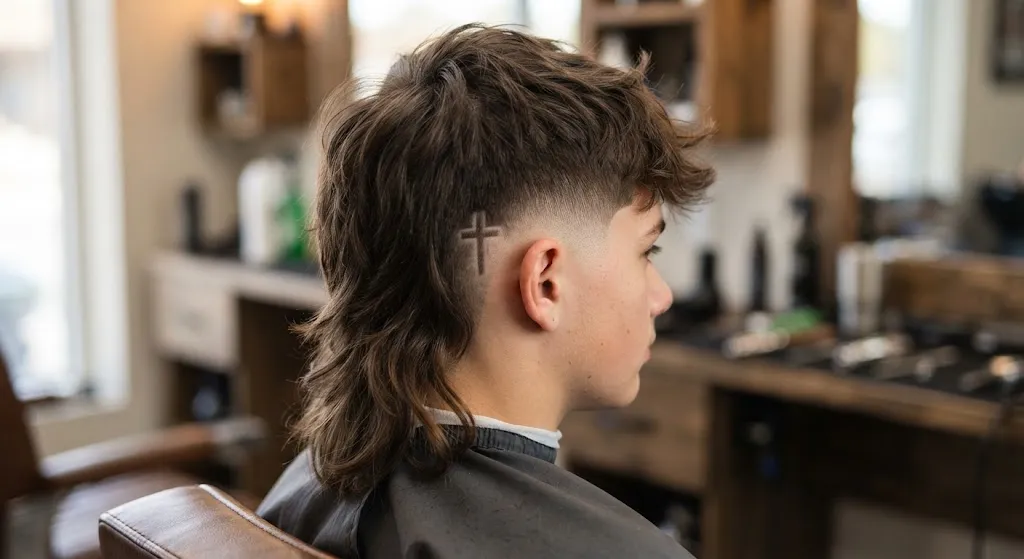
For boys who want a haircut with a personal statement, the cross design mullet adds a bold detail to an otherwise wearable haircut.
The sides are faded tightly, while a small cross-shaped razor design is added above the fade. The back remains long and layered, keeping the mullet recognizable.
Because the design itself is the standout detail, the rest of the haircut doesn’t need to be overly complicated.
This style is generally more appropriate for older boys and teenagers who have more freedom to experiment with their appearance.
What to ask the barber
Ask for a mid fade with a small cross-shaped razor design above the fade. Keep the back longer and lightly layered so it moves naturally.
Best for
- Teenagers
- Older boys
- Creative hairstyle fans
- Boys who want a distinctive haircut
How to Choose the Right Mullet for Your Boy
Choosing a haircut isn’t only about finding the coolest picture online. The best hairstyle is the one that fits the child’s hair, personality, routine, and environment.
Before choosing a mullet, consider a few important things.
Consider His Age
Age can make a big difference in how bold a mullet should be.
For younger boys, a tapered or subtle mullet can be a great introduction. These styles keep the sides neat and the back only slightly longer.
Pre-teens and teenagers often have more freedom to experiment. A stronger fade, hard part, burst fade, textured layers, or razor design can make the hairstyle feel more individual.
There isn’t a strict age at which a boy “should” or “shouldn’t” have a mullet. The key is adapting the haircut to the child.
Think About Hair Texture
Hair type can completely change the appearance of a mullet.
Straight hair tends to create a cleaner, sharper silhouette. Wavy hair naturally adds movement, while curly hair can make a mullet look fuller and more playful.
Thick hair often benefits from layers because they remove some of the weight. Fine hair may look better with a softer shape that creates the appearance of movement without removing too much density.
A good barber should be able to adjust the haircut according to the child’s natural texture rather than simply copying a photograph.
Don’t Forget School Rules
This is particularly important for school-aged boys.
Some schools are relaxed about hairstyles, while others have grooming policies that may restrict shaved designs, extreme fades, or unusually long hair.
If your child’s school has specific grooming expectations, a subtle or tapered mullet may be a safer choice than a dramatic design fade.
It’s always worth checking the rules before committing to a bold haircut.
Think About Maintenance
Some mullets are much easier to maintain than others.
A subtle taper can grow out naturally and may not need frequent barber appointments. A sharp fade or razor design, on the other hand, can lose its crisp appearance relatively quickly.
If your child doesn’t enjoy sitting through frequent haircuts, choose a style that still looks good as it grows.
Let the Child Have a Say
Perhaps the most important factor is whether the boy actually likes the hairstyle.
A haircut is a form of self-expression, especially as children become older. Showing your child several options and allowing him to choose the one he likes can make the haircut experience much more positive.
Parents can still guide the decision by considering school rules, maintenance, and practicality, but the child’s personality should be part of the conversation.
How to Maintain a Boy’s Mullet
A good mullet doesn’t have to require a complicated routine.
For most boys, regular washing, gentle brushing, and occasional trimming are enough to keep the haircut looking presentable.
If the hair is curly or wavy, a lightweight curl cream can help define the natural texture. For textured or spiky styles, a small amount of matte paste or clay can provide additional shape.
The biggest maintenance difference comes from the sides.
Fades and tapers can become less defined as the hair grows. If you want the haircut to maintain a freshly cut appearance, regular barber visits may be necessary.
The back usually has a little more flexibility. One of the advantages of a mullet is that the longer section can often grow out without immediately making the haircut look messy.
How Often Should a Boy Get a Mullet Trimmed?
The answer depends on the style.
A simple, subtle mullet may look good for several weeks as it grows. A sharp fade or design haircut may need attention sooner because the shorter sides and shaved lines lose their definition relatively quickly.
Instead of following a strict schedule, look at the haircut itself.
If the sides become bulky, the neckline becomes untidy, or the fade no longer has the shape you want, it’s probably time for a cleanup.
For younger children, keeping the neckline and area around the ears tidy can make a big difference even if you don’t completely reshape the haircut.
Are Mullets Good Hairstyles for Boys?
Yes — when the style is adapted properly.
A mullet doesn’t have to mean extremely long hair in the back and dramatically shaved sides. There are subtle versions that work beautifully for young children, as well as bold variations that suit teenagers.
The versatility is what makes the hairstyle interesting.
A younger boy might look great with a soft taper and slightly longer back. A child with curls might suit a curly burst mullet. An older teenager might prefer a hard part, drop fade, or creative design.
Ultimately, the best mullet is the one that feels comfortable, suits the child’s hair, and fits his everyday environment.
Final Thoughts
The modern boys’ mullet is much more versatile than it may first appear.
There are soft and subtle versions for younger children, textured styles for boys with thick hair, curly variations that work with natural texture, and sharper fade-based options for pre-teens and teenagers.
The right choice depends on more than just how a haircut looks in a photograph. Think about your child’s age, hair type, styling routine, school expectations, and personality before deciding.
If you’re unsure, start with a softer version. A tapered or subtle mullet gives you the basic shape without making too dramatic a change. If your child loves it, you can always make the next haircut more defined.
And when you visit the barber, don’t simply say, “Give him a mullet.” Bring a reference image and explain exactly what you like about it — whether that’s the fade, the amount of length at the back, the texture on top, or the overall shape.
With the right cut and a little maintenance, a mullet can be a fun, stylish, and completely age-appropriate hairstyle for boys of many different ages.



3 thoughts on “15 Best Mullet Hairstyles for Boys: Cute, Cool & Modern Ideas for Every Age”