Afro hair gives men something a lot of hairstyles simply can’t: natural volume, texture, and personality all in one. The beauty of an afro is that you don’t have to fight your natural hair pattern to create a great style. Instead, the right haircut can work with your curls and coils, giving your hair a shape that looks intentional while still feeling natural.
Here are 10 afro hairstyles for men worth considering if you want a style that looks modern but still lets your natural hair do the talking.
Whether you prefer a clean taper, a sharp lineup, defined curls, or a more traditional rounded afro, there are plenty of ways to style your hair without sacrificing its natural fullness.
The key is finding the right balance between shape, texture, and maintenance. A good barber can use fades and tapers to clean up the sides while leaving enough length on top for your natural texture to stand out. At home, a little moisturizer, a curl product, and a hair pick can go a long way toward keeping your afro looking fresh.
Read Also : 15 Best Mullet Hairstyles for Boys: Cute, Cool & Modern Ideas for Every Age
1. Low or Mid Taper Afro
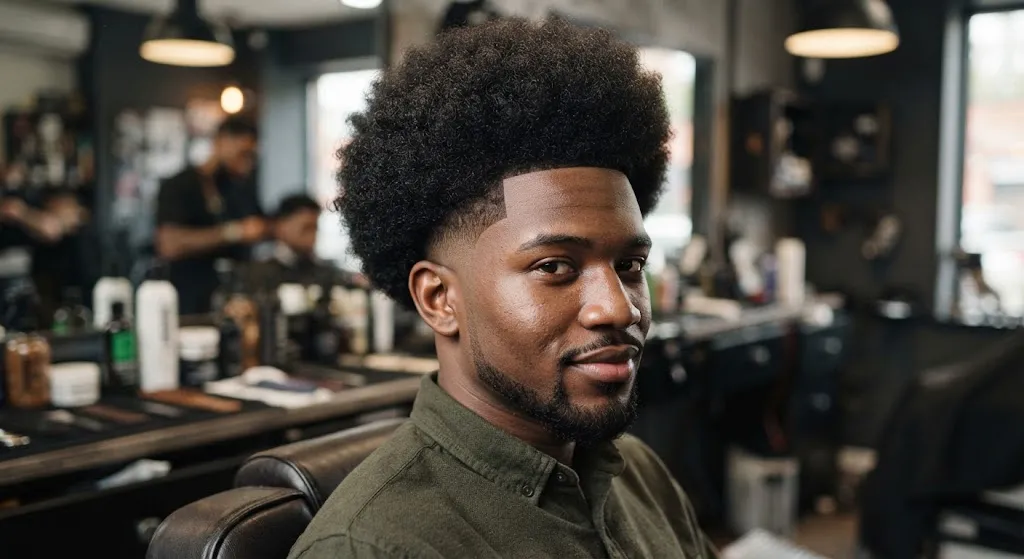
If you like the traditional fullness of an afro but want something cleaner around the edges, a low or mid taper is a great place to start.
The taper keeps the temples and neckline neat without taking too much away from the overall shape of your hair. Unlike a full fade, a taper allows you to maintain more of your natural volume while still giving the haircut a polished finish.
For the top, the goal is usually to keep the hair trimmed evenly. This helps your afro maintain its round form rather than becoming uneven or losing its shape as it grows.
You can ask your barber for a low taper or mid taper, depending on how much contrast you want around the sides. A low taper gives you a more subtle transition, while a mid taper creates a little more definition.
At home, you don’t need an overly complicated routine. A light hair pick can help lift the roots and restore the fullness of your afro. Follow that with a daily moisturizing spray to keep your hair feeling soft without weighing it down.
The biggest mistake to avoid is using too much product. Heavy creams or oils can sometimes flatten the hair and take away the airy, full appearance that makes this style work.
2. Curly Afro Fade
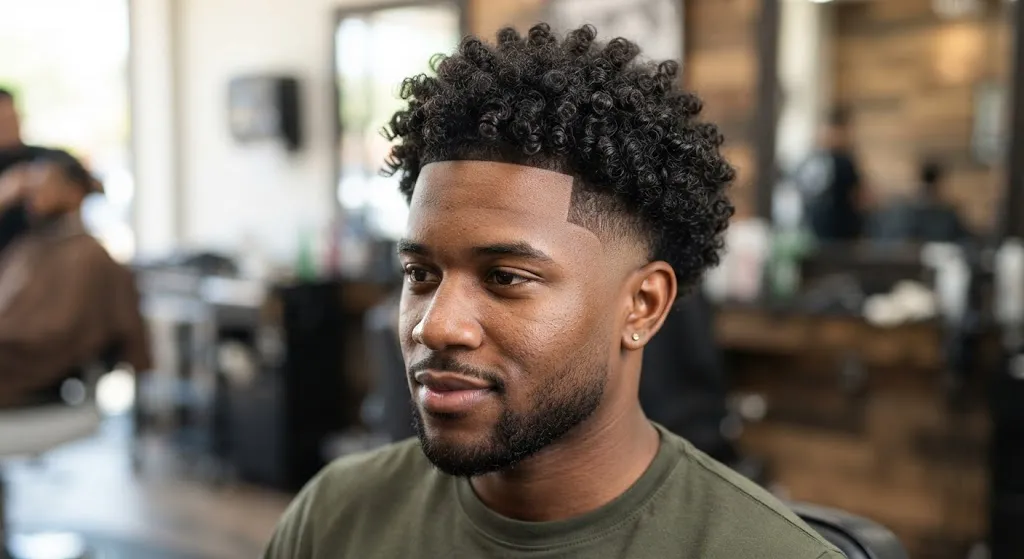
If your curls naturally form a defined pattern, why not make them the main feature of your haircut?
The curly afro fade is all about contrast. The sides are gradually faded to create a clean outline, while the curls on top remain longer, fuller, and more noticeable.
This style works particularly well if you want your hair to look styled without making it look overly controlled. Your natural curl pattern does most of the work.
For styling, start when your hair is damp. Apply a small amount of curl cream or leave-in conditioner, then gently twist small sections with your fingers. You don’t need to manipulate every curl. The idea is simply to encourage your existing curl pattern.
Once your hair dries naturally, you can use a pick to gently fluff the roots. Be careful not to pick aggressively through the ends because that can disrupt your definition and create unnecessary frizz.
A well-maintained fade also makes a big difference. Even if you allow the curls to grow, keeping the sides cleaned up gives the entire haircut a fresh appearance.
The result is a hairstyle that feels relaxed but still looks deliberate.
3. Textured Afro Fade
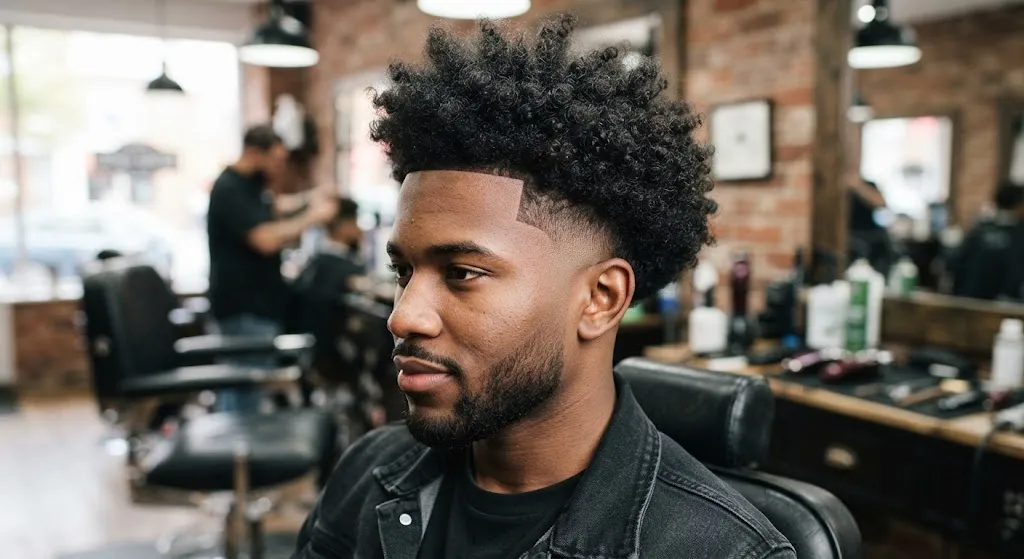
Sometimes the best afro hairstyles are the ones that don’t try to make the texture look too perfect.
The textured afro fade allows your natural curl pattern to take center stage. Instead of creating a highly uniform top, the barber leaves enough length for the coils and curls to form their own character.
The sides are faded, creating a sharp contrast between the shorter sides and fuller top. This gives the haircut a modern appearance while still keeping the natural personality of afro-textured hair.
For styling, apply a curl-defining cream to damp hair. You can then separate a few small sections with your fingers to encourage definition. There’s no need to make every curl identical.
In fact, a little variation is part of what makes this haircut look natural.
Regular barber visits are important with this style because the fade can lose its definition fairly quickly. Keeping the sides and neckline clean allows the textured top to remain the star of the haircut.
If you prefer hairstyles that look effortless rather than overly sculpted, this is an excellent option.
4. Rounded Afro Taper
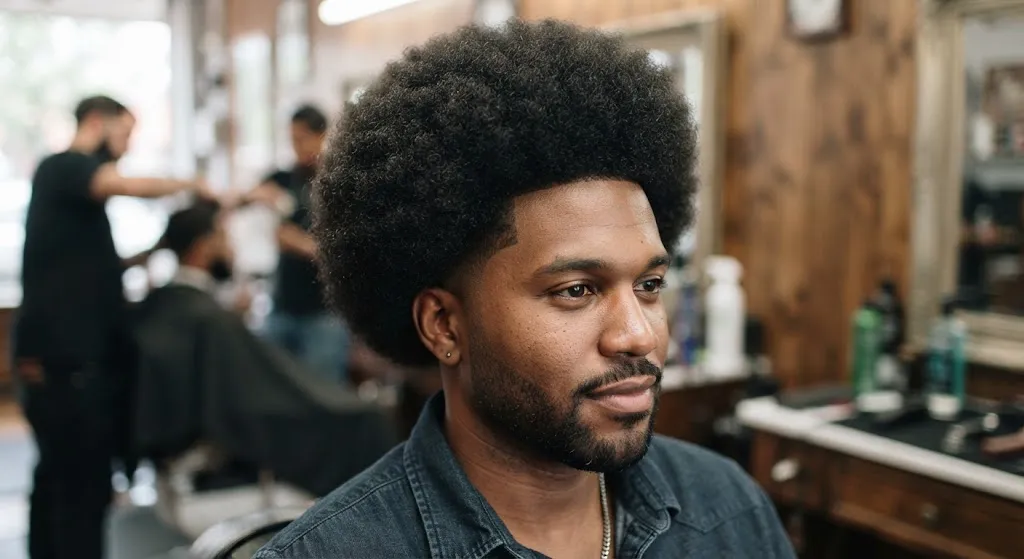
The rounded afro taper is ideal if you want your hair to have a balanced shape from every angle.
Instead of aggressively cutting down the sides, your barber can taper the temples and neckline while leaving plenty of length throughout the top and sides. This creates a smooth transition while preserving the classic rounded silhouette of an afro.
The shape is especially important here. A well-cut rounded afro should look balanced from the front, side, and back. You don’t want one area sticking out dramatically more than another.
Ask your barber to taper the temples and neckline while keeping enough length on top to maintain the round form.
At home, a hair pick can help lift the roots and restore volume. A lightweight moisturizer can also help keep the curls soft. This is particularly useful if your hair tends to become dry after washing.
The goal isn’t to make the hair look overly shiny or wet. You want a soft, healthy appearance that still has plenty of lift.
5. Curly Taper Afro
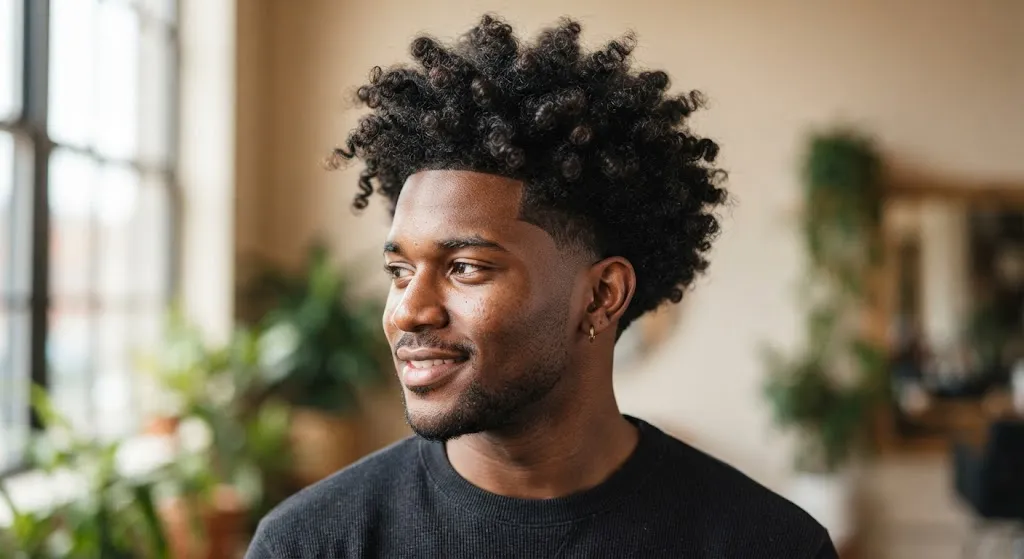
Your natural curls already give your afro plenty of character, so the goal with a curly taper afro is to shape that texture rather than hide it.
This hairstyle combines a full, curly top with a soft taper around the temples and neckline. Because the taper is relatively subtle, the transition feels natural rather than extremely dramatic.
It’s a good choice if you want something that can work in both casual and more polished settings.
Ask your barber for a soft taper around the temples and neckline and explain that you want to preserve the volume on top. Communication matters here. If too much is removed from the sides or top, you may lose the rounded fullness that makes the style work.
For daily styling, apply curl cream or leave-in conditioner while your hair is damp. You can then gently fluff the roots with your fingers or a pick.
Try to avoid constantly brushing or manipulating your curls once they have formed. Too much handling can create frizz and reduce definition.
With the right cut and a simple routine, this hairstyle can look naturally stylish without requiring a lot of effort.
6. Wet Curly Afro
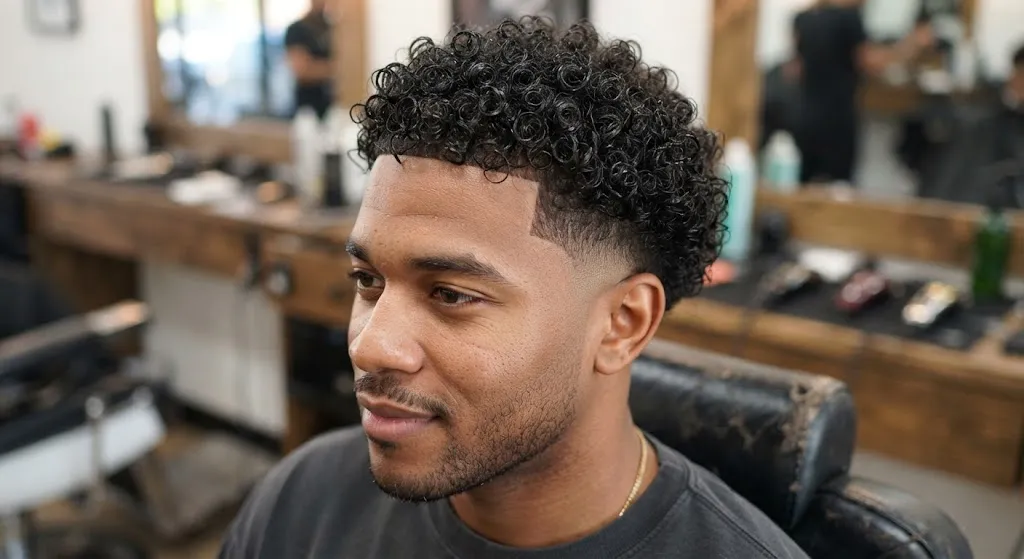
For a more polished take on the afro, you can experiment with a wet curly finish.
This style emphasizes curl definition rather than maximum fluffiness. The idea is to make the natural curl pattern more visible while giving the hair a slightly glossy, freshly styled appearance.
Start with damp hair and apply curl cream or a small amount of gel. Scrunch the hair gently to encourage the curls to form without pulling them apart.
Once you’ve finished styling, let the hair air dry. Avoid constantly touching it while it dries because that can disturb the curl pattern and create frizz.
You can combine this look with a low fade for extra contrast. The clean sides make the defined curls on top stand out even more.
This hairstyle is particularly useful when you want your afro to look more polished for an event, evening out, or special occasion while still keeping the natural texture visible.
Just remember that the goal is defined curls, not hair that looks soaked in product.
7. Bowl Cut Afro
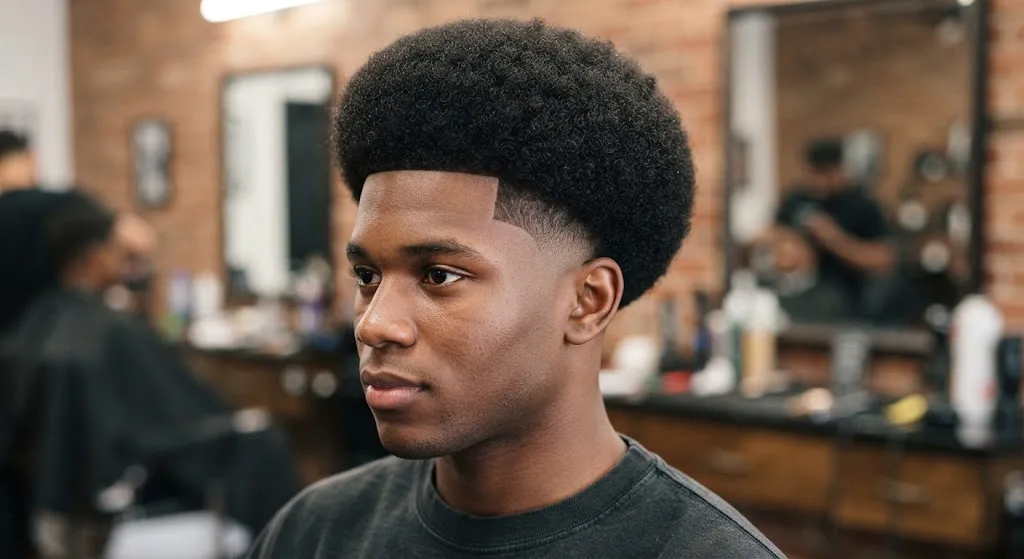
The bowl cut afro is for anyone who wants something a little more distinctive.
Rather than following the traditional rounded afro shape, this haircut creates a more deliberate bowl-like silhouette. The top remains thick and structured, while a low fade or shorter sides creates contrast underneath.
The key is having enough length before the haircut. Your barber needs enough hair to sculpt the top into a smooth curve. If your hair is too short, the rounded shape may not have enough volume to develop properly.
A hair sponge or soft pick can help keep the texture consistent across the top. Since dense afro hair can become dry, daily moisturizing is also important.
This hairstyle is less about looking perfectly traditional and more about creating a strong visual shape. It’s a good option if you want your haircut to become part of your overall style rather than simply being something you maintain in the background.
8. Boxy Line Afro
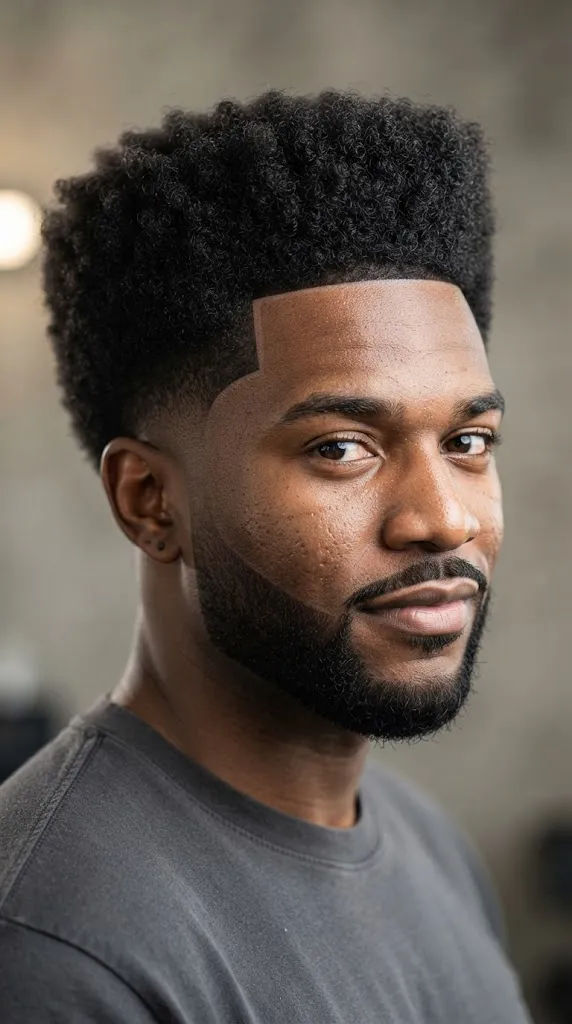
If you like sharp lines and strong geometry, the boxy line afro can completely change the character of your haircut.
Instead of allowing the front of the afro to remain naturally rounded, your barber creates a squared-off lineup. The straight front edge gives your face a stronger frame and makes the haircut immediately look more structured.
Pairing the lineup with a low fade creates an especially clean contrast. You still get the fullness of an afro on top, but the edges provide a sharper and more modern finish.
The most important part of this hairstyle is precision. A good lineup should complement the natural shape of your hairline rather than forcing an unnatural shape.
Once the haircut is finished, use a light pick to maintain the volume. A small amount of moisturizer can help prevent the top from becoming dry while keeping the hair from looking weighed down.
This style is a great example of how a relatively small change — shaping the front differently — can completely transform an afro.
9. High Top Afro
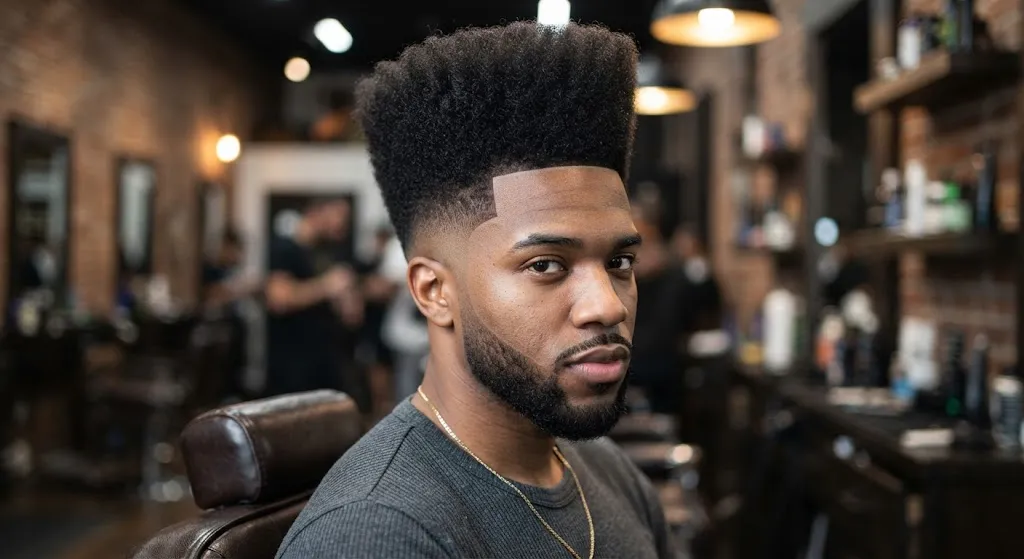
Few afro hairstyles make a statement quite like the high top.
The concept is simple: keep the sides faded while building significant height on top. The result is a structured silhouette that immediately draws attention to the shape and volume of the hair.
The challenge is keeping the top balanced. You don’t want the hair leaning dramatically forward or becoming heavier on one side. Ask your barber to shape the top evenly so the height looks intentional.
This style also benefits from regular picking at the roots. A pick can help maintain the height and prevent the hair from becoming compressed.
Because the top contains a lot of dense hair, moisture is important. A lightweight moisturizer can help prevent dryness without destroying the structure.
The high top afro is particularly appealing if you enjoy hairstyles with a strong silhouette. It’s confident, noticeable, and works especially well when the sides are kept extremely clean.
10. Wave Pattern Afro
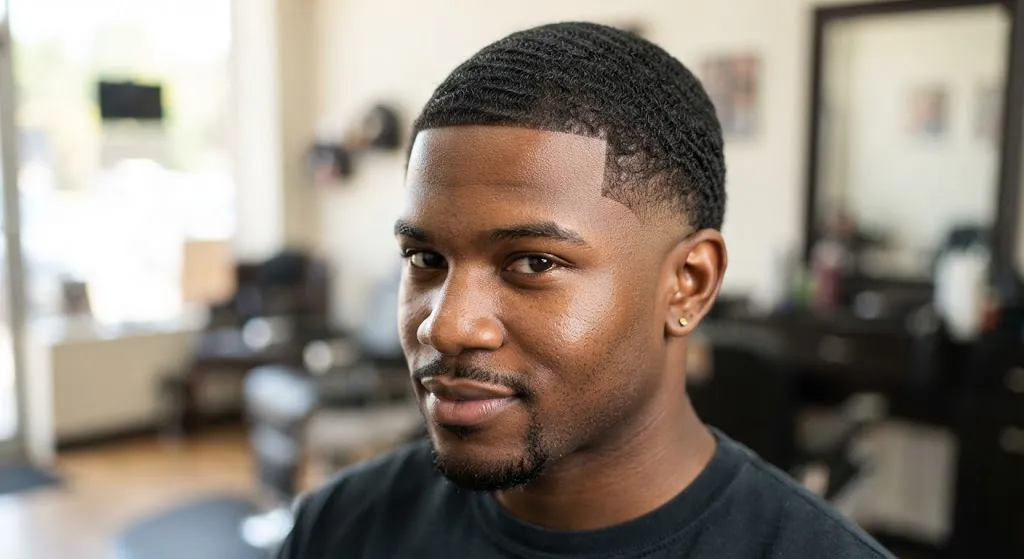
You don’t always need a lot of length to show off your natural texture.
The wave-pattern afro works with shorter, shaped hair, allowing the natural coil pattern to create subtle waves across the top. When the sides are faded, the contrast makes those patterns much easier to notice.
A curl sponge or twist brush can help enhance the pattern when your hair is slightly damp. Work gently across the top rather than aggressively brushing the hair.
After creating the pattern, apply a light moisturizer to help keep your hair from becoming dry. The goal is to maintain definition without making the hair heavy or greasy.
This style is a good choice if you prefer a shorter afro and want something that looks neat without sacrificing texture. It’s also relatively easy to refresh between barber visits.
The best part is that the pattern doesn’t have to look perfectly identical from one day to the next. Natural variation is what keeps the style looking authentic.
How to Choose the Right Afro Hairstyle
Choosing between these hairstyles isn’t only about picking the one that looks best in a photo. Your hair density, curl pattern, preferred maintenance level, and the amount of time you’re willing to spend styling your hair all matter.
If you want something low-maintenance and subtle, a low taper afro or rounded afro taper is a strong option. Both preserve plenty of natural volume while keeping the edges controlled.
If your curls are one of your favorite features, consider a curly afro fade, textured afro fade, or curly taper afro. These cuts make your natural texture the main attraction without making the hairstyle feel overly complicated.
For something more noticeable, the high top afro, bowl cut afro, or boxy line afro can give you a much stronger silhouette. These styles rely heavily on shape and precision, so choosing an experienced barber is especially important.
And if you prefer shorter hair, the wave-pattern afro gives you an opportunity to show off your natural texture without maintaining a large amount of volume.
How to Keep an Afro Looking Fresh
A great haircut is only half the equation. Your everyday routine can make a major difference in how your afro looks and feels.
Keep Your Hair Moisturized
Afro-textured hair can benefit from regular moisture, especially when it feels dry or loses its softness. A lightweight moisturizing spray or leave-in conditioner can help keep the hair flexible without making it heavy.
You don’t need to saturate your hair with product every day. Start with a small amount and add more only when necessary.
Use a Hair Pick Carefully
A pick is one of the simplest tools for maintaining afro volume. Use it primarily around the roots when you want to lift compressed hair.
Avoid repeatedly dragging the pick through the ends. Gentle root lifting is usually enough to restore the shape.
Don’t Overwork Your Curls
When you’re wearing a defined curly afro, touching your hair constantly can create frizz and disturb your curl pattern.
Apply your product, shape the curls, and then let them dry. Once the hair is set, you can gently fluff the roots if you need more volume.
Keep Your Fade or Taper Clean
The top of your hair might be the main attraction, but the sides and neckline can determine whether the entire haircut looks polished.
A fresh taper or fade creates a clean border around your natural texture. If you want your haircut to consistently look sharp, regular barber visits are worth it.
Communicate Clearly With Your Barber
Don’t simply tell your barber that you want an “afro fade” and hope for the best. Explain how much volume you want to keep, how high you want the fade or taper, and whether you want the top rounded, squared, or left more natural.
If you have a reference photo showing the shape you want, that’s even better.
Final Thoughts
Afro hairstyles for men don’t have to follow one particular formula. Your natural texture gives you plenty of room to experiment with shape, length, fades, tapers, curls, and lineups.
A low taper afro can give you a clean everyday look, while a curly afro fade lets your curl pattern take center stage. A rounded afro taper keeps things classic, whereas a boxy line afro adds sharper definition. If you’re looking for something more dramatic, the high top afro or bowl cut afro can give your hairstyle a powerful silhouette.
Whatever direction you choose, the most important thing is to work with your natural texture rather than against it. Keep your hair moisturized, avoid over-manipulating your curls, maintain the edges, and give your barber a clear idea of the shape you’re trying to achieve.
The right afro haircut isn’t just about looking neat. It’s about finding a shape that makes your natural hair feel like part of your personal style.