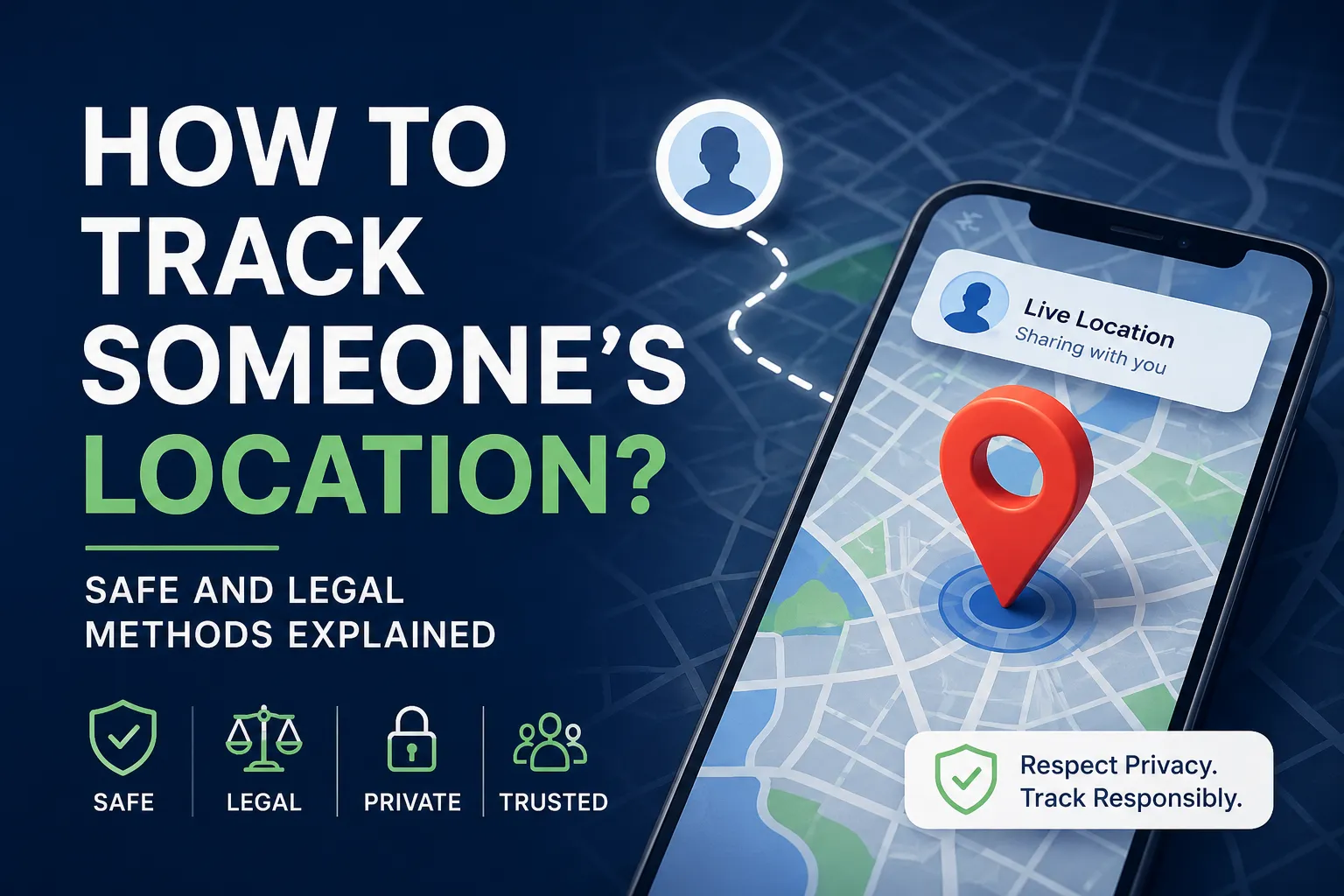
Knowing where someone is can be useful in everyday situations—whether you’re coordinating a family meetup, checking that a friend arrived safely, or managing company-owned devices. But location tracking involves privacy, consent, and legal responsibilities.
The good news is that there are legitimate ways to share or track a person’s location without secretly monitoring them. This guide explains the safest and most responsible methods, what to avoid, and how to protect your own location privacy.
Is It Legal to Track Someone’s Location?
Location tracking is not automatically illegal, but how and why you track someone matters.
In general, the safest approach is to obtain the person’s knowledge and consent before accessing their location. Laws vary by country and jurisdiction, particularly when tracking involves spouses, employees, children, vehicles, or electronic devices.
Secretly installing monitoring software, accessing another person’s accounts, using hidden trackers, or bypassing security controls can violate privacy and computer-access laws.
If you’re unsure about the rules in your jurisdiction, consider getting advice from a qualified legal professional.
1. Use Built-In Location Sharing
The simplest and safest method is to use location-sharing features provided by smartphones and major platforms.
For example, a person can voluntarily share their live or current location with you through a trusted service. They can generally choose who receives the information and, depending on the service, how long it remains available.
This method is preferable because:
- The person knows their location is being shared.
- They can usually stop sharing at any time.
- No hidden monitoring software is required.
- Access is controlled through the account or device.
For everyday situations, consensual location sharing should be your first choice.
2. Use Family Location Features
Families may benefit from dedicated family-safety features available on modern smartphones and operating systems.
Parents and guardians can use appropriate family-management tools to help keep track of children or dependents, subject to applicable laws and the child’s age and circumstances.
These services can sometimes provide features such as:
- Location sharing
- Arrival and departure notifications
- Device-finding capabilities
- Emergency or safety features
- Family account management
Even when you have a legitimate reason to monitor a family member, transparency and age-appropriate privacy are important.
3. Find Your Own Lost Phone or Device
There is an important distinction between tracking another person and locating your own device.
If you lose your smartphone, tablet, laptop, or another supported device, use the manufacturer’s official device-finding service. These tools can help you locate, lock, or secure your device.
This is one of the clearest legitimate uses of location technology because you are accessing your own device or an account you are authorized to manage.
4. Share Your Location During Travel
Location sharing can also improve safety when traveling.
For example, you might share your location with a trusted friend while:
- Traveling alone
- Going hiking
- Taking a long road trip
- Meeting someone in an unfamiliar area
- Returning home late at night
Instead of permanently sharing your location, consider using temporary sharing for the duration of the activity.
This gives you the safety benefits of location technology without creating unnecessary long-term exposure.
5. Use Vehicle Tracking Responsibly
Vehicle tracking systems can be legitimate when the vehicle owner or authorized user has agreed to tracking.
Businesses may also use GPS systems to manage company vehicles, but they should establish clear policies explaining what is tracked, why it is tracked, who can access the information, and how long the data is retained.
Using a tracker secretly on another person’s vehicle is a very different situation and may create serious legal and privacy problems.
6. What About Tracking Someone by Phone Number?
You may see websites claiming that you can enter a phone number and instantly obtain someone’s precise real-time location.
Be cautious.
A phone number alone generally does not give an ordinary person legitimate access to another person’s live GPS location. Services making unrealistic promises may be scams, misleading advertisements, or attempts to collect personal information or payment details.
Legitimate location services normally require authorization, account access, device permissions, or participation from the person whose location is being shared.
7. Avoid Spyware and Hidden Tracking Apps
Secretly installing monitoring software on another person’s phone is one of the riskiest approaches.
Such applications may claim to provide access to GPS data, messages, calls, photos, or other private information. Apart from potential legal consequences, they can expose both people to security risks.
Avoid tools that encourage you to:
- Bypass someone’s password
- Hide monitoring from the device owner
- Install software without permission
- Steal account credentials
- Circumvent security protections
- Secretly collect private communications
If a service requires you to compromise someone’s device or account, it is not a responsible location-tracking solution.
8. How to Track Someone Safely: A Better Approach
Before attempting to access someone’s location, ask yourself three questions:
Do I have permission?
If the person has knowingly agreed to share their location, use an established location-sharing service rather than a hidden tracking method.
Do I have a legitimate reason?
Safety, family coordination, device recovery, and authorized business operations can be legitimate purposes. Curiosity or suspicion does not automatically justify surveillance.
Am I using an appropriate tool?
Prefer reputable services with clear privacy controls, visible permissions, and an option to stop sharing.
If the answer to any of these questions is no, reconsider whether tracking is appropriate.
How to Protect Yourself From Unwanted Location Tracking
Location privacy works both ways. If you are concerned that someone might be tracking you without permission, review your devices and accounts.
Consider:
- Reviewing which apps have location permission.
- Removing location access from apps that don’t need it.
- Checking your account’s active sessions and connected devices.
- Updating your phone’s operating system and apps.
- Using strong, unique passwords and multi-factor authentication.
- Reviewing location-sharing settings regularly.
- Checking for unfamiliar physical tracking devices if you have a legitimate reason to suspect one.
- Seeking appropriate professional or legal help if you believe you are being monitored unlawfully.
Do not attempt to retaliate by hacking into another person’s accounts or devices.
Final Thoughts
Location technology can be extremely useful, but convenience should never come at the expense of someone’s privacy.
The safest rule is simple: track only when you have a legitimate reason, appropriate authorization, and a transparent method for doing so.
For most people, voluntary location sharing, family-safety tools, and official device-finding services provide everything they need. Avoid secret tracking apps, phone-number tracking scams, credential theft, and other methods that bypass someone’s knowledge or consent.
Responsible location tracking isn’t about finding a way to monitor someone secretly—it’s about using technology in a way that protects safety, privacy, and trust.