Choosing the right haircut can be harder than it seems.
You may see a hairstyle on Instagram, TikTok, Pinterest, or on a celebrity and think, “That would look great on me.” But after getting the same haircut, you may notice that it doesn’t look quite the same.
There is a simple reason for this.
A haircut that looks great on one person may not work as well on another because everyone has different facial features, hair textures, hair thickness, and lifestyles.
The good news is that you don’t need to know everything about men’s hairstyles to choose a haircut that suits you. You just need to understand a few basic things about yourself.
Your face shape, hair type, and daily routine can tell you a lot about which haircut is likely to work best.
The goal isn’t to find a “perfect” haircut. It’s to find a style that works naturally with your features and is realistic for your everyday life.
Read Also : Best Haircuts for Men With a Square Face: Styles That Balance Your Face Shape
Start by Understanding Your Face Shape
The first thing you should look at is your face shape.
Stand in front of a mirror and look closely at the overall outline of your face. You don’t need to measure every part of your face or try to identify the exact shape with complete accuracy.
You’re simply looking for a general idea.
If your face looks noticeably longer than it is wide, you may have a long face shape.
If your cheeks look fuller and your jawline appears soft or rounded, you may have a round face.
A strong, defined jawline with relatively straight sides often indicates a square face.
If your forehead is wider than your chin and your face gradually becomes narrower toward the bottom, you may have a heart-shaped face.
An oval face is usually more balanced, with the length of the face being slightly greater than its width and a softer jawline.
Don’t worry if you can’t decide between two shapes.
Real faces don’t always fit perfectly into a single category. Many people have features that sit somewhere between two different face shapes.
You only need a rough idea.
Once you understand your general face shape, choosing a haircut becomes much easier because you can start thinking about balance.
Why Face Shape Matters
Your haircut can change the way your facial proportions appear.
For example, if you have a round face, adding some height on top can make your face appear slightly longer and create a more balanced look. Keeping the sides relatively neat can also prevent your hairstyle from adding unnecessary width.
If you have a long face, the opposite approach may work better. Too much height on top can make the face appear even longer, so a more moderate hairstyle with balanced volume may be a better choice.
Square faces are naturally strong and angular, which gives them a lot of flexibility. Many different hairstyles can work well with this face shape, particularly textured styles that complement the jawline.
Oval faces are also versatile because their proportions are already relatively balanced. This allows you to experiment with many different cuts.
Heart-shaped faces usually have more width around the forehead and a narrower chin. Adding some visual fullness around the sides can help create a more balanced appearance.
These aren’t strict rules.
Think of them as guidelines that help you understand what your haircut can do for your overall appearance.
The goal is balance, not perfection.
How Your Hair Type Affects Your Haircut
Your face shape is important, but your actual hair may be even more important when deciding which haircut will work in real life.
A hairstyle can look amazing in a photograph but become difficult to manage when your hair has a completely different texture.
Before choosing a haircut, take a moment to understand your natural hair.
Is it straight, wavy, or curly?
Is it thick or fine?
Does it naturally sit flat, fall forward, curl up, or become puffy?
These details can make a huge difference.
Straight Hair
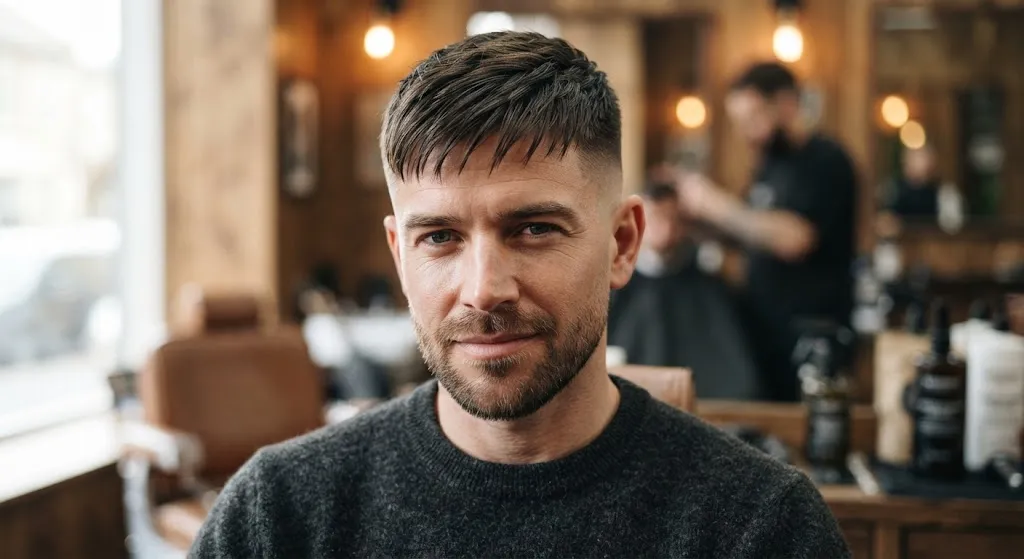
Straight hair tends to fall naturally, which makes it suitable for many clean and structured hairstyles.
Side parts, textured crops, crew cuts, classic tapers, and many short-to-medium hairstyles can work well with straight hair.
If your straight hair is particularly thick, however, you may need some weight removed so that it doesn’t become too bulky.
The right haircut should give your hair structure without making it feel difficult to control.
Wavy Hair

Wavy hair naturally provides movement and texture.
Instead of trying to remove that natural movement, it’s often better to make it part of the hairstyle.
Medium-length cuts, textured crops, messy styles, and natural-flowing hairstyles can work especially well with wavy hair.
One of the biggest advantages of wavy hair is that you already have texture without needing to create it with styling products.
Curly Hair
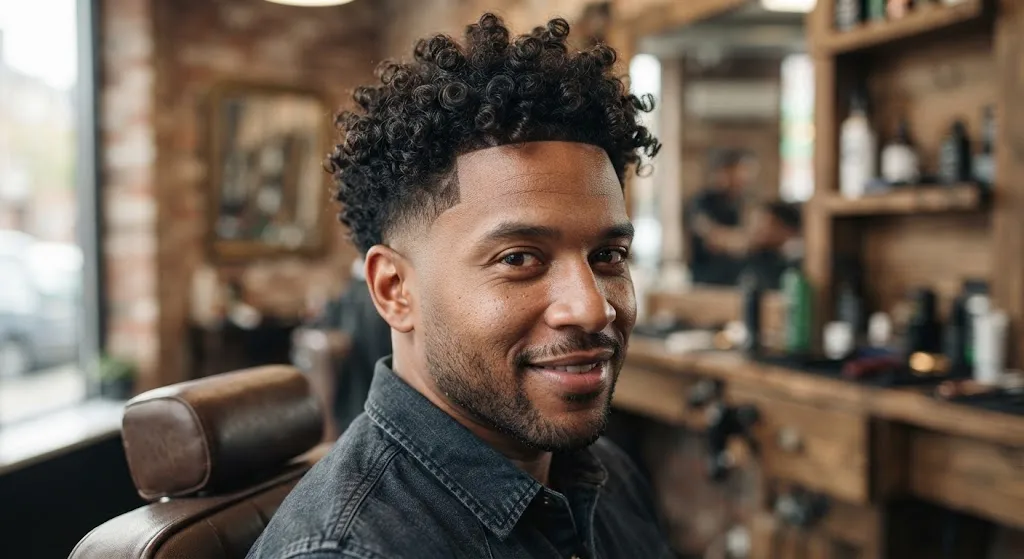
Curly hair requires a slightly different approach.
The goal shouldn’t be to fight your curls every morning. Instead, choose a haircut that allows the curls to form naturally while keeping the overall shape controlled.
A good curly haircut should give your curls enough room to move while preventing the hairstyle from becoming too bulky or uneven.
Sharp, disconnected styles can sometimes become difficult to maintain as curly hair grows, so shape and proportion are especially important.
Work with your curls rather than against them.
Thick Hair
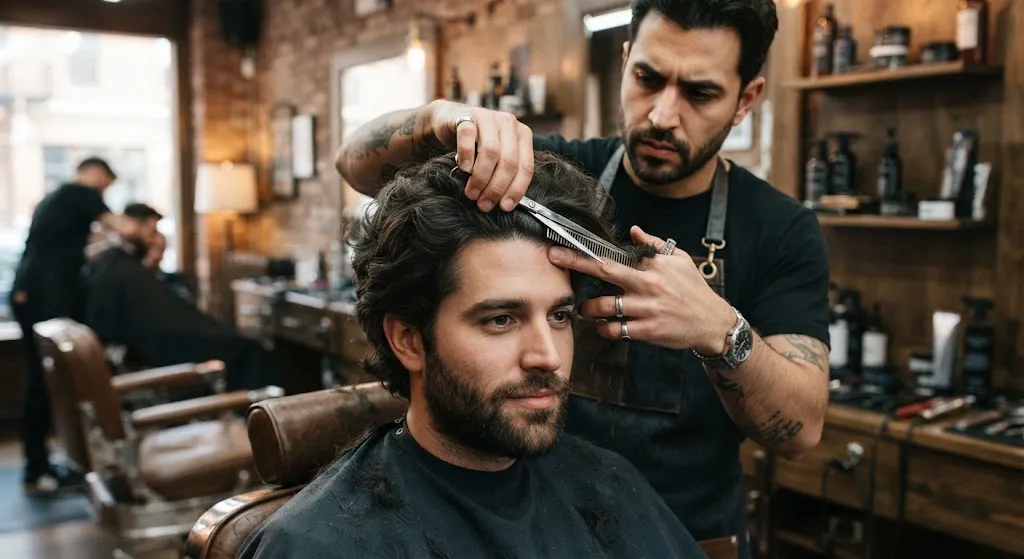
Thick hair can give you plenty of styling options, but it can also become bulky if the haircut isn’t shaped correctly.
If too much weight is left in the wrong areas, thick hair can expand outward and make the hairstyle look heavier than intended.
A skilled barber can remove or distribute some of that weight while maintaining the fullness that makes thick hair look good.
Thin Hair
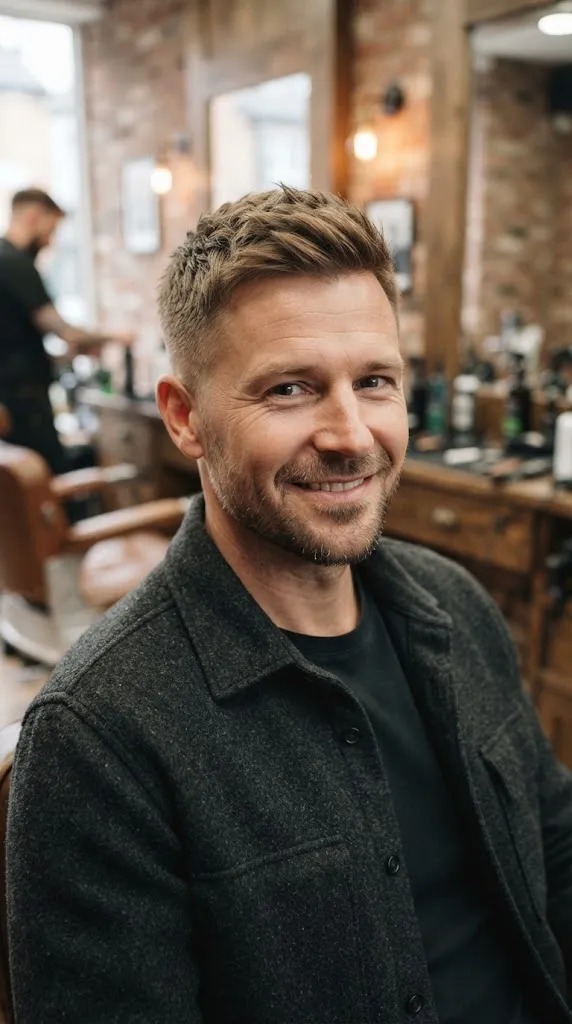
If your hair is thin or fine, shorter hairstyles can often create the appearance of greater density.
Long, flat hairstyles may make thin hair look even flatter, especially when the hair doesn’t have enough natural volume.
Textured cuts can help create movement and make the hair appear fuller.
Instead of choosing a haircut simply because it looks good on someone else, consider how your own hair naturally behaves.
That’s usually a much better starting point.
How Much Time Do You Want to Spend Styling Your Hair?
Another important question is how much effort you’re realistically willing to put into your hair every morning.
A hairstyle may look fantastic after a professional barber spends twenty minutes styling it, but that doesn’t mean you’ll want to repeat the process every morning.
Be honest about your routine.
If you prefer to shower, get dressed, and leave the house quickly, choose something that doesn’t require much styling.
If you’re willing to spend a few minutes on your hair, you have more options.
If you genuinely enjoy grooming, you can choose more detailed styles.
Your haircut should fit your lifestyle rather than making your morning routine harder.
Low-Maintenance Haircuts

If you want something simple, hairstyles such as a buzz cut, crew cut, short fade, or short taper can be excellent choices.
These cuts generally require very little daily styling while still looking clean and polished.
They’re particularly useful for people who don’t want to spend time using multiple styling products every morning.
Medium-Maintenance Haircuts

If you’re willing to spend a few minutes styling your hair, you have more options.
A side part, textured crop, or similar style can give you a polished appearance without requiring a complicated routine.
A small amount of product and a few minutes of styling may be enough.
High-Maintenance Haircuts
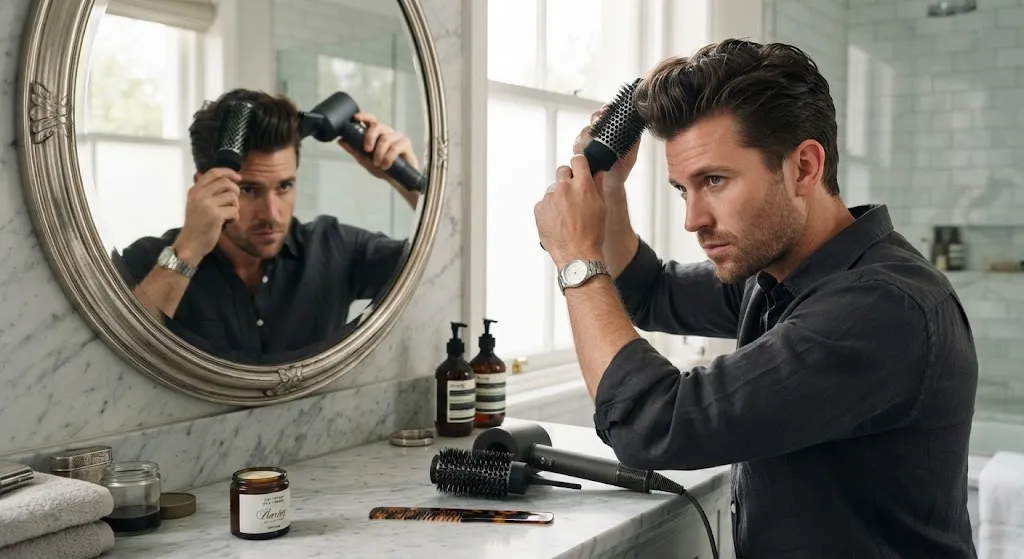
Styles such as pompadours, quiffs, slick backs, and highly structured hairstyles can look excellent, but they usually require more effort.
You may need a blow dryer, comb, styling product, and several minutes every morning to achieve the desired shape.
There’s nothing wrong with choosing a high-maintenance hairstyle if you enjoy grooming.
The problem is choosing one when you already know you won’t maintain it.
A Simple Step-by-Step Way to Choose Your Haircut
You don’t need to memorize dozens of haircut names.
Instead, follow a simple process.
Step 1: Check Your Face Shape

Look at yourself in the mirror and identify the face shape that seems closest to your features.
It may be round, square, oval, long, or heart-shaped.
If you’re unsure, don’t overthink it.
You only need a general idea so you can understand what kind of balance your haircut should create.
Your face shape is a starting point, not a strict rulebook.
Step 2: Decide What Your Face Needs
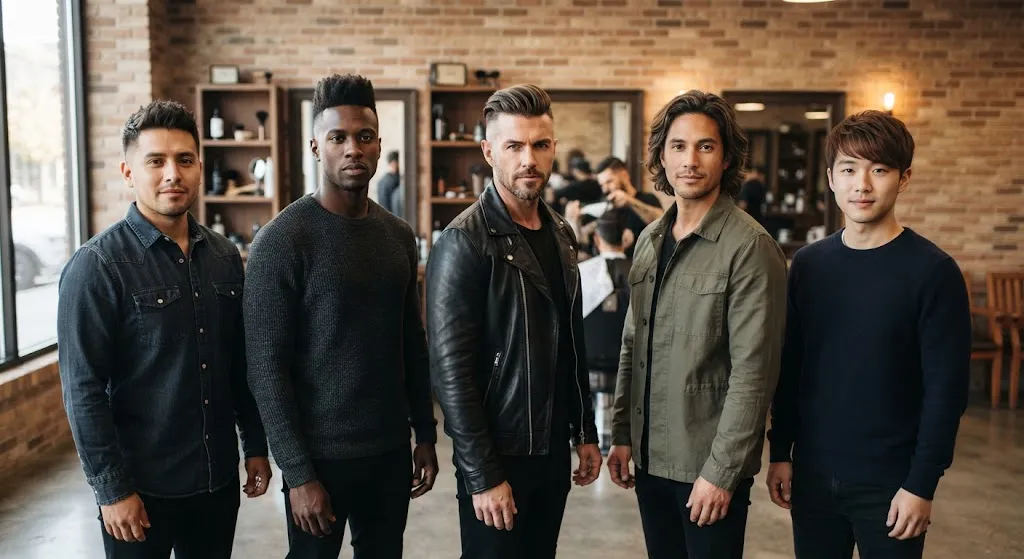
Now think about balance.
If your face is round, some height on top and shorter sides can help create a more elongated appearance.
If your face is long, avoid adding excessive height because it can make the face appear even longer.
If your face is square, you have plenty of options because the strong jawline works with many different hairstyles.
If you have an oval face, you can experiment with a wide range of cuts because your facial proportions are already relatively balanced.
For a heart-shaped face, some additional fullness around the sides can help balance a wider forehead and narrower chin.
The important thing is to understand what your haircut is adding to your facial proportions.
Step 3: Understand Your Hair Type
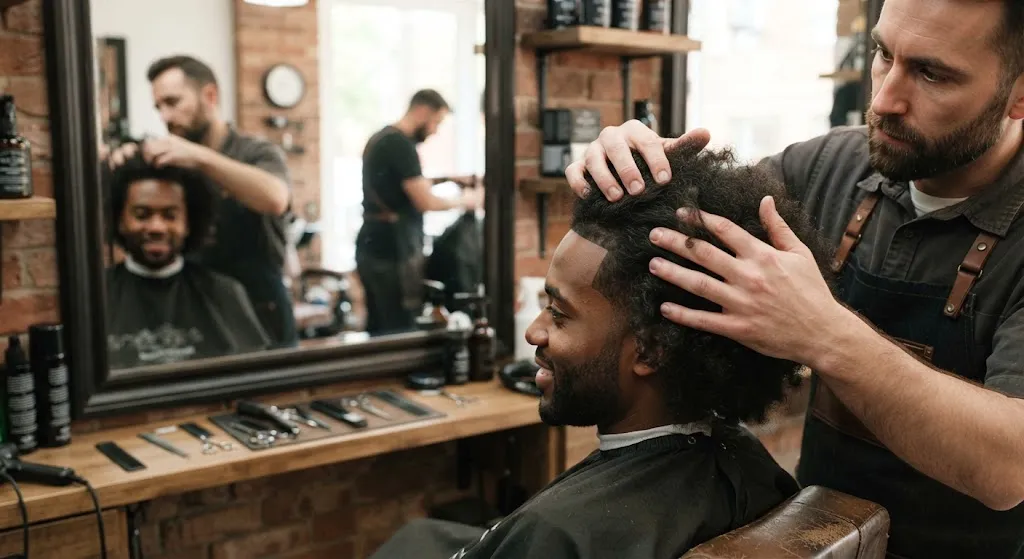
Next, look at your hair.
Determine whether it is straight, wavy, or curly.
Then consider whether it is thick or thin.
Your haircut should work with your natural texture rather than forcing your hair to behave in a way it naturally doesn’t.
When you choose a hairstyle that works with your hair type, styling becomes easier and the haircut usually looks more natural.
Step 4: Think About Your Daily Routine

Now consider your lifestyle.
How much time do you actually want to spend styling your hair?
If you want something quick and easy, choose a low-maintenance haircut.
If you don’t mind spending a few minutes styling your hair, you can choose something more detailed.
If you genuinely enjoy grooming and styling, high-maintenance hairstyles can give you more control over your appearance.
There is no right or wrong answer.
The best choice is simply the one that matches your routine.
Step 5: Combine Everything

This is where everything comes together.
Think about your face shape, hair texture, hair thickness, styling habits, and daily routine.
For example, someone with a round face, thick straight hair, and very little time for styling may want a completely different haircut from someone with a long face, fine wavy hair, and plenty of time for grooming.
Once you consider all these factors together, you stop guessing.
You’re making a decision based on your actual features.
Step 6: Explain Your Choice to Your Barber
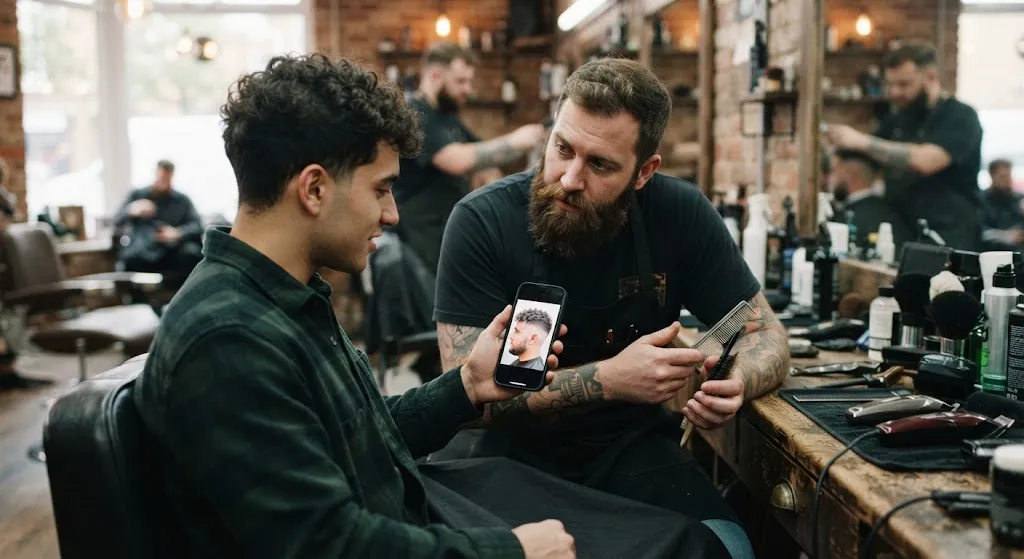
Once you have an idea of what you want, communicate it clearly.
Avoid vague instructions such as “just trim it” or “give me something nice.”
Instead, describe the important details.
For example:
“Give me a low fade, keep the sides around a number two, and leave some length on top so I can style it naturally.”
That gives your barber much more information.
If possible, show a reference photo as well.
A photo can communicate the overall shape and style much more clearly than words.
However, remember that the barber may need to adjust the style based on your own hair and face shape.
A good barber won’t simply copy a picture. They’ll adapt it to you.
Best Haircuts for Different Face Shapes
There are certain hairstyles that can make sense as starting points for different face shapes.
The key is not to treat these suggestions as strict rules.
Your hair texture and personal preferences still matter.
Best Haircuts for Round Faces
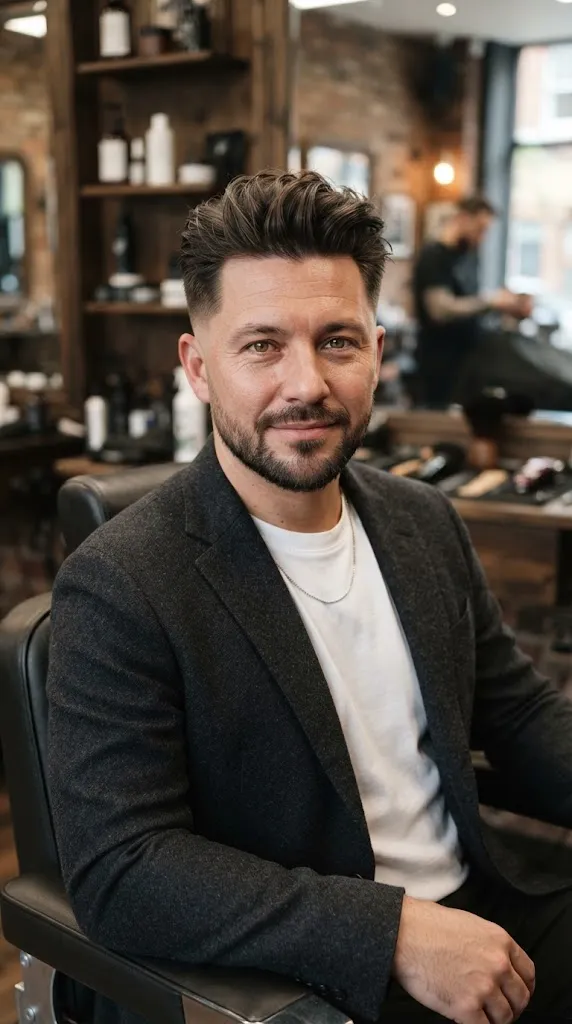
If you have a round face, hairstyles that create some height on top can help balance your features.
Good options may include textured crops, mid fades, high fades, quiffs, short pompadours, and textured tops with shorter sides.
The basic idea is to create some vertical structure while avoiding unnecessary width around the sides.
Very flat hairstyles may emphasize the roundness of the face, so adding some height can often create a more balanced appearance.
Best Haircuts for Square Faces
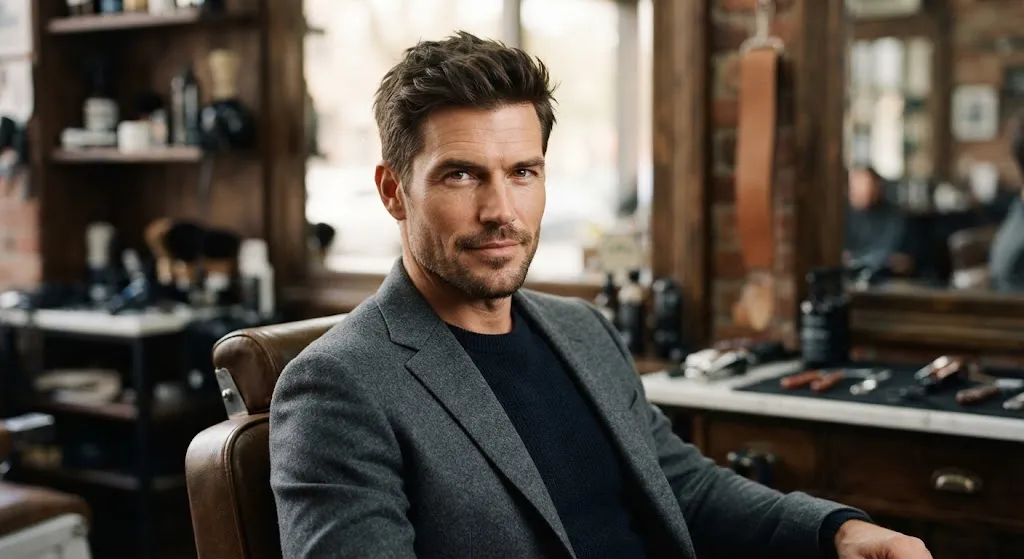
Square faces naturally have a strong jawline and angular features.
This gives you plenty of flexibility.
You can experiment with textured crops, crew cuts, side parts, tapers, fades, short quiffs, and messy textured styles.
If you want to emphasize your strong facial structure, a clean and structured haircut can work well.
If you’d rather soften the appearance slightly, texture and movement can help.
Best Haircuts for Oval Faces

Oval faces are among the most versatile when it comes to hairstyles.
You can experiment with side parts, textured crops, tapers, fades, medium-length hairstyles, classic cuts, and modern textured styles.
Because the facial proportions are already balanced, you generally have more freedom.
One thing to be careful about is allowing a heavy fringe or excessive hair to cover too much of the face
Best Haircuts for Long Faces

If your face is long, your goal should generally be balance rather than additional height.
Consider side parts, medium-length hairstyles, classic tapers, textured styles with moderate volume, and hairstyles that add some width.
Avoid extremely tall quiffs or pompadours if they make your face appear noticeably longer.
The goal is to keep the proportions visually balanced.
Best Haircuts for Heart-Shaped Faces

Heart-shaped faces tend to be wider around the forehead and narrower toward the chin.
Styles that provide some fullness around the sides can help balance those proportions.
Depending on your hair type, you might consider medium-length textured styles, side parts, layered hairstyles, natural-flowing styles, and controlled fringe styles.
Again, your hair texture should influence the final choice.
What Should You Say to Your Barber?
Communication is one of the most important parts of getting a good haircut.
You can have the perfect hairstyle in mind, but if you don’t explain it properly, your barber may interpret your request differently.
Instead of saying:
“Make it short.”
Try explaining exactly what you want.
For example:
“I want a low fade, keep some length on top, and leave enough texture so I can style it naturally.”
You can also tell your barber what you don’t want.
For example:
“I don’t want the sides too high.”
Or:
“Don’t take too much length off the top.”
These small details can make the conversation much clearer.
It’s also useful to explain how you normally style your hair.
If you don’t use styling products, tell your barber.
If you only have two minutes in the morning, mention that.
If you like a messy natural finish instead of a polished look, explain that too.
The more your barber understands about your preferences, the easier it becomes to create a haircut that works for you.
Common Haircut Mistakes You Should Avoid
Choosing the right haircut isn’t only about knowing what to do.
It’s also about knowing what not to do.
One of the biggest mistakes is blindly following trends.
A haircut may be extremely popular, but that doesn’t mean it will work with your face shape or natural hair.
Blindly Following Trends
Trends come and go.
A hairstyle may be extremely popular one year and much less common the next.
More importantly, a trending hairstyle isn’t automatically right for your face or hair.
Use trends as inspiration rather than instructions.
Ignoring Your Hair Type
If your hair is curly, don’t choose a style that requires naturally straight hair unless you’re prepared to style it regularly.
If your hair is thin, be careful with very long and heavy styles.
If your hair is extremely thick, make sure the haircut controls unnecessary bulk.
Choosing a Haircut That Requires Too Much Maintenance
A high-maintenance haircut can look amazing when professionally styled.
But if you’re not willing to style it every morning, the result may quickly become frustrating.
Copying Another Person’s Haircut Exactly
Reference photos are useful, but your haircut doesn’t need to be an exact copy.
The person in the picture has a different face, hair texture, hairline, and head shape.
Use the photo to communicate the general style and let your barber customize it.
Your Haircut Should Fit Your Lifestyle
A haircut is something you live with every day.
That’s why your lifestyle matters so much.
If you work in a professional environment, you may prefer something neat and versatile.
If you have a more relaxed lifestyle, you may enjoy textured or messy styles.
If you’re physically active, you may prefer something shorter and easier to manage.
If you enjoy grooming, you can experiment with more detailed hairstyles.
There’s no universal best haircut.
The best haircut is the one that fits your circumstances.
Don’t Be Afraid to Experiment
You don’t have to find your perfect haircut immediately.
Hair grows back.
Try something, see how it behaves, and learn from the experience.
Maybe you discover that you like shorter sides.
Maybe you realize that your hair looks better with more length on top.
Maybe you find that you don’t enjoy using styling products every morning.
All of these experiences give you useful information for your next haircut.
Over time, you can develop a much better understanding of what works for you.
Finding the Right Barber Can Make a Big Difference
Once you find a barber who understands your hair and knows how to work with your face shape, it’s worth building a relationship with them.
A good barber can learn how your hair grows, which areas become difficult to manage, how quickly your hair grows, and what styles you prefer.
You also won’t have to explain everything from the beginning every time you visit.
Eventually, you can simply say:
“Same as last time, but leave a little more length on top.”
That’s when getting a haircut becomes much easier.
Final Thoughts
Choosing the right haircut doesn’t have to be complicated.
Start with your face shape.
Then understand your hair type and thickness.
After that, think honestly about how much time you’re willing to spend styling your hair every day.
Finally, communicate clearly with your barber.
You don’t need to follow every trend or copy someone else’s hairstyle exactly.
You simply need to find a style that works with your natural features and fits into your everyday life.
Remember the basic formula:
Face Shape + Hair Type + Lifestyle + Good Communication = A Better Haircut
If your face is round, think about adding some height.
If your face is long, avoid excessive height.
If your hair is curly, work with the curls.
If your hair is thin, consider shorter textured styles.
If you don’t like styling your hair, choose something low-maintenance.
And if you’re unsure, start with a simple, balanced haircut and make small adjustments over time.
Most importantly, don’t chase perfection.
A great haircut isn’t necessarily the most complicated or fashionable one.
It’s the haircut that makes you feel confident, looks natural on you, works with your hair, and fits into your daily routine.
When all of those things come together, you don’t just have a good haircut.
You have a style that actually feels like your own.