Thinning hair can be frustrating, especially when you feel like every haircut makes the problem more noticeable. You might look at photos online and see a haircut that looks amazing on someone else, only to try something similar and realize it does not have the same effect on your own hair.
The goal is not necessarily to hide your hair loss completely. Instead, the goal is to reduce the visual difference between areas with more hair and areas with less hair.
A good haircut blends everything together, adds texture and creates a more natural appearance. When the haircut is combined with the right styling technique, even thinning hair can look cleaner, fuller and more intentional.
And that is why simply copying random hairstyles from Instagram, TikTok or Pinterest often does not work. Your haircut should be based on your current hair density, thinning pattern, face shape and lifestyle, rather than the hairstyle you may have worn several years ago.
Read Also : Best Haircuts for Men With a Square Face: Styles That Balance Your Face Shape
Where Is Your Hair Thinning?
Before choosing a haircut, take a moment to figure out where your hair is actually thinning.
This sounds simple, but it makes a huge difference.
Not all hair loss looks the same. Some men notice their temples disappearing first, while others see thinning around the crown. Some experience gradual thinning across the entire scalp.
Understanding your pattern helps you choose a haircut that works with your hair instead of fighting against it.
Receding Hairline
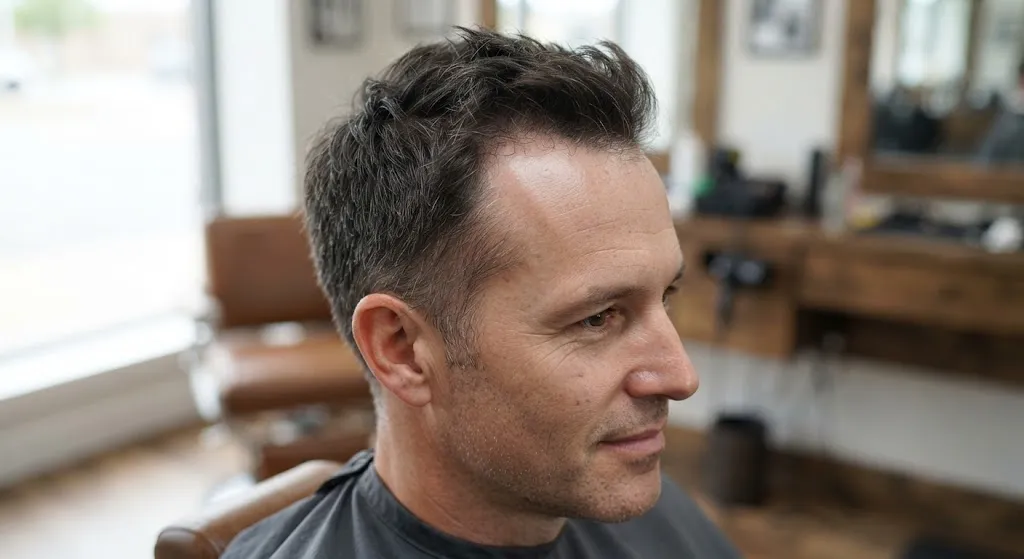
If your hairline is moving backward, particularly around the temples, you should be careful about choosing hairstyles that expose those areas too aggressively.
A haircut with extremely short sides and a very sharp transition can sometimes make the temples look more obvious. Instead, a softer taper and textured top can create a more balanced appearance.
You do not necessarily need to hide your hairline. The idea is simply to avoid making it the first thing people notice.
Thinning Crown
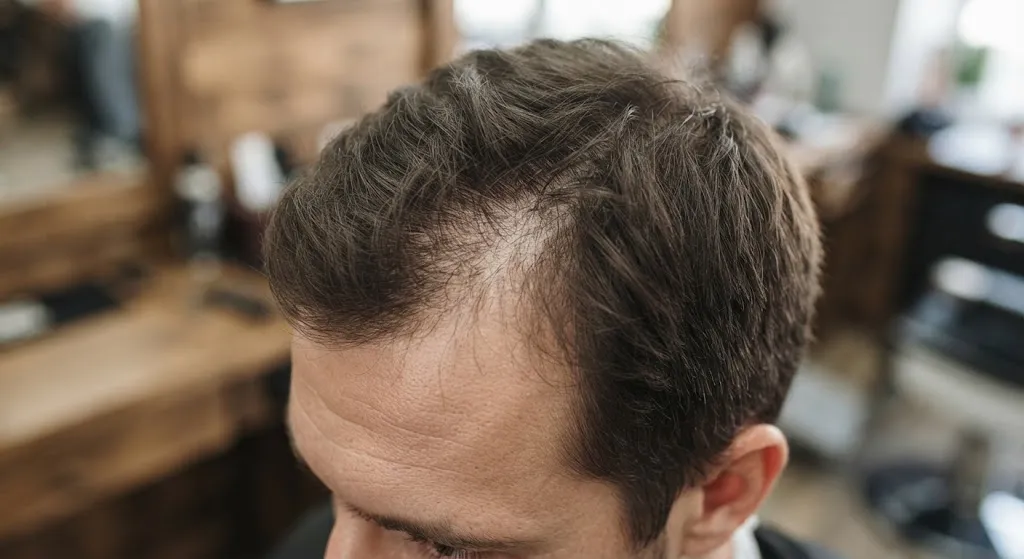
The crown is another common problem area.
Crown thinning can be difficult because overhead lighting often makes it look worse than it does in normal conditions. If you have a thinning crown, choosing a haircut that keeps the top relatively short and textured can help reduce the contrast between your hair and visible scalp.
Long, separated strands around the crown can sometimes expose even more scalp, especially when they become oily or fall flat
Overall Thinning
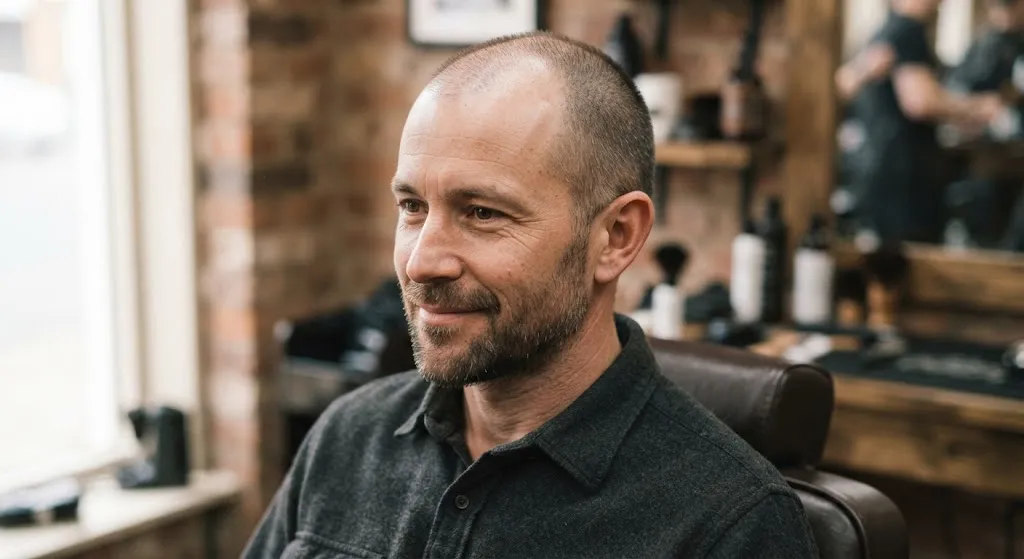
If your hair is thinning across the entire scalp, shorter hairstyles usually become more practical.
Keeping the hair at a similar length can reduce the contrast between dense and sparse areas. Instead of having long strands sitting over thinner sections, a shorter cut creates a more consistent appearance.
This is one reason simple cuts can work surprisingly well for men experiencing diffuse thinning.
Best Haircuts for Thinning Hair
Once you understand your thinning pattern, choosing a haircut becomes much easier.
The best haircuts for thinning hair generally have a few things in common: they are short enough to control separation, textured enough to create movement, and balanced enough to avoid drawing attention to sparse areas.
Here are some of the most useful options.
1. Buzz Cut

The buzz cut is one of the simplest choices for noticeable thinning.
Its biggest advantage is consistency. Because the hair is kept very short, there is less difference between areas with more density and areas with less density.
Instead of having long hair sitting beside visible scalp, the entire head has a relatively uniform appearance.
A buzz cut can also make hair loss look intentional rather than something you are constantly trying to disguise.
The exact length is worth discussing with your barber. A slightly longer buzz can provide a little more coverage, while a very short buzz creates an even more exposed but deliberate appearance.
2. Crew Cut
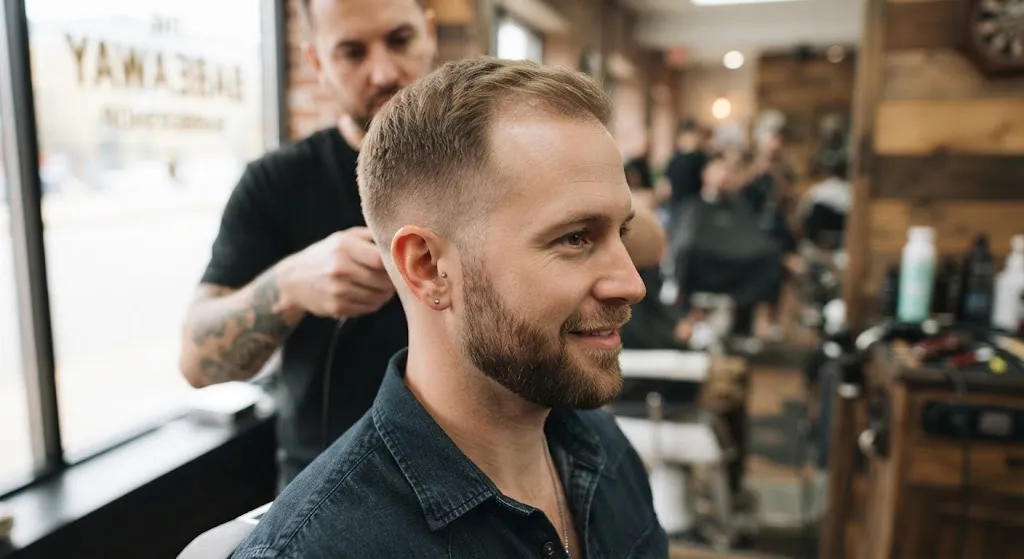
A crew cut is a great middle ground if you still have reasonable density but want something short and easy to maintain.
Unlike a very short buzz cut, a crew cut gives you a little more length on top. That extra length can provide shape and allow you to use texture to create the appearance of additional fullness.
The sides should not necessarily be taken extremely high or extremely tight. A controlled taper can often look more balanced when the top is thinning.
3. Textured Crop
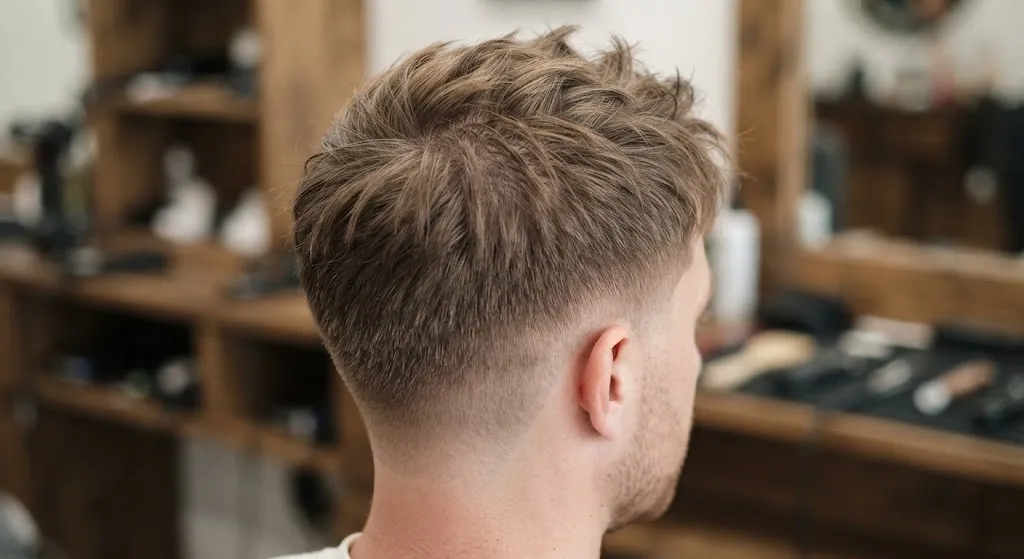
The textured crop is one of the most versatile choices for thinning hair.
Instead of allowing the hair to fall into one flat layer, texture creates small variations in direction and height. This movement can make the hair appear more substantial.
It can also help break up areas where the scalp might otherwise be clearly visible.
The important thing is not to overdo the texture. Excessive thinning with scissors can actually make sparse hair look even thinner.
A good textured crop should look natural rather than heavily styled.
4. Short Taper With Texture

If you prefer something modern without going extremely short, consider a short taper with textured hair on top.
The taper creates a gradual transition around the sides and back instead of an extremely dramatic change in length.
That can be useful if you have thinning hair because it avoids creating an overly strong contrast between the sides and the top.
The top can then be styled with a matte product to create separation and movement.
5. Ivy League
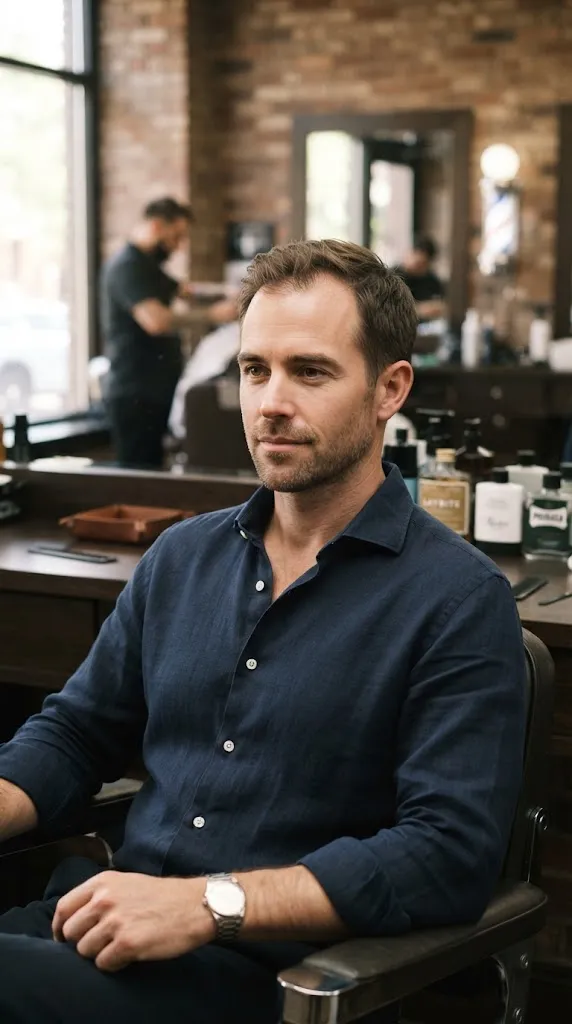
The Ivy League can work well when thinning is still relatively mild.
It gives you more styling flexibility than a buzz cut while remaining relatively short and controlled.
You can wear it slightly to the side, forward or with subtle texture depending on your hairline and density.
The key is keeping the style natural. Trying to force thin hair into an overly polished, perfectly flat shape can make the scalp more visible.
Haircuts You Should Avoid If Your Hair Is Thinning
Knowing what to avoid can be just as important as knowing what to choose.
Some hairstyles look fantastic on men with thick hair but can make thinning more noticeable when your density is lower.
Avoid Growing the Hair Too Long
One of the most common mistakes is assuming that longer hair automatically means better coverage.
It usually does not.
As thin hair grows longer, individual strands can become separated and fall away from each other. That can expose more scalp instead of covering it.
Long hair can also become flat and oily, making sparse areas easier to see.
If your hair is thinning, controlled length is generally more useful than excessive length.
Be Careful With Comb-Overs
A comb-over is another hairstyle that many men try when they first notice hair loss.
The intention is understandable: move hair from one area to another to cover the thinning.
The problem is that obvious comb-overs can sometimes attract more attention to the exact area you are trying to hide.
Wind, movement and even a change in lighting can expose the separation between the hair and scalp.
A natural forward texture or short crop is usually easier to maintain and looks more believable.
Avoid Extremely Sharp Fades With Thin Hair on Top
Very sharp fades can create too much contrast when the hair on top is thin.
Imagine very short or nearly shaved sides next to a top where the scalp is already visible. That dramatic difference can make the top look even thinner.
A softer taper or moderate fade often creates a more balanced transition.
The goal is not to avoid fades completely. It is to choose one that works with your current density.
Avoid Excessive Layering and Over-Thinning
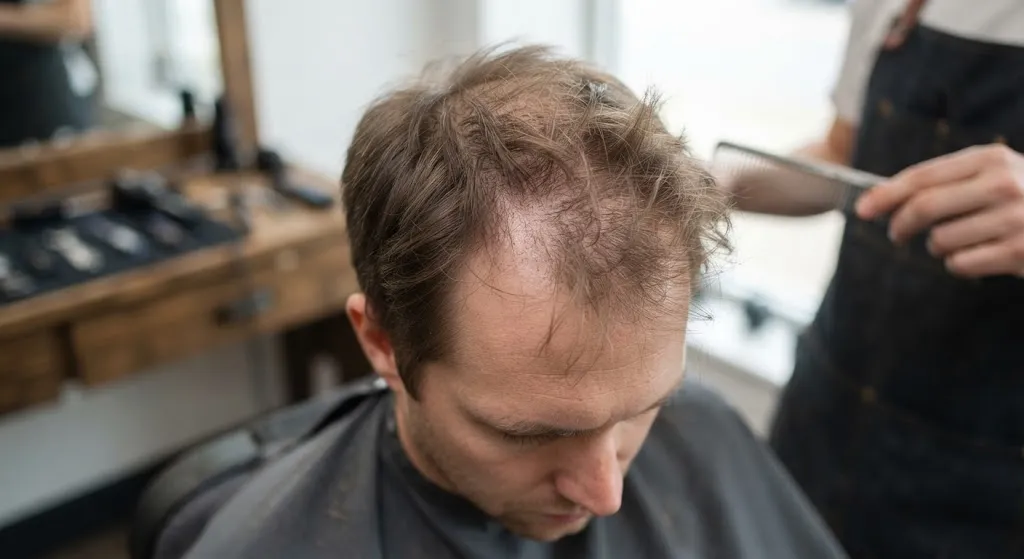
Your barber may use thinning shears to remove bulk from thick hair.
But when your hair is already sparse, removing too much can work against you.
Over-thinning the hair can make individual strands look weaker and reduce the visual density you have left.
Tell your barber that your priority is making the hair appear fuller rather than removing as much bulk as possible.
What to Tell Your Barber So You Get the Right Haircut
Even if you know which haircut you want, communication with your barber matters.
Saying “make it look good” leaves a lot open to interpretation.
Instead, explain what you are trying to achieve.
For example, you could say:
“Keep the sides short but not too high, and add texture on top. I want the haircut to make my hair look fuller.”
You can also tell your barber that you do not want the top aggressively thinned out with scissors.
If your hair is already fine or sparse, this small detail can make a noticeable difference.
A reference photo can also help, but choose your reference carefully.
Do not simply show a photo because you like the hairstyle. Look for someone with a similar hairline, hair density and hair texture.
A haircut can look completely different when performed on thick hair versus fine, thinning hair.
How to Style Thinning Hair to Make It Look Thicker
A good haircut is only part of the equation.
Styling can make a major difference in how your hair looks throughout the day.
The main goal is to create volume, texture and movement without making the hair heavy.
Use Lightweight Products
Matte clay, lightweight styling cream or volumizing powder can be useful because they provide texture without making the hair look overly shiny.
Heavy gels and greasy pomades can cause strands to stick together.
When several thin strands clump into one shiny section, more scalp can become visible.
A matte finish usually gives thinning hair a more natural appearance.
Use a Blow Dryer for Root Volume
A blow dryer can also be surprisingly useful.
Instead of simply pushing the hair flat, use the dryer to lift the roots and direct the hair into a natural position.
You do not need an elaborate styling routine.
A few minutes of controlled airflow can create enough lift to make the hair appear fuller.
The trick is to avoid overheating the hair or aggressively pulling it into an unnatural shape.
Keep the Finish Natural
Perfectly flat, perfectly combed hair is not always the best option for thinning hair.
A slightly messy or naturally textured finish can create more movement and prevent the scalp from becoming the main focus.
You want the hairstyle to look like hair—not like an attempt to construct a perfect cover.
That subtle difference can make the overall look much more confident.
What Haircut Works at Each Stage of Hair Loss?
Your ideal haircut can change as your hair changes.
A style that looked great when your hair was thick may not be the best choice after several years of thinning.
There is nothing wrong with adjusting your haircut.
In fact, changing your hairstyle as your hair density changes is often the smartest approach.
Mild Thinning
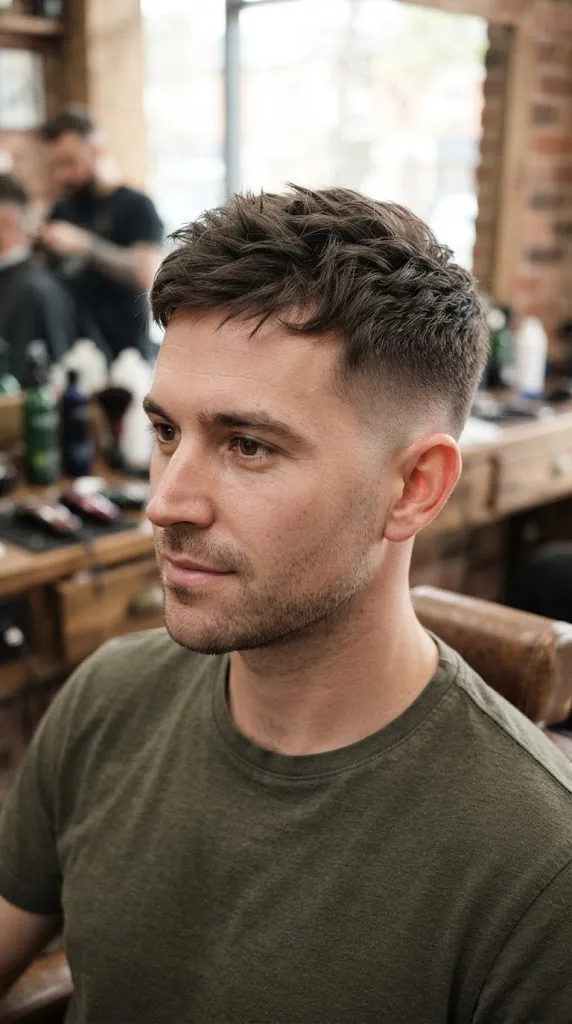
When thinning is still mild, you have plenty of options.
An Ivy League, textured crop or short textured style can give you shape while maintaining a natural appearance.
At this stage, the goal is usually to preserve as much visual volume as possible without making the hairstyle look artificial.
Moderate Thinning
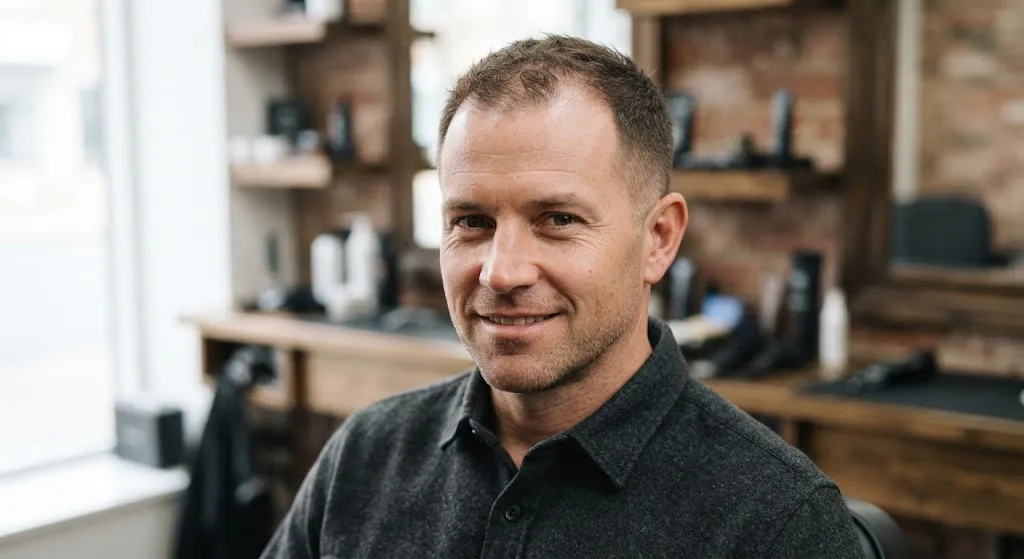
As thinning becomes more noticeable, shorter styles generally become easier to manage.
A crew cut, short textured crop or short taper can create a more consistent appearance.
The shorter the hair becomes, the less opportunity there is for individual strands to separate and expose large areas of scalp.
You can still have personality and style. You simply want the haircut to work with the amount of density you currently have.
Advanced Thinning

When thinning becomes advanced and bald spots become more visible, trying to maintain a longer hairstyle may become more difficult.
At this point, a buzz cut or shaved head can often create a cleaner and more uniform appearance.
It may feel like a big change at first, but many men find that embracing a shorter style looks much better than constantly trying to disguise increasingly visible bald spots.
A very short haircut can also make hair loss look like a deliberate grooming choice rather than something you are trying to fight.
How to Pick the Right Haircut for Your Situation
If you do not want to overthink the decision, use your current level of thinning as a starting point.
Slight thinning
Try a textured crop or Ivy League.
These styles give you shape while allowing you to maintain some length and natural volume.
Mild to moderate thinning
Consider a crew cut or short textured haircut.
These styles are easy to maintain and help keep the overall appearance balanced.
Noticeable thinning
A short textured style or moderate taper can help reduce the contrast between the sides and top.
The key is avoiding an unnecessarily dramatic fade.
Advanced thinning
A buzz cut or shaved head may be the cleanest option.
Rather than attempting to cover every sparse area, you create an even appearance across the scalp.
The Most Important Rule: Work With Your Hair, Not Against It
There is a temptation to treat thinning hair like a problem that must be hidden.
But that mindset can lead you toward complicated hairstyles that require constant maintenance.
Instead, think about what your hair naturally does well.
If your hair is fine, keep it controlled.
If the crown is thinning, avoid styles that separate heavily around the crown.
If your temples are receding, choose a shape that balances your forehead instead of exposing the recession dramatically.
And if your overall density has decreased significantly, do not be afraid to go shorter.
The best haircut is not necessarily the one that gives you the most hair.
It is the one that makes the hair you do have look intentional, balanced and natural.
Final Thoughts
Thinning hair does not mean you have to give up on looking sharp.
It simply means you need to be more thoughtful about your haircut.
The biggest mistake is choosing a hairstyle based solely on what looks good on someone else. Hair density, hairline, texture and face shape all affect the final result.
Instead of trying to completely hide hair loss, focus on reducing contrast, creating texture and keeping the overall shape balanced.
For mild thinning, a textured crop or Ivy League can work well. For moderate thinning, a crew cut or short textured style can be a practical choice. When thinning becomes more noticeable, a short taper or textured haircut can help maintain balance. And for advanced hair loss, a buzz cut or shaved head can create a clean, even appearance.
Your styling routine matters too.
Use lightweight, matte products rather than heavy, greasy products. Add a little volume with a blow dryer, and avoid making the hair perfectly flat or overly polished.
Most importantly, talk to your barber.
Explain that your goal is to make your hair look fuller and more natural, and ask them not to aggressively thin out hair that is already fine.
There is no single haircut that works for every man with thinning hair. The right choice depends on where you are losing density and how much hair you currently have.
The goal is simple: choose a haircut that works with your hair instead of constantly fighting against it.
When you find that balance, thinning hair becomes much easier to manage—and you can still have a haircut that looks clean, modern and confident.