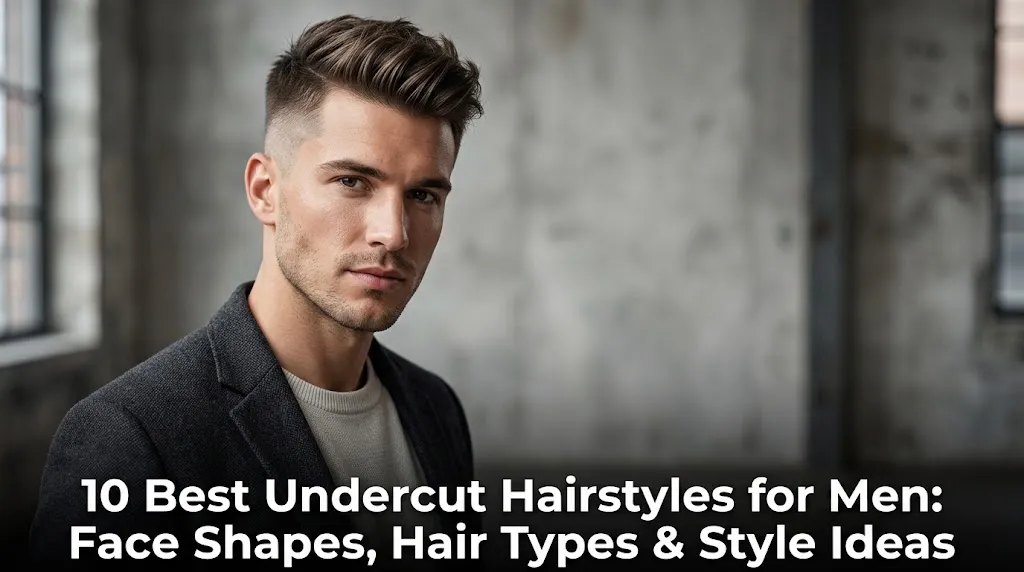
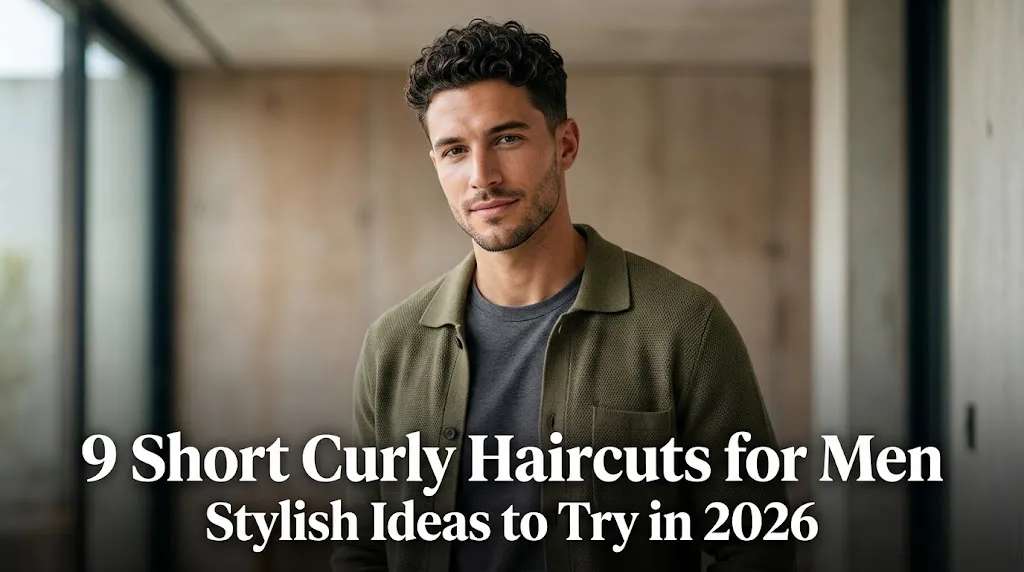
A receding hairline can change the way a haircut looks, even when the haircut itself looks great on someone else. The reason is simple: some hairstyles naturally expose the temples and front of the head more than others.
Long hair, slicked-back styles, and very sharp line-ups can sometimes make recession look more noticeable. They create stronger contrast around the areas where the hair is already getting thinner.
But the right haircut can do the opposite.
A good style can soften the appearance of your hairline, reduce contrast between thick and thin areas, and make the whole haircut look more balanced. You don’t necessarily need to hide your hairline. You just need to choose a style that works with it.
That’s why choosing the right haircut isn’t really about following trends. It’s about understanding what suits your hairline and making the most of what you have.
Read Also : 15 Modern Cornrow Hairstyles for Men: Stylish Ideas to Show Your Barber
How to Choose the Right Haircut for Your Hairline
Before you choose a haircut, take a realistic look at your hairline.
Not every receding hairline looks the same. Some men only have slight recession around the temples. Others have a deeper M-shaped hairline, while some have noticeable thinning across the entire front.
Your haircut should match your current situation.
If your recession is still mild, you have plenty of flexibility. You can keep some length on top and use texture to soften the edges of the hairline.
If your recession is more advanced, shorter hairstyles often become easier to manage. Keeping the hair shorter can reduce the contrast between areas where your hair is thick and areas where it is becoming thinner.
Your hair type also matters.
Thick hair can usually hold texture naturally, while fine hair may need a little help from a blow dryer or lightweight styling product to create volume.
The goal isn’t to completely hide your hairline. In fact, trying too hard to hide it can sometimes make it more obvious.
The better approach is to avoid highlighting it.
Once you understand your hairline, hair density, and hair type, choosing a haircut becomes much easier.
Best Haircuts for a Receding Hairline
There isn’t one haircut that works perfectly for every man with a receding hairline.
However, certain styles work particularly well because they follow the same basic principles: keep the sides controlled, add texture on top, avoid unnecessary exposure around the temples, and keep the front natural.
Here are some of the best options.
1. Textured Crop

A textured crop is one of the easiest hairstyles to recommend when the hairline is starting to recede.
The top is kept short enough to stay manageable but long enough to create texture. Instead of combing the hair straight backward, the hair is directed slightly forward or allowed to fall naturally.
That small change can make a noticeable difference.
Texture breaks up the outline of the hairline. Rather than creating one obvious straight or M-shaped boundary, the individual pieces of hair create a softer transition.
A textured crop can also be adjusted depending on your level of recession. With mild recession, you can keep more length on top. With moderate recession, the entire style can be made shorter and more controlled.
2. Crew Cut
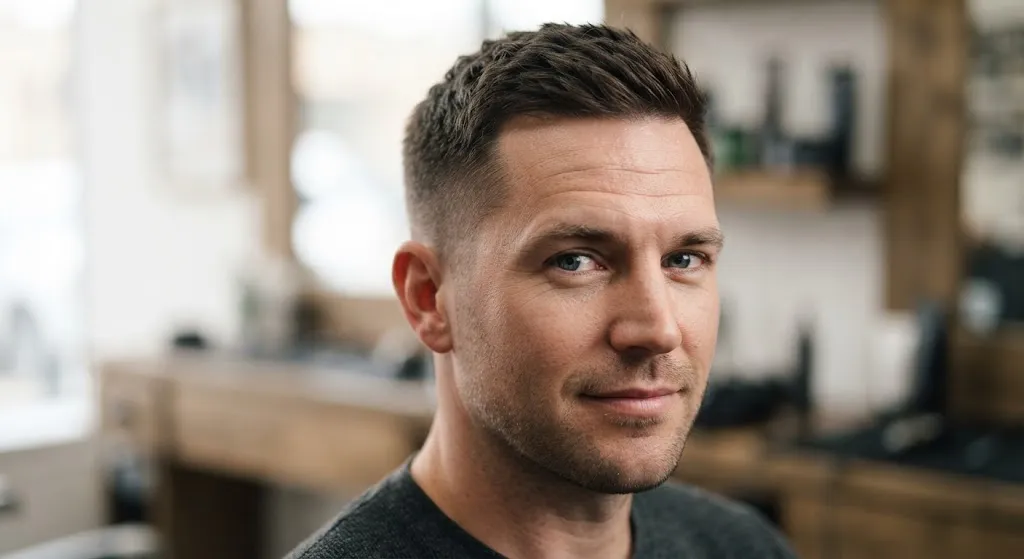
The crew cut is another strong choice, especially if you want something clean and low-maintenance.
It gives you enough length on top to maintain some structure without creating a large amount of hair that needs to be positioned around the hairline.
The sides stay short while the top provides balance.
For men with moderate recession, this can be particularly effective because it doesn’t try to create a completely new hairline. Instead, it allows the natural shape of the hairline to become part of the overall haircut.
You can wear it naturally or add a small amount of matte product for extra texture.
3. Buzz Cut

If your hairline has receded more noticeably, the buzz cut is worth considering.
One of the main advantages of a buzz cut is that it reduces the difference in length between the top and sides.
With longer hair on top, the contrast between thick hair and thinning temples can become very obvious. A buzz cut removes much of that contrast.
It also makes the haircut look intentional.
Instead of spending time every morning trying to position your hair over your temples, you simply have an even, clean style.
A buzz cut isn’t only for men with advanced recession either. If you like the look and feel comfortable with it, it can work at many different stages.
4. Short Fade With Texture on Top
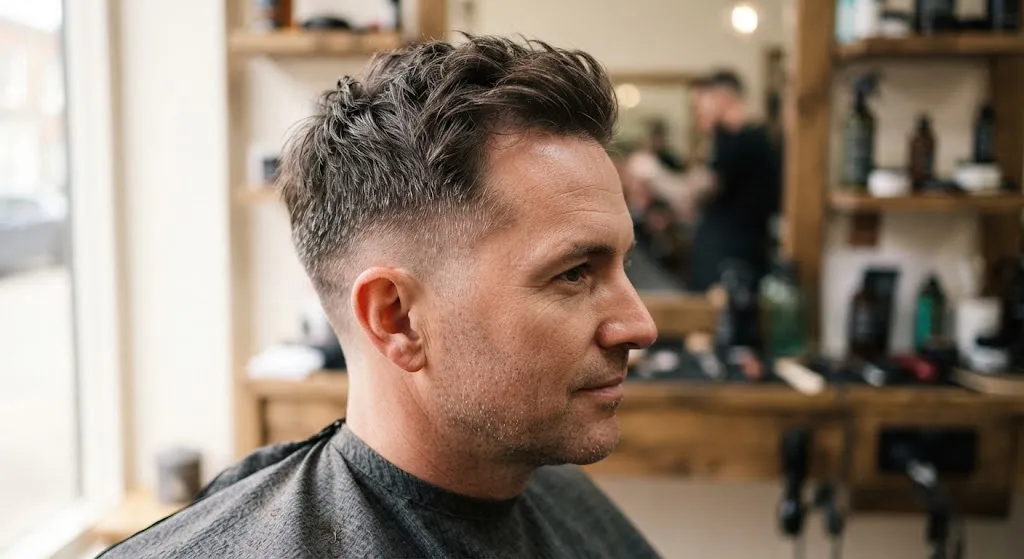
A short fade with textured hair on top is another versatile option.
The short sides create a clean shape around the head, while the textured top gives the eye something else to focus on.
Instead of directing all the attention toward the temples, the texture creates movement across the top of the hairstyle.
The important part is keeping the front natural.
An aggressive line-up can defeat the purpose of the haircut by drawing attention directly to the hairline. A soft front combined with a clean fade usually looks much more natural.
What to Tell Your Barber So You Get the Right Cut
A good haircut can still turn out badly if you don’t explain what you want.
Simply telling your barber, “Give me a short haircut,” doesn’t give them enough information.
Instead, tell them what you want to achieve with your hairline.
For example, you can say:
“Keep the sides short with a low or mid fade, but leave some texture on top. I want the front to look natural rather than having a sharp line-up.”
If you want a crop, you can say:
“Keep the front soft and textured. Don’t make the hairline too straight, and don’t push the corners back.”
If you’re going for a very short style:
“I want it clean and even, but keep the natural shape of my hairline.”
These details can make a huge difference.
You should also be careful about asking for an extremely sharp temple line-up. When the barber pushes the corners backward to create a cleaner shape, the recession can actually become more obvious.
Your natural hairline doesn’t have to be perfectly straight to look good.
Sometimes a natural, slightly irregular edge looks much better.
How to Style Your Hair So Your Hairline Looks Better
Even the right haircut can look different depending on how you style it.
One of the biggest mistakes men with thinning hair make is using too much shiny or heavy product.
When hair becomes wet-looking and separated, the scalp can become easier to see. That can make thinning areas appear more noticeable.
Instead, matte products are usually a better choice.
A lightweight clay or paste can give your hair texture without making it look greasy or overly shiny.
The goal is to make the hair look natural.
Style the Hair Slightly Forward
If your temples are receding, pushing all your hair backward exposes them.
Try directing the hair slightly forward or diagonally instead.
You don’t need a dramatic fringe. Even a little movement toward the forehead can soften the overall appearance.
Add Volume With a Blow Dryer
If your hair is fine, a blow dryer can help create volume without adding too much product.
Start with damp hair and use your fingers to lift the roots while drying. You can direct the hair slightly forward or upward depending on the haircut.
Once it’s dry, use a small amount of matte product and work it through the hair with your fingertips.
Don’t Overdo It
You don’t need to spend twenty minutes arranging every strand.
A slightly messy, textured hairstyle can actually look fuller and more natural than a perfectly controlled style.
Once you’ve created the shape, leave it alone.
Haircut Mistakes That Make a Receding Hairline Look Worse
Sometimes knowing what not to do is just as important as knowing what works.
Some hairstyles can make a receding hairline much more obvious because they expose the temples or create too much contrast.
Slicked-Back Hair
Slicking the hair completely backward exposes the entire front of your head.
If your temples are already receding, this can make the corners stand out immediately.
If you like longer hair, you don’t necessarily have to cut it short. Try wearing it with natural texture or a looser direction instead of completely slicking it back.
Long Hair
Long hair isn’t automatically wrong for a receding hairline.
However, it can create a stronger contrast between thick areas and areas where the hair is becoming thinner.
If you want to keep your hair longer, make sure the overall shape works with your current density instead of simply growing everything out.
Sharp Line-Ups
A sharp line-up creates a very strong visual boundary.
That can look great with a naturally dense hairline, but with temple recession it can draw attention to the exact areas you’re concerned about.
A softer edge can be much more forgiving.
Hard Parts
A shaved hard part adds another strong line to the hairstyle.
It isn’t necessarily a bad choice, but when combined with a receding hairline, it can make the haircut look more structured around the forehead than necessary.
A natural side part is often easier to blend.
Trying to Draw a New Hairline
This is one of the biggest mistakes.
Trying to force a perfectly straight hairline over an M-shaped or receding hairline can make the haircut look artificial.
You don’t need to recreate the hairline you had years ago.
The goal is to make your current hairline look natural.
Final Thoughts
There is no single haircut that will work for every man with a receding hairline.
The best choice depends on how far your hairline has moved back, how thick or fine your hair is, your natural hair texture, and the amount of styling you’re willing to do.
If your recession is mild, a textured crop or short textured style can soften the temples.
If your recession is moderate, a crew cut, French crop, or short fade can create a cleaner and more balanced appearance.
If your recession is advanced, a buzz cut or another very short style may actually look better than trying to maintain a complicated hairstyle designed to cover the front.
The biggest lesson is simple:
Don’t highlight the area you’re trying to make less noticeable.
Instead of slicking everything backward, create natural movement. Instead of forcing a straight hairline, let the front remain natural. Instead of using heavy products, focus on texture and volume.
Most importantly, choose a haircut that makes you feel comfortable.
A receding hairline may change the way you approach your haircut, but it doesn’t mean you have to stop looking sharp.
Sometimes, the best style isn’t the one that hides your hairline.
It’s the one that makes you stop worrying about it.