That is one reason the French crop has become such a popular men’s haircut.
It is short, practical, modern, and surprisingly versatile. You can keep it neat and structured, give it plenty of texture, pair it with a fade, or let the fringe fall naturally over your forehead. There is also plenty of room to adjust the cut depending on your hair type and the overall look you want.
In this guide, we’re looking at 19 French crop hair ideas for men in 2026, from clean and classic versions to textured, wavy, spiky, and beard-blended styles.
So, if you’re thinking about getting a French crop but aren’t sure which version to choose, keep reading. You may find your next haircut here.
Rad Also : How to Get a NADRA Vaccination Certificate in Pakistan – Complete Guide
What Is a French Crop Haircut for Men?
A French crop is a short men’s hairstyle that generally features short sides and back with a slightly longer top and a forward-facing fringe.
Unlike hairstyles where the hair is pushed backward or lifted upward, the French crop is designed to bring the front of the hair forward. The fringe can be straight, textured, choppy, short, or slightly longer depending on your preference.
The top is usually cut with scissors to create texture and movement. Your barber can remove some weight from the hair without making it look excessively thin, giving the top a more natural appearance.
The sides can be finished in several ways. You can choose a taper, low fade, mid fade, high fade, or even a skin fade if you want stronger contrast.
That flexibility is what makes the French crop interesting.
A simple French crop can look completely different depending on how the barber cuts the fringe, how much texture is added, and how aggressively the sides are faded.
Why Do Men Like the French Crop?
One of the biggest advantages is how easy it can be to maintain.
You don’t necessarily need to spend a long time in front of the mirror every morning. For a casual version, you may only need to use your fingers to arrange the top and fringe.
The fringe can also be useful if you’re not completely comfortable showing your forehead or hairline. Rather than pushing all of your hair away from the face, the crop brings some of the hair forward.
Another advantage is that the hairstyle works across different hair types. Straight hair can look clean and structured, while wavy or thick hair can give the crop more natural texture.
Of course, the right version depends on your individual hair and face shape. Your barber can adjust the length, fringe, fade, and texture to make the haircut work better for you.
Now let’s look at some of the most interesting French crop variations you can consider.
1. Structured French Crop
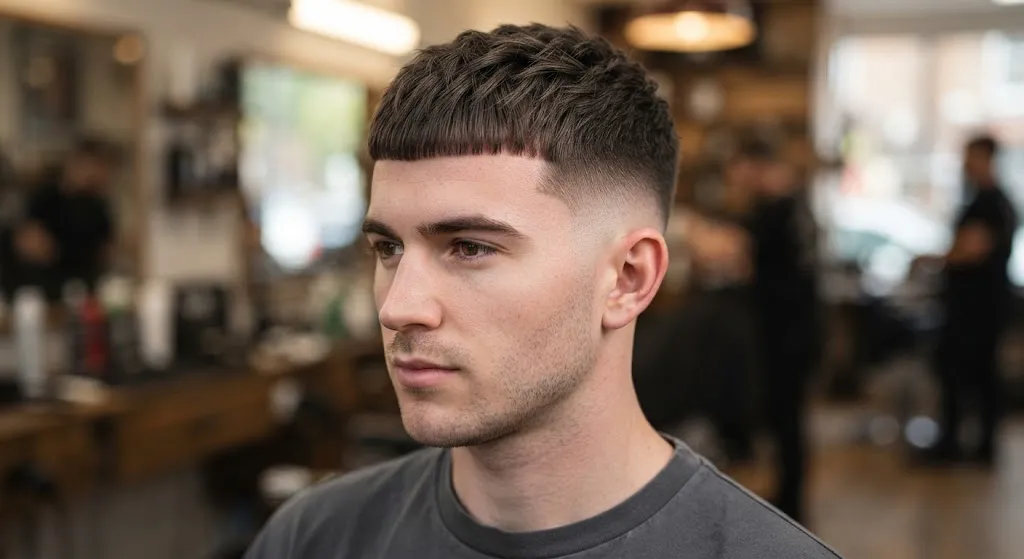
If you like your haircut to look polished without becoming overly formal, the structured French crop is a great direction to consider.
This version keeps the top relatively controlled while still allowing enough texture to prevent the hair from looking flat. The sides are usually finished with a clean mid fade, creating a noticeable but balanced contrast.
The fringe is kept compact and sits naturally toward the forehead.
What makes this haircut appealing is its balance. It doesn’t have the extremely messy appearance of some textured crops, but it also doesn’t look overly styled.
You could wear it to work, a dinner, a casual outing, or even a formal event without feeling like your haircut is out of place.
Ask your barber for: a short textured top, compact fringe, and a clean mid fade.
2. Textured Crop Blend
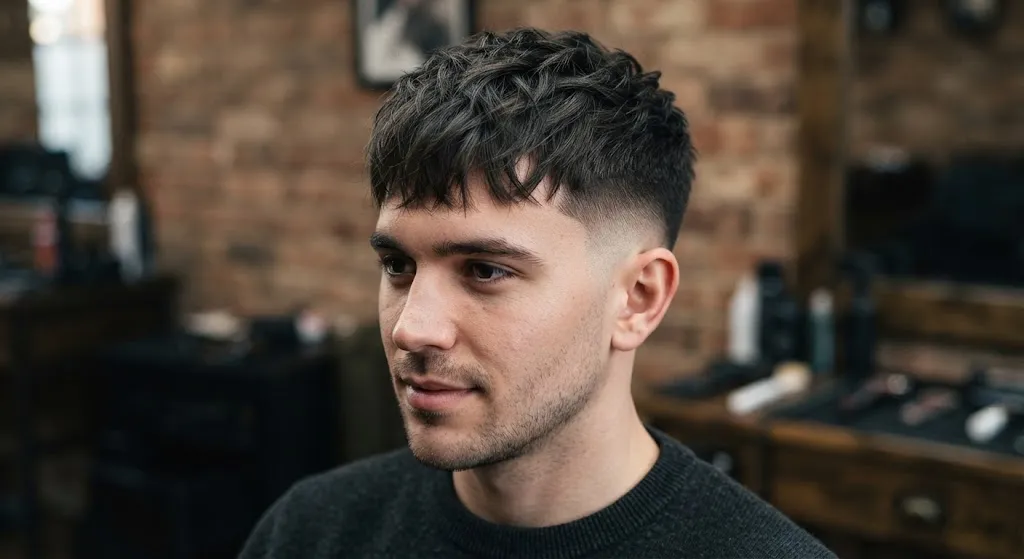
The textured crop blend is for men who want their haircut to have movement.
Instead of making the top perfectly smooth, the barber creates small layers and separation throughout the hair. This allows individual sections to sit slightly differently, producing a natural textured effect.
The sides are blended softly into the top rather than creating an extremely dramatic contrast.
This can be especially attractive if you have naturally thick hair because texture can help prevent the top from appearing too heavy.
The result is relaxed but still clean.
Ask your barber for: a softly blended fade with a textured, layered top and natural fringe.
3. Disconnected Crop Fade
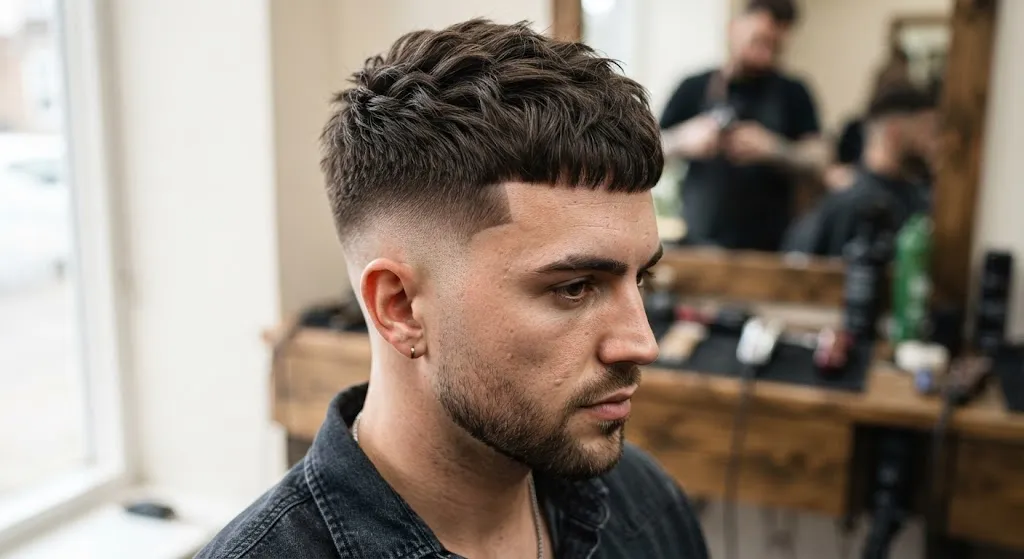
If subtle isn’t really your thing, the disconnected crop fade gives the French crop a much stronger personality.
This style relies on contrast.
The textured top is visually separated from the much shorter sides, sometimes with a clearly defined line or hard disconnect. Below that, the sides can transition into a tight skin fade.
The short fringe keeps the haircut recognizable as a crop, while the disconnect adds a more dramatic element.
This is the type of haircut that looks particularly sharp when the fade is freshly done.
Keep in mind that a high-contrast fade usually requires more frequent barber visits if you want to maintain the crisp appearance.
Ask your barber for: a textured crop, short fringe, hard disconnect, and tight skin fade.
4. Loose Fringe Crop
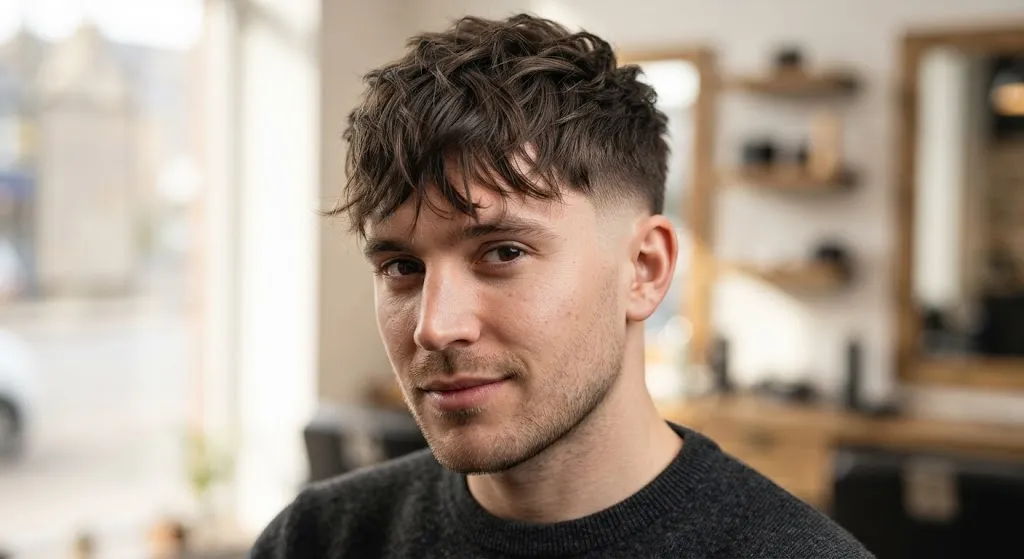
The loose fringe crop has a more relaxed personality.
Instead of cutting the fringe into a perfectly straight horizontal line, the barber leaves additional length so the hair can naturally fall across the forehead.
This makes the haircut feel softer and less rigid.
The sides can still have a fade, but the overall appearance isn’t as sharp as a high skin fade crop. The combination of a relaxed fringe and clean sides gives you something that feels modern without appearing overly manufactured.
This can be a good choice if you prefer hairstyles that look natural rather than perfectly arranged.
Ask your barber for: extra length around the fringe, light top texture, and a soft fade.
5. Sharp Fade Crop
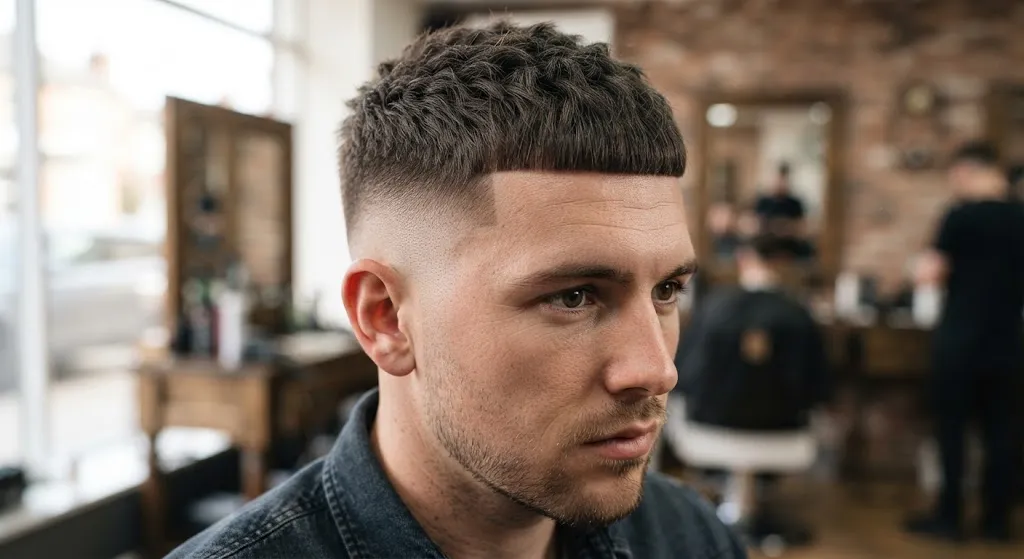
The sharp fade crop is built around clean lines and strong contrast.
The sides are faded tightly, often reaching the skin near the lower portion of the fade, while the top remains compact and textured.
The fringe is usually more controlled than the loose fringe styles, giving the haircut a defined front edge.
If you like your haircut to look fresh and precise immediately after leaving the barber, this variation is worth considering.
The great thing is that the top doesn’t need excessive styling. The fade and shape of the crop already provide much of the visual impact.
Ask your barber for: a high skin fade, compact textured top, and clean straight fringe.
6. Clean Skin Crop
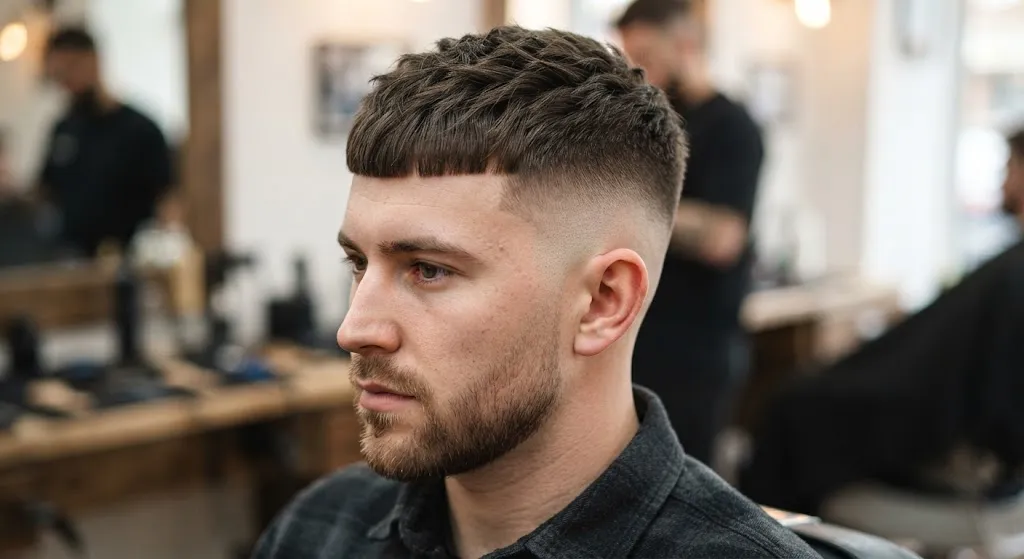
The clean skin crop takes the contrast even further.
The sides are shaved extremely close while the top remains short, dense, and textured. Because the sides are so clean, the eye naturally focuses on the top and fringe.
This can create a very crisp appearance, particularly if you have naturally dense hair.
The fringe doesn’t need to be long. In fact, a short fringe often works better with this style because it keeps the entire haircut compact.
It is also a hairstyle that can look especially fresh with a clean neckline and well-defined sideburn area.
Ask your barber for: a high skin fade, compact textured top, short fringe, and clean neckline.
7. Textured Fringe Crop
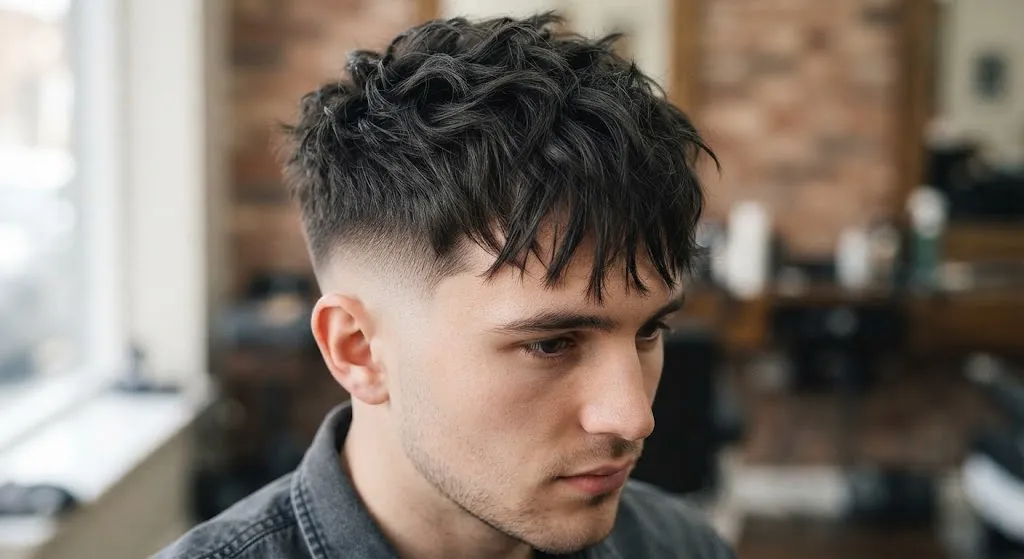
A textured fringe can completely change the character of a French crop.
Instead of having a perfectly straight front edge, the fringe contains small variations in length. Some strands sit slightly higher while others fall forward.
This creates movement and makes the haircut feel less rigid.
It works particularly well with thick hair because the texture breaks up some of the bulk.
A soft or mid fade can balance the textured top without creating too much contrast.
Ask your barber for: point-cut texture on top, an irregular fringe, and a soft mid fade.
8. Natural Texture Crop
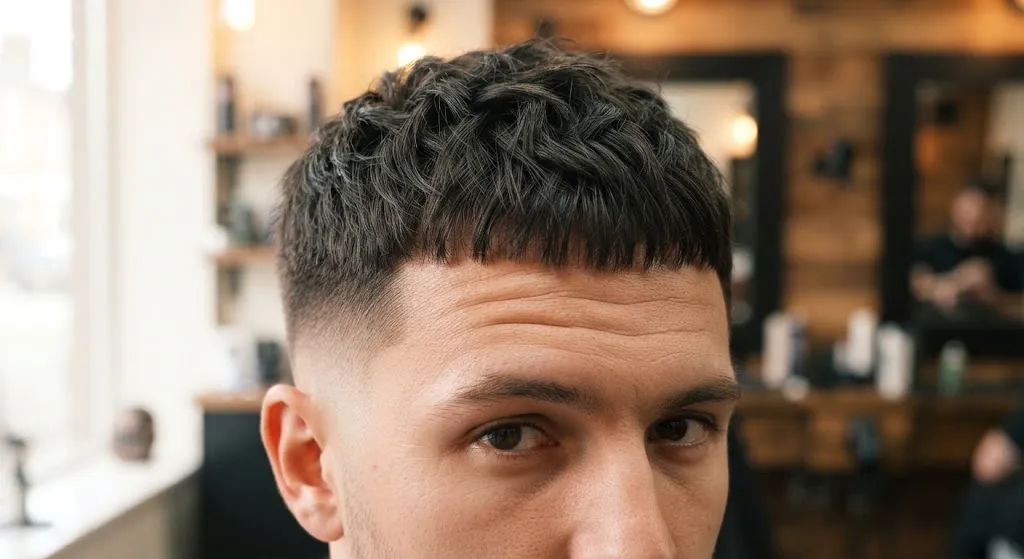
Sometimes the best haircut is the one that doesn’t look like you tried too hard.
The natural texture crop focuses on that exact idea.
The top is given enough texture to create depth, but the styling remains subtle. Instead of using a strong pomade or gel, you can keep the finish matte and natural.
A low fade keeps the sides tidy without creating an aggressive contrast.
This is a particularly good direction if you want something that looks appropriate in everyday situations rather than something designed purely for photographs.
Ask your barber for: light scissor texture, a short fringe, and a low fade.
9. Soft Fade Crop
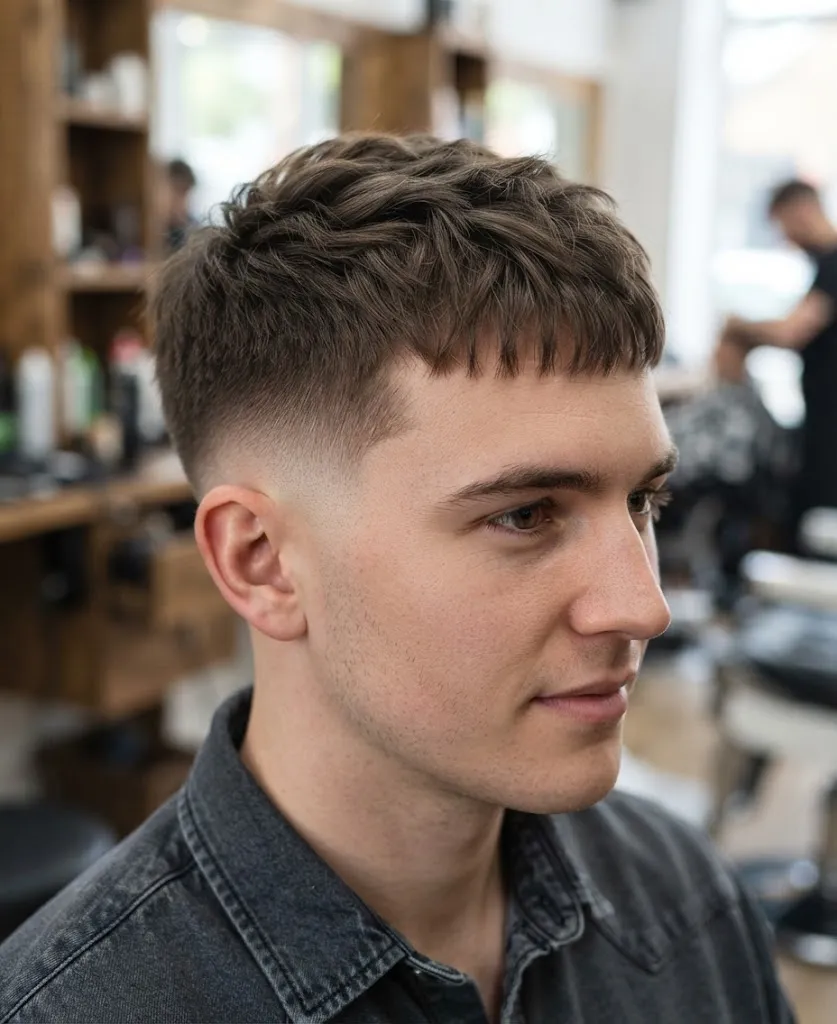
The soft fade crop is ideal if you don’t want your sides to look extremely short.
Instead of jumping quickly from longer hair to skin, the fade gradually transitions through several lengths.
That creates a softer appearance.
The top remains textured and the fringe stays relatively short, but there isn’t a dramatic difference between the top and sides.
This is an easy choice if you want a modern haircut without the sharpness of a high skin fade.
Ask your barber for: a low soft fade, lightly textured top, and neat short fringe.
10. Choppy Texture Crop
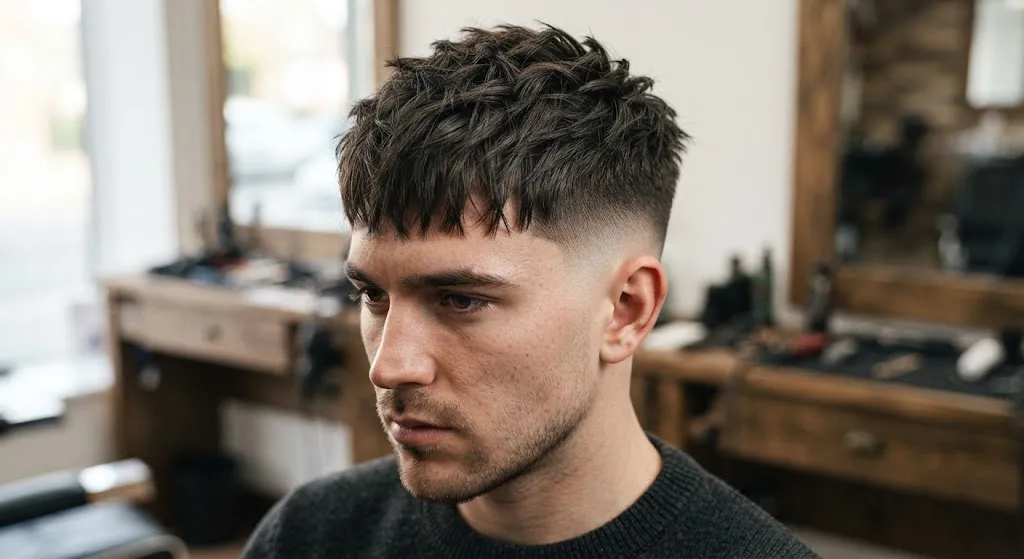
The choppy texture crop is designed to make the top look more energetic.
Rather than having smooth layers, the barber creates noticeable separation throughout the top. The fringe also has an irregular finish.
This prevents thick hair from sitting like one solid block.
A mid fade keeps the sides controlled while the top becomes the main feature.
If you enjoy hairstyles with a slightly messy appearance but still want the haircut to look intentional, this version can give you that balance.
Ask your barber for: point-cut layers, choppy texture, an irregular fringe, and a clean mid fade.
11. Short Fringe Crop
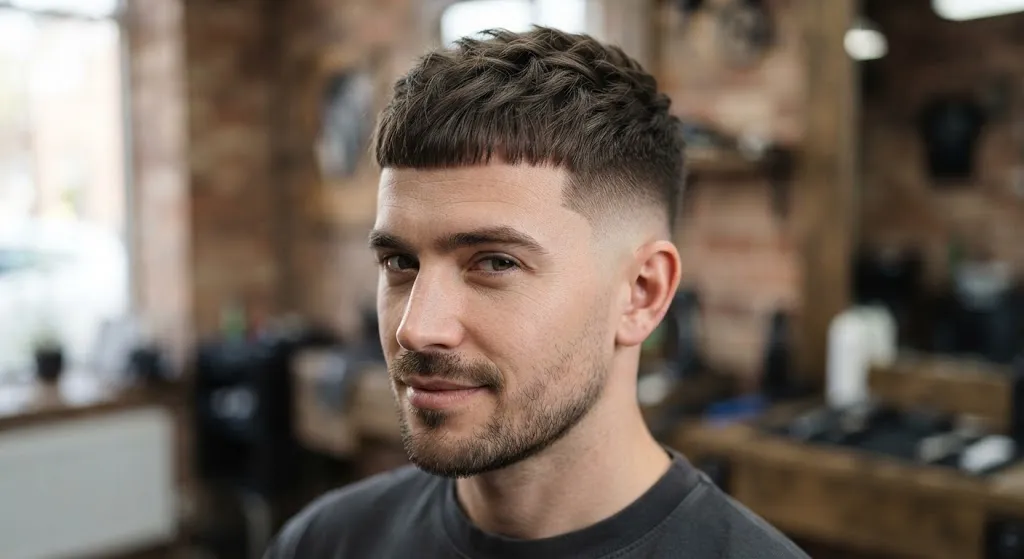
Not everyone wants a long fringe covering the forehead.
The short fringe crop keeps the front compact and controlled.
The fringe sits close to the forehead, while the top remains short enough to make the entire haircut easy to manage.
The sides can be softly faded to keep the haircut balanced.
This is one of those styles that can work particularly well for men who prefer a simple haircut that doesn’t require much styling.
If you wear glasses, the shorter fringe can also help keep the area around your eyes visually open.
Ask your barber for: a short even fringe, short textured top, and soft fade.
12. Kids French Crop
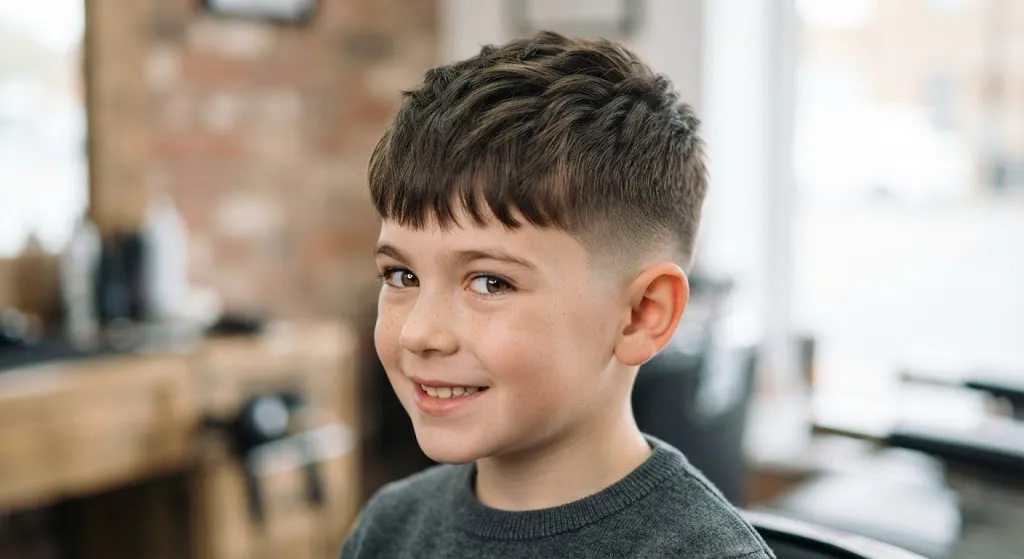
The French crop isn’t only for adults.
A shorter, softer version can work beautifully for boys who need a hairstyle that’s easy for parents to manage.
For a child’s version, the fade doesn’t necessarily need to be extremely high or sharp. A low fade combined with a lightly textured top can create a neat appearance while keeping the haircut age-appropriate.
The fringe can also be softened instead of being cut into a very rigid line.
For younger children, avoiding excessive thinning can help preserve the natural fullness of the hair.
Ask your barber for: a lightly textured top, soft fringe, and low fade.
13. Layered Crop Fade
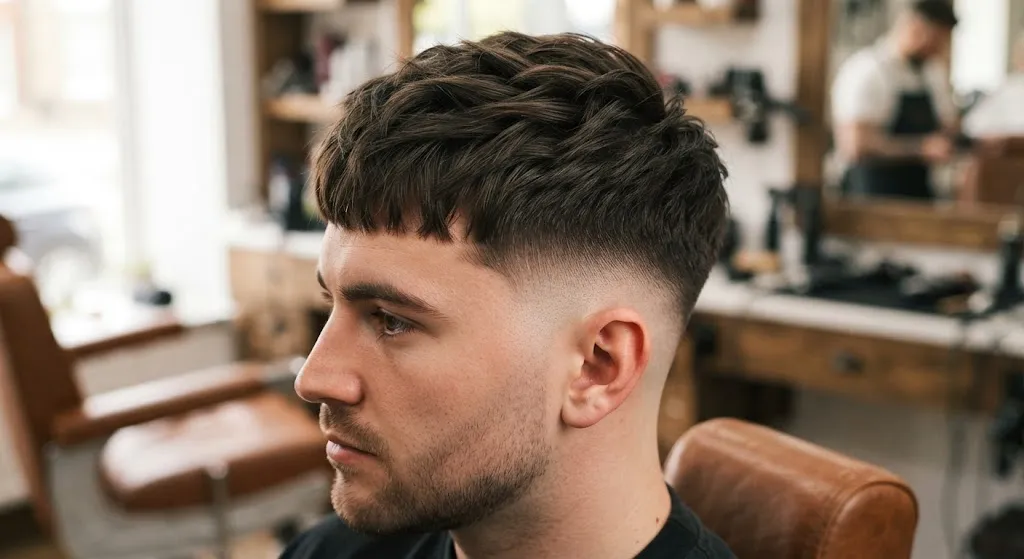
Layers add another level of movement to the French crop.
Instead of keeping the top at one uniform length, the barber creates different lengths that allow the hair to separate naturally.
This is especially useful for thick hair because layers can remove some of the heaviness without making the top look thin.
The mid fade provides a clean foundation underneath the textured layers.
The result is a haircut that looks fuller while still having plenty of definition.
Ask your barber for: layered scissor work on top, natural texture, and a smooth mid fade.
14. Wavy Crop Fade
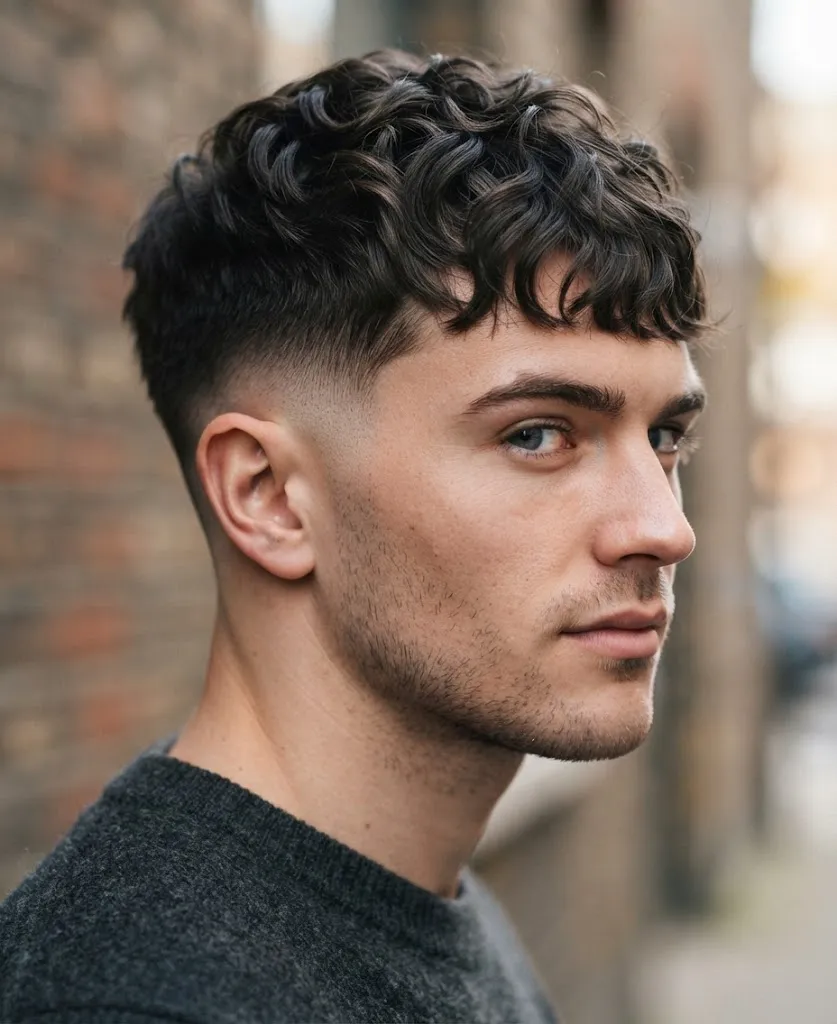
If your hair naturally has waves, don’t assume you need to straighten it to wear a French crop.
A wavy crop can look fantastic because the natural movement gives the hairstyle texture without requiring much product.
The important thing is keeping enough length on top for the waves to form.
The sides can be faded from low to high depending on how much contrast you prefer.
Avoid asking your barber to remove too much weight from naturally wavy hair because excessive thinning can sometimes make the texture behave unpredictably.
Ask your barber for: enough length for natural waves, textured scissor work, and a clean mid-to-high fade.
15. Beard Blend Crop
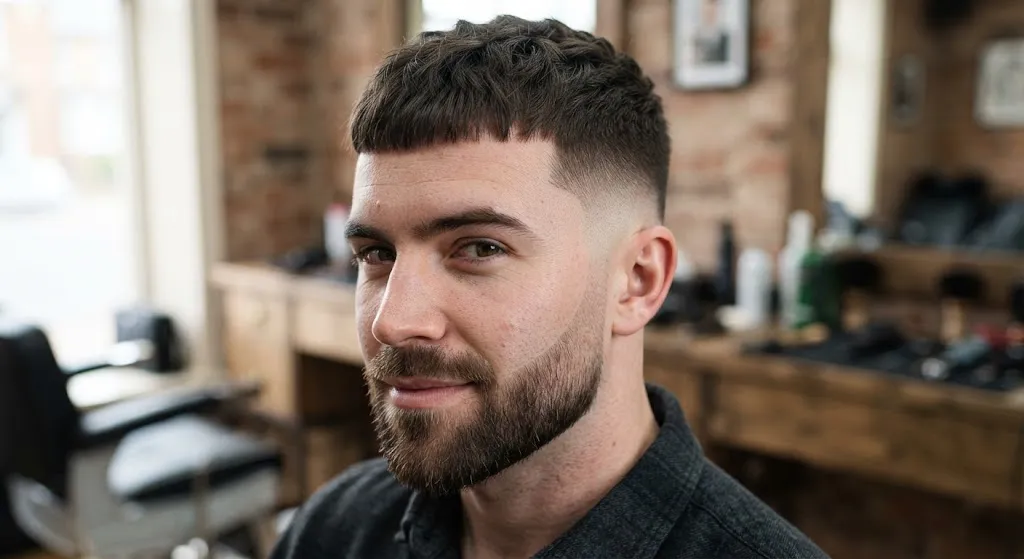
If you have a beard, you don’t necessarily have to treat your haircut and facial hair as separate styles.
A beard blend crop connects the two.
The fade gradually transitions into the sideburn and beard area, creating a continuous visual line from the hair down toward the jaw.
The top stays relatively structured with a short textured fringe.
This style can create a particularly polished appearance because there aren’t obvious gaps between the haircut and beard.
Ask your barber for: a mid skin fade that blends naturally into the beard, short fringe, and lightly textured top.
16. Feathered Crop Fade
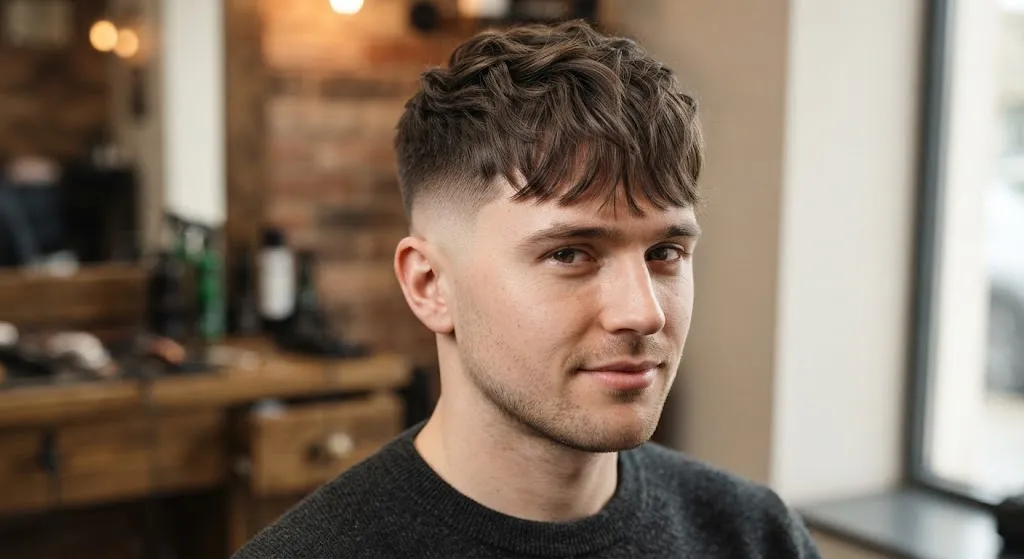
Feathered texture gives the French crop a softer appearance.
Rather than creating chunky or sharp pieces, the barber uses gentle scissor work to create light layers that separate naturally.
The fringe can have a slightly feathered edge as well.
A clean mid fade underneath prevents the overall hairstyle from becoming too soft.
This can be a great middle ground if you like texture but don’t want the exaggerated appearance of a heavily choppy crop.
Ask your barber for: feathered scissor texture, gentle layering, a natural fringe, and a smooth mid fade.
17. Spiky Texture Crop
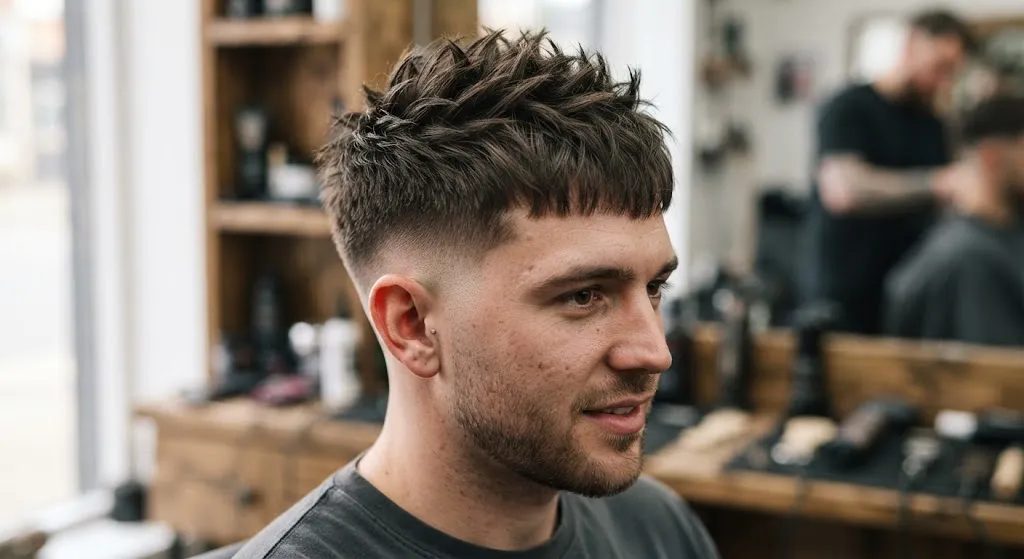
The French crop doesn’t always have to lie flat.
You can give the textured top some height and turn it into a subtle spiky crop.
The trick is not to make the spikes look stiff or overly gelled.
Short textured layers combined with a small amount of matte clay can create separation while maintaining a natural finish.
This style tends to work especially well with thick hair that naturally holds its shape.
Ask your barber for: short textured layers, a compact fringe, and enough length on top to create subtle spikes.
18. Textured Fringe Crop
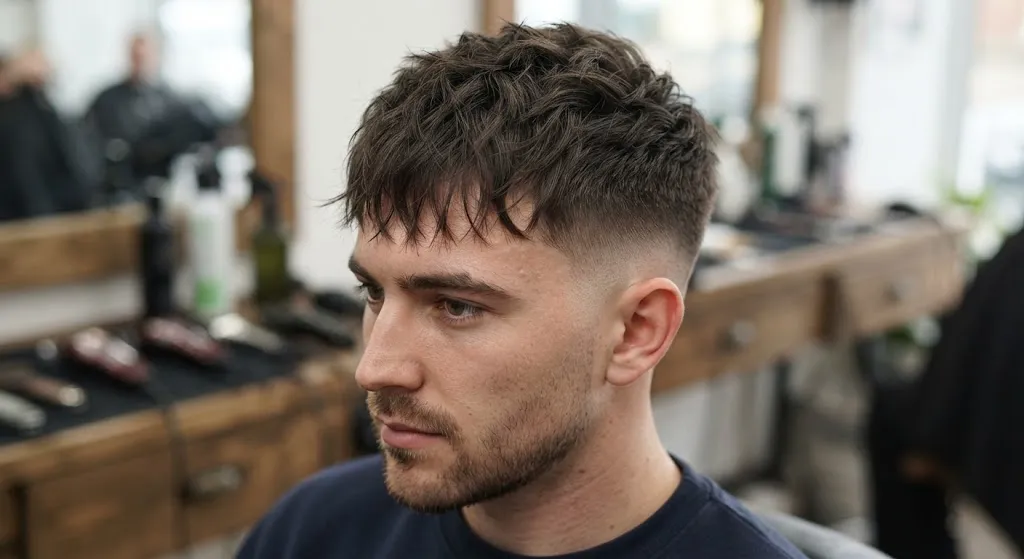
This version focuses heavily on the fringe.
The front is given enough texture to create a slightly irregular appearance, while the top remains fuller and relaxed.
A low fade keeps the sides neat without taking attention away from the fringe.
It is a useful choice if you want something that looks modern but doesn’t feel overly sharp.
As the haircut grows out, the softer fade and textured fringe can also make the transition feel less severe.
Ask your barber for: light point-cut texture, fuller top, textured fringe, and a soft low fade.
19. Clean Fringe Crop
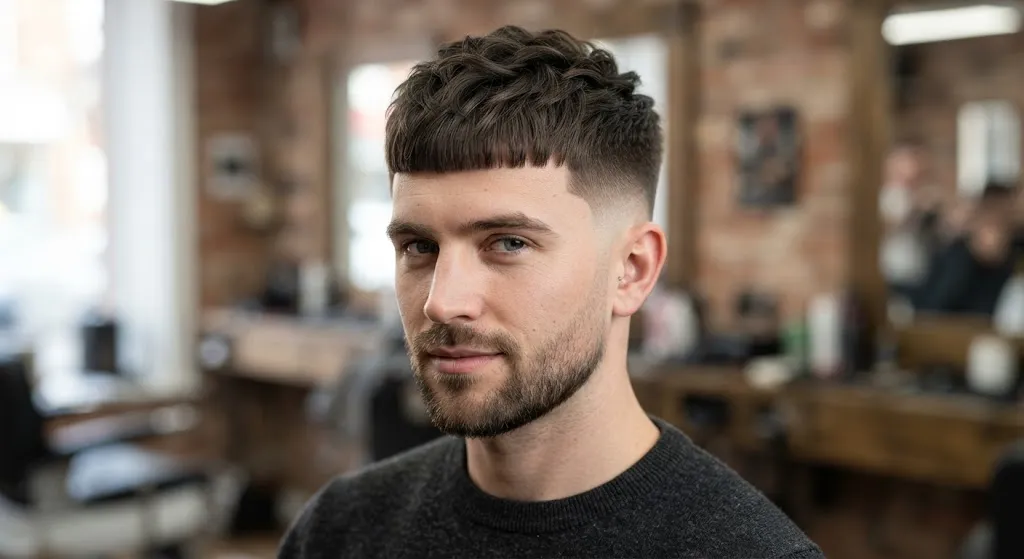
The clean fringe crop brings everything back to simplicity.
The fringe is short, tidy, and relatively straight, while the top remains slightly textured.
The sides are usually finished with a low fade, creating enough contrast to keep the haircut modern without making it extremely dramatic.
If you prefer hairstyles that have a clear shape and don’t require complicated styling, this can be a very practical option.
It also grows out in a relatively straightforward way because the haircut isn’t dependent on an exaggerated amount of texture or length.
Ask your barber for: a compact straight fringe, lightly textured top, and smooth low fade.
How to Choose the Right French Crop for Your Hair
Seeing 19 hairstyles can actually make choosing harder.
The best approach is to think about your hair type, styling habits, and how much maintenance you’re willing to do.
If You Have Thick Hair
Thick hair gives you plenty of options.
You can experiment with choppy texture, layered crops, wavy crops, or spiky versions.
The important thing is controlling the weight. Ask your barber to create texture and remove bulk strategically rather than simply thinning everything aggressively.
If Your Hair Is Fine or Thin
A shorter French crop can sometimes make fine hair appear more compact.
Instead of keeping the top long and allowing the hair to separate into thin sections, a cropped top keeps the overall shape together.
Texture should be subtle, though. Too much thinning can make already-fine hair appear less dense.
A short fringe can also provide additional coverage around the front.
If Your Hair Is Naturally Wavy
Work with the wave instead of fighting it.
Leave enough length on top for your natural texture to appear, and ask the barber not to over-thin the hair.
A wavy French crop can look much more interesting than a completely straightened version because the texture comes naturally from your hair.
If You Want Very Low Maintenance
Look toward styles such as:
- Short Fringe Crop
- Clean Fringe Crop
- Natural Texture Crop
- Soft Fade Crop
These styles don’t depend heavily on elaborate styling.
If You Want a Bold Haircut
Consider:
- Disconnected Crop Fade
- Sharp Fade Crop
- Clean Skin Crop
- Spiky Texture Crop
These versions create more contrast and tend to look especially striking when freshly cut.
How to Tell Your Barber Exactly What You Want
One of the easiest ways to avoid disappointment is to stop describing the haircut using only its name.
“Give me a French crop” can mean several different things.
Instead, explain the haircut in three parts:
1. The top
Tell your barber whether you want the top short, layered, choppy, feathered, wavy, or heavily textured.
2. The fringe
Explain whether you want the fringe short, straight, irregular, loose, or longer across the forehead.
3. The sides
Tell your barber whether you prefer a low fade, mid fade, high fade, taper, or skin fade.
For example, you could say:
“I want a short textured French crop with a slightly irregular fringe and a low fade. Please keep enough weight on top so it doesn’t look too thin.”
That gives your barber much more useful information than simply saying “French crop.”
And whenever possible, bring a reference photo.
A photo gives your barber an immediate idea of the proportions, texture, fringe length, and fade you’re imagining.
How to Style a French Crop
One of the best things about the French crop is that styling doesn’t have to be complicated.
Start with slightly damp or completely dry hair, depending on the product you’re using.
For a natural appearance, take a small amount of matte clay or paste and work it through the top with your fingertips.
Don’t flatten everything.
Instead, pinch small sections of the hair to bring out the texture.
For a messy crop, move your fingers in different directions and allow the fringe to fall naturally.
For a cleaner look, use your fingers or a comb to arrange the fringe into a more consistent shape.
The main thing to remember is less product is usually better.
Too much gel or pomade can make a textured crop look heavy and greasy, which takes away from the natural movement that makes the hairstyle appealing.
How Often Should You Get a French Crop Trimmed?
The answer depends on how short your fade is and how precise you want the haircut to remain.
A skin fade will usually show growth sooner than a low taper or softer fade.
If you like a very crisp appearance, you may want to visit your barber more frequently.
If you don’t mind a slightly grown-out appearance, you can wait longer.
The top may also need occasional trimming to keep the fringe and texture under control.
Your barber can recommend a schedule based on how quickly your hair grows and how sharp you want the style to look.
Frequently Asked Questions
Can a French Crop Work With Thin Hair?
Yes. A French crop can be a useful option for fine or thinning hair because the shorter top keeps the hair more compact.
A textured cut can also create the appearance of movement and fullness.
However, the haircut cannot change your actual hair density. The goal is simply to use the existing hair more effectively.
If your hair is fine, ask your barber not to over-thin the top.
Is a French Crop Easy to Maintain?
Generally, yes.
The hairstyle is relatively short, and many versions can be styled with just a small amount of matte product.
The amount of maintenance depends heavily on the fade. A skin fade may require more frequent visits to keep its sharp appearance, while a softer taper can grow out more gradually.
Can You Get a French Crop With Curly Hair?
Yes, although the haircut will look different from a straight-hair French crop.
Curly or wavy hair can create a textured and more dimensional version of the style.
The key is leaving enough length on top for the natural curl pattern to develop.
Does a French Crop Hide a Receding Hairline?
The forward fringe can provide some visual coverage around the front of the head.
However, every hairline is different.
A barber can adjust the fringe length and shape to work with your particular hairline rather than trying to force the haircut into a single shape.
What Face Shape Works Best With a French Crop?
There isn’t one face shape that automatically owns the French crop.
The proportions can be adjusted.
For example, the barber can alter the fringe length, fade height, and amount of volume on top to create a shape that works with your features.
This is another reason why showing your barber a reference photo and discussing your hair texture is useful.
Final Thoughts
The French crop is popular for a simple reason: it gives you plenty of room to personalize a short haircut.
You can keep it clean and structured, make it heavily textured, let your natural waves show, connect it to your beard, or go for an extremely sharp skin fade.
And you don’t necessarily need to spend a lot of time styling it every morning.
The trick is choosing the version that fits your hair, your routine, and the amount of maintenance you’re comfortable with.
If you’re still unsure, start with a softer version rather than jumping straight into an extreme fade or dramatic disconnect. Your barber can always make the style shorter or sharper during the appointment, but adding hair back isn’t quite as easy.
Most importantly, take a few reference photos with you.
Find the French crop that comes closest to the look you want, show it to your barber, and then let them adjust the proportions to suit your hair.
Sometimes the best haircut isn’t the exact one in the picture.
It’s the version of that haircut that has been customized specifically for you.