In this guide, I’m sharing 9 kids fade haircut ideas for 2026 that give you plenty of options, from simple and classic cuts to fun, textured, and more modern styles.
Whether your child is getting their first fade or they simply want something new for their next barber visit, you should find an idea here that gives you a much clearer starting point.
Let’s get into it!
Read Also : How to Get a NADRA Vaccination Certificate in Pakistan – Complete Guide
What Is the Best Fade Haircut for Kids?
There isn’t one single fade that is perfect for every child.
The best choice depends on how old your child is, how their hair naturally grows, how short you want the sides, and whether you want a haircut that can grow out without needing frequent trips to the barber.
For younger children, a low fade or taper fade is often an easy place to start. These styles keep the sides and neckline neat without creating an extremely dramatic contrast.
If your child is older and enjoys experimenting with their appearance, you can consider a mid fade, textured fade, or even a skin fade.
You should also think about maintenance.
A very short skin fade can look incredibly crisp when it is fresh, but the contrast becomes noticeable as the hair grows. A low fade or taper can be a little more forgiving, which may be helpful if you don’t want to visit the barber every couple of weeks.
And then there’s personality.
Some kids want a simple haircut that lets them get ready and go. Others want texture, spikes, a part line, or a small design that makes the haircut feel more personal.
The good thing is that you don’t have to make the decision complicated.
Choose the fade first, decide how much length you want on top, and then add details if your child wants them.
Here are 9 styles worth considering.
1. Low Drop Fade
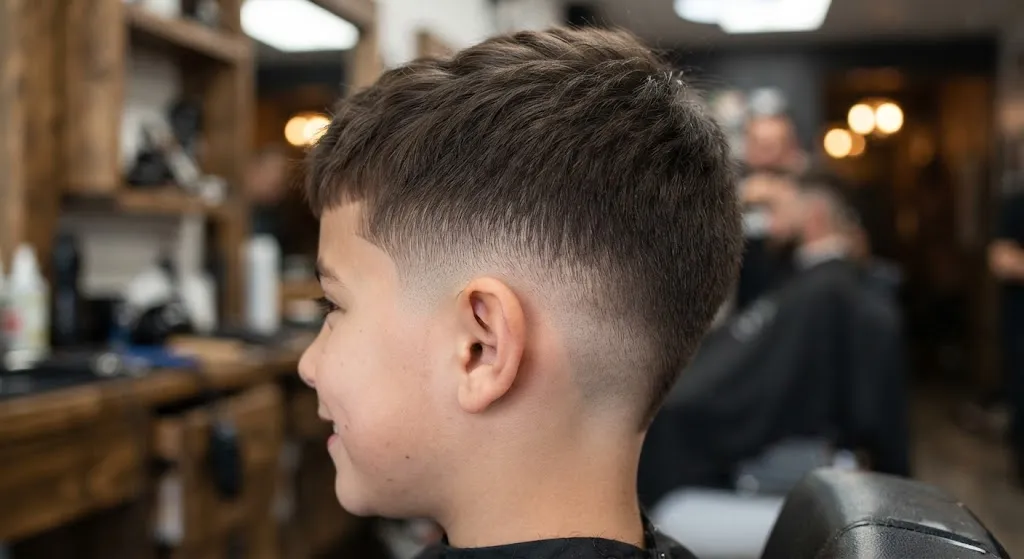
If you want a fade that looks modern without feeling too dramatic, the low drop fade is a great option.
The fade stays relatively low around the ears and drops slightly toward the back of the head. This creates a clean shape while leaving plenty of natural hair on top.
That balance is one of the reasons this style works so well for kids.
You can keep the top short and simple, or leave an inch or two of length if your child has naturally wavy, curly, or textured hair.
The lower fade also means you aren’t taking the sides extremely high, which can make the haircut feel more age-appropriate for younger boys.
What to ask the barber
You can say:
“I’d like a low drop fade around the ears and neckline, but please leave some length on top.”
If you have a particular picture in mind, show it to the barber as well. The word “fade” can mean slightly different things to different people, so a reference photo can make the result much easier to understand.
Why kids can like it
It looks neat without being overly formal, and the top can be styled in several different ways.
You can brush it forward, leave it naturally textured, or use a tiny amount of styling product for special occasions.
For a first fade, this is one of those styles that gives you a modern look without going too far.
2. Textured Low Fade
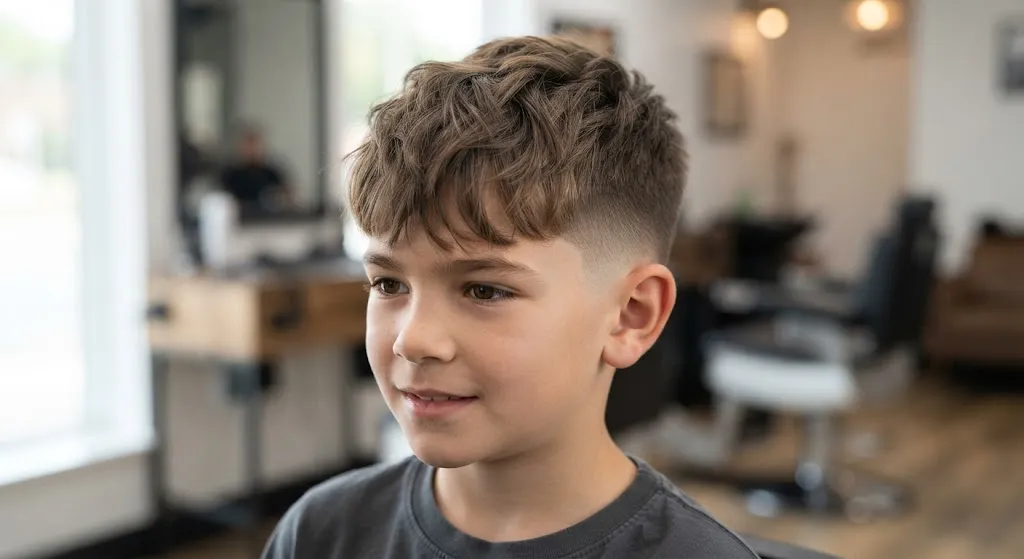
A fade doesn’t have to mean cutting the entire top short.
If your child has thick, wavy, or naturally textured hair, a textured low fade can let you keep some of that natural movement while cleaning up the sides.
The fade stays low around the ears, while the barber uses scissors on top to create texture.
This gives the haircut a softer appearance than some of the sharper fade styles.
You can leave the top slightly messy and natural, or use a small amount of matte styling cream to bring out the texture.
And the best part?
It doesn’t have to look perfectly styled.
Kids are going to play, run around, go to school, and generally be kids. A textured haircut that still looks good when it becomes slightly messy can be much easier to live with.
What to ask the barber
Try saying:
“Keep the fade low and leave some length on top. I want the top textured with scissors and easy to style.”
If your child has curls or waves, ask the barber to work with the natural texture rather than trying to make the hair completely straight or uniform.
Who is it good for?
This style is especially nice for kids with naturally thick or textured hair who want something fashionable without having to spend a lot of time styling it.
3. Classic Taper Fade
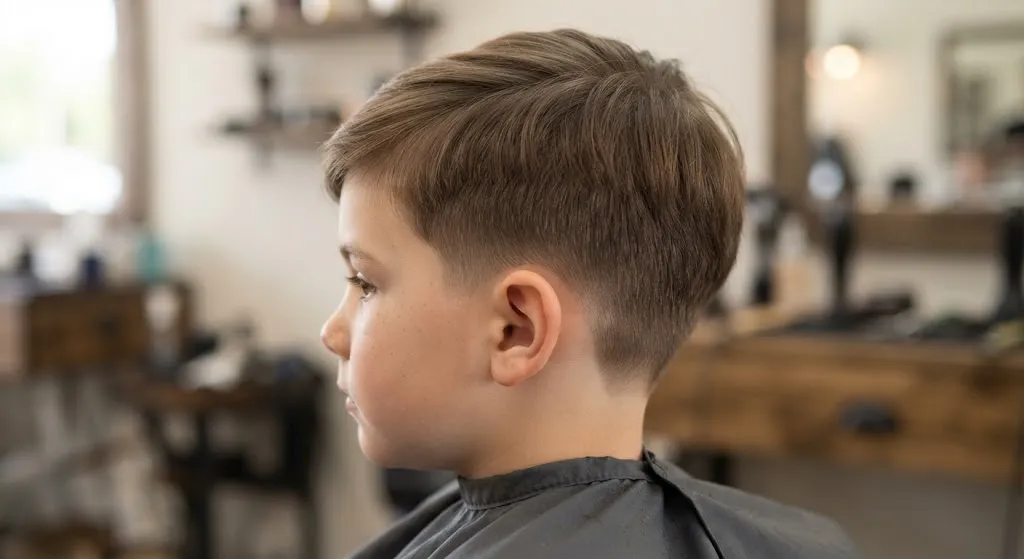
Sometimes, simple really is better.
The classic taper fade is one of the easiest choices if you want your child’s haircut to look clean, natural, and appropriate in almost any setting.
Instead of creating a dramatic fade across a large section of the sides, the taper gradually gets shorter around the ears and neckline.
That gives you a neat finish while allowing the rest of the haircut to keep a softer appearance.
You can leave the top longer and brush it forward, to the side, or simply let it fall naturally.
This makes the taper particularly useful for younger kids who may not want to sit still for complicated styling every morning.
What to ask the barber
You can ask for:
“A low taper around the ears and neckline, with the top left longer and natural.”
You can also ask the barber to keep the transition soft if you want a more subtle look.
Why parents may appreciate it
A taper tends to grow out naturally without the haircut looking completely different after a short period of time.
If you don’t want to schedule frequent barber appointments just to keep a very sharp fade looking fresh, this can be a practical choice.
It is clean enough for school, polished enough for family events, and casual enough for everyday life.
4. Buzz Cut Fade
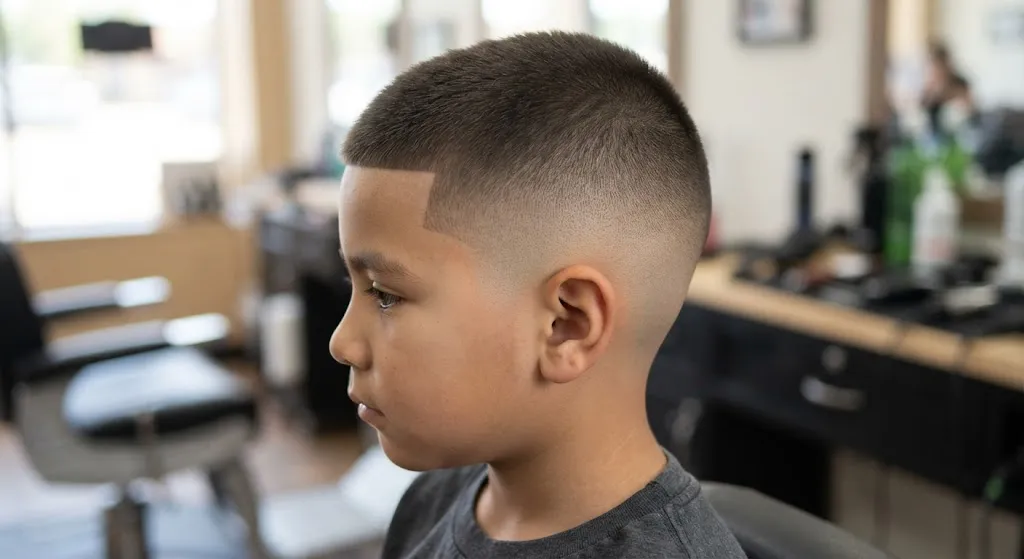
If your child is active and you don’t want to spend time fixing their hair every morning, the buzz cut fade is worth considering.
The hair on top stays short and even, while the sides are faded to create a cleaner outline.
It is simple, practical, and requires very little styling.
That can be especially useful during busy school mornings.
There’s no need to spend several minutes trying to get the top sitting perfectly. A quick brush or even just running your hands through the hair can be enough.
You can also adjust how short the buzz cut is.
A #3 or #4 on top gives you more length, while shorter clipper lengths create a more traditional buzz-cut appearance.
What to ask the barber
You might say:
“I want a short buzz cut on top with a low or mid fade on the sides.”
If your child is very active or plays sports regularly, tell the barber. They can help you choose a length that keeps the haircut comfortable and easy to maintain.
The biggest advantage
It’s easy.
If your child doesn’t enjoy sitting in front of the mirror every morning, a buzz fade gives you a haircut that can look put together with almost no effort.
5. Side Swept Fade
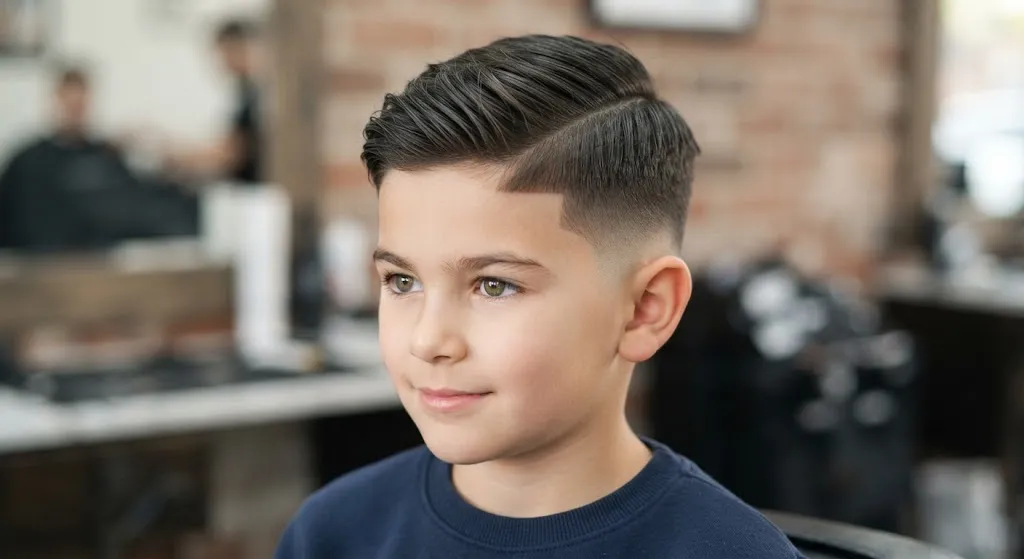
If you want something a little more polished, try a side swept fade.
This style keeps the sides clean with a low fade while leaving enough length on top to sweep the hair toward one side.
It has a classic feel, but the fade keeps it from looking old-fashioned.
You can make the style very neat for school pictures, weddings, birthdays, or family events, or leave the top slightly relaxed for everyday wear.
The amount of styling you use is completely up to you.
A light styling cream can help control the hair without making it look stiff or overly shiny.
What to ask the barber
Tell the barber:
“I’d like a low fade with around two inches of length on top so the hair can be swept to the side.”
If your child has a natural part, the barber can work with it instead of forcing a new part into the haircut.
Why this style stands out
It gives you the neatness of a traditional haircut while still looking modern.
If you’re looking for something that can work for both everyday school days and special occasions, this is a versatile option.
6. Textured Crop Fade
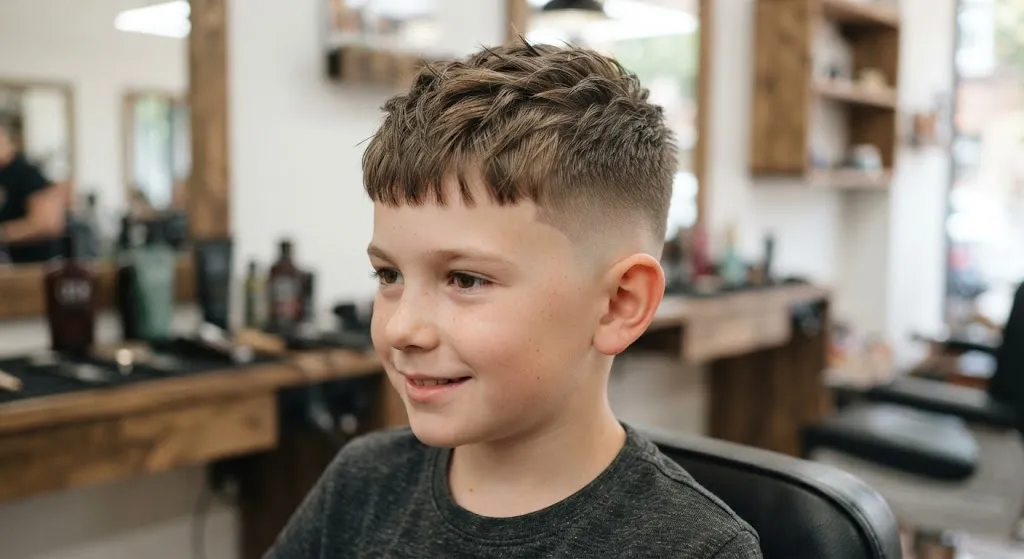
The textured crop fade is a fun choice when you want something modern but not overly complicated.
The sides are cleaned up with a fade, while the top is cut shorter and given plenty of texture.
The front usually has a short fringe that sits naturally across the forehead.
That shorter top makes this style particularly easy to manage.
You don’t need to spend ages combing the hair into position. In many cases, the natural texture does most of the work.
For a slightly more defined finish, you can use a small amount of matte paste.
Just remember that kids usually don’t need a lot of product. A tiny amount is often enough.
What to ask the barber
You can say:
“Give me a low or mid fade with a short textured crop on top and a natural fringe.”
If your child has thick hair, ask the barber to remove some weight from the top while keeping the textured appearance.
Why kids may love it
It has a playful, youthful feel while still looking fresh and tidy.
It’s also a good option for children who don’t want their haircut to look too formal.
7. Spiky Mid Fade
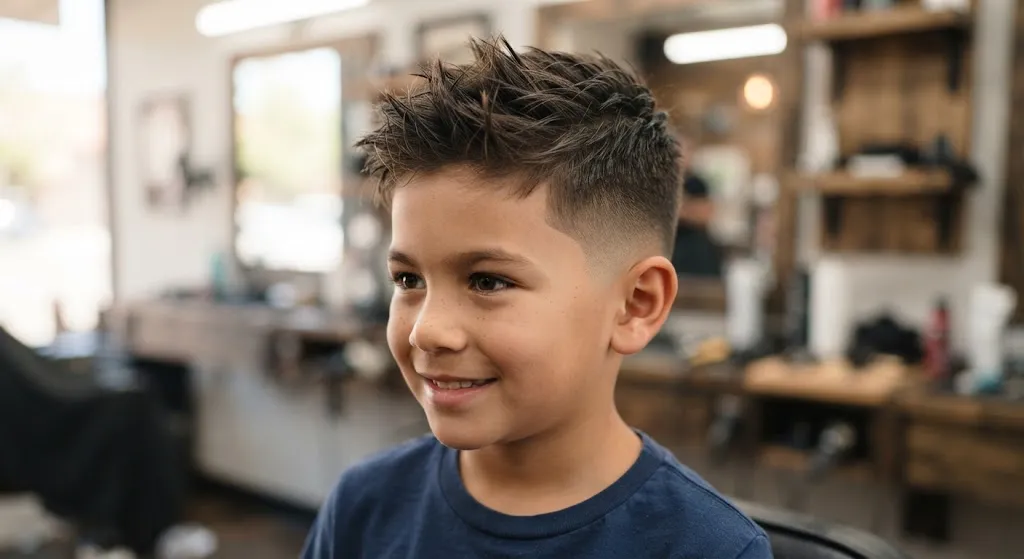
Some kids don’t want a quiet, traditional haircut.
They want something fun.
That’s where the spiky mid fade comes in.
The fade begins around the middle of the sides, creating a noticeable contrast between the shorter sides and longer top.
The top is left long enough to push upward and create texture or spikes.
You don’t necessarily need dramatic, perfectly separated spikes. A slightly messy textured finish can actually look more natural on a child.
What to ask the barber
Try:
“Give me a mid fade and leave enough textured length on top so it can be styled upward.”
The barber can use scissors to add texture to the top rather than leaving it completely one-length.
At home, rub a tiny amount of matte paste between your fingers and work it through the top.
Then simply push the hair upward with your fingers.
Adding a design
If your child wants something more noticeable, you can add a simple shaved line or small design.
However, keep school rules in mind before choosing a design.
A haircut should be fun, but you also don’t want to discover after the barber visit that your child’s school has restrictions on shaved designs.
8. Clean Skin Fade
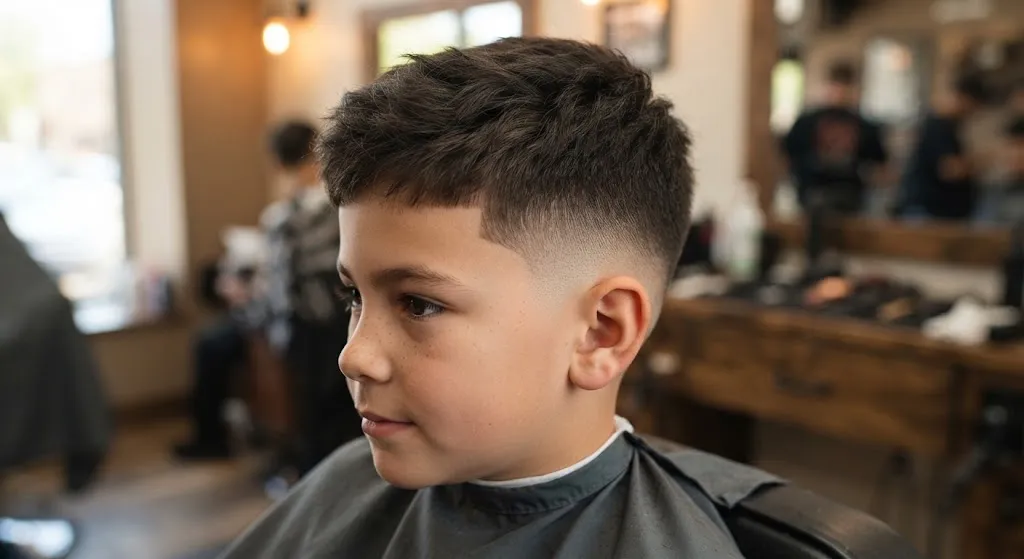
A clean skin fade creates one of the sharpest finishes on this list.
The sides gradually transition from bare skin into longer hair, creating a strong contrast between the sides and the top.
It can look incredibly fresh when it is first cut.
However, this is also one of the styles where you should think carefully about maintenance.
Because the sides are taken down so short, the regrowth can become noticeable relatively quickly.
For older boys who enjoy a sharper haircut and are comfortable with regular barber visits, this can be a stylish option.
For very young children, you may prefer something softer, such as a taper or low fade.
What to ask the barber
You can say:
“I’d like a clean low or mid skin fade, blended smoothly into a few inches of length on top.”
The exact height of the fade can make a big difference, so show your barber a reference photo whenever possible.
Keep the top natural
You don’t have to make the top extremely styled.
A natural textured top can balance the sharpness of the skin fade and make the overall haircut feel more youthful.
9. Messy Top Fade
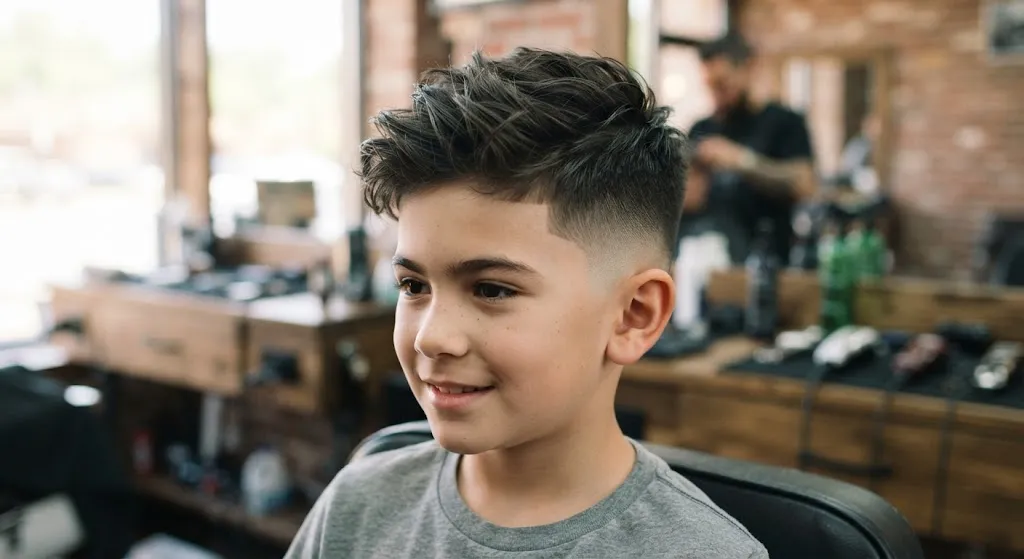
Not every haircut needs to look perfectly combed.
The messy top fade is made for kids who look better with a little natural movement.
The sides are kept neat with a fade, while the top is left longer and textured.
Instead of combing every strand into exactly the same position, you can simply push the hair upward or forward with your fingers.
A small amount of matte styling paste can help create that relaxed, slightly messy appearance.
The goal isn’t to make the hair look untidy.
It’s more about creating a haircut that looks naturally textured rather than overly polished.
What to ask the barber
Try:
“I want a mid or low fade with enough length on top for a messy, textured style.”
Ask the barber to add texture with scissors so the top doesn’t look too heavy.
Why it’s practical
This style works particularly well for kids who don’t want to spend a lot of time getting their hair perfect.
Even when the top becomes slightly messy during the day, it can still look intentional.
How to Choose the Right Fade for Your Child
With so many options, it’s easy to get stuck trying to decide which one to choose.
Instead of focusing only on the name of the haircut, think about these five things.
1. Your Child’s Age
Age doesn’t determine what haircut a child can wear, but it can help guide your choice.
For toddlers and younger children, softer styles such as a low taper, classic taper, or low fade can create a clean look without feeling too mature.
Older children may enjoy experimenting with textured crops, spiky styles, part lines, and sharper fades.
2. Hair Texture
Look at what your child’s hair naturally wants to do.
Straight hair can work beautifully with side-swept styles, comb overs, and slicker looks.
Thick or wavy hair can look great with textured fades.
Curly hair can often benefit from leaving more natural length on top while cleaning up the sides.
Instead of fighting the natural texture, ask the barber to make it part of the haircut.
3. School Rules
This is easy to forget when you’re looking at haircut inspiration online.
Some schools may have rules about very short cuts, shaved designs, or dramatic styles.
Before choosing a skin fade with a design or a very high fade, check whether your child’s school has grooming guidelines.
A simple low fade can sometimes give you the modern look you want while staying relatively conservative.
4. Maintenance
Ask yourself how often you’re realistically willing to visit the barber.
If you want the haircut to look extremely sharp all the time, you may need more frequent touch-ups.
If you prefer something that can grow out naturally, a taper or low fade may be easier.
There’s nothing wrong with choosing a slightly less dramatic haircut simply because it is easier to maintain.
5. Your Child’s Opinion
And don’t forget the person actually wearing the haircut.
If your child loves the idea of spikes, texture, or a design, let them have some input.
You can still guide the decision based on school and maintenance, but giving them a voice can make the haircut experience much more enjoyable.
After all, a haircut is a small way for kids to express their personality.
How Often Should Kids Get a Fade Haircut?
Most fades need some maintenance if you want the sides to stay crisp.
A child who wants a very fresh-looking fade may need a touch-up roughly every 2 to 4 weeks.
A low fade or taper can often be allowed to grow out for longer because the transition is less dramatic.
How quickly the haircut loses its shape also depends on your child’s hair growth and how short the fade is.
If you don’t mind a softer, grown-out appearance, you can wait longer between appointments.
The important thing is not to feel like you have to maintain a perfectly fresh fade every few weeks unless that’s the look your child actually wants.
What Should You Tell the Barber?
You don’t need to know every barbering term.
In fact, one of the easiest ways to avoid confusion is to describe the haircut using three simple details:
How high should the fade go?
Low, mid, or high?
How short should the sides be?
For example, you can mention a regular fade, skin fade, or taper.
How much length should remain on top?
You can say something like:
“I want a low fade around the sides, leave about two inches on top, and keep the top textured.”
And if you have a picture, show it.
A reference photo can communicate the shape, fade height, top length, and overall finish much more clearly than trying to explain everything with words.
Final Thoughts
Finding the right kids’ fade haircut doesn’t have to be stressful.
You don’t necessarily need the most dramatic fade or the trendiest haircut you see online.
Sometimes, the best haircut is simply the one that fits your child’s personality, works with their natural hair, follows the rules they need to follow, and doesn’t require more maintenance than you’re willing to give it.
For a softer everyday look, consider a low drop fade, textured low fade, or classic taper.
If easy maintenance is your priority, a buzz cut fade or textured crop fade can make mornings much simpler.
And if your child wants something more noticeable, a spiky mid fade, skin fade, or messy textured fade can give them a more modern look.
Most importantly, use these ideas as inspiration rather than strict instructions.
Take your favorite reference photo to the barber, talk about the length you want to keep, and let the barber adjust the cut to suit your child’s actual hair.
A good haircut should make your child feel comfortable, confident, and happy when they look in the mirror.