Finding the right hairstyle can be surprisingly difficult.
The good news is that men’s hairstyles in 2026 are not about following one strict trend.
This year, you’ll see everything from clean fades and textured crops to longer flowing styles, modern mullets, messy looks, and classic cuts that never really go out of fashion. The biggest difference is that modern men’s haircuts tend to look more natural and personalized rather than overly perfect.
So, instead of choosing a haircut just because it looks good on someone else, think about what will actually work for you.
Do you have thick hair? Maybe a textured crop or messy quiff will make the most of it. Have naturally curly hair? A curly taper can give your curls shape without making them look forced. Prefer something low-maintenance? A buzz cut or crew cut may be exactly what you’re looking for.
To make things easier, I’ve put together 15 of the best men’s hairstyles to consider in 2026.
Let’s get into them.
Read Also : How to Apply for the Prime Minister Fuel Subsidy 2026: Registration 9771
1. Textured Crop
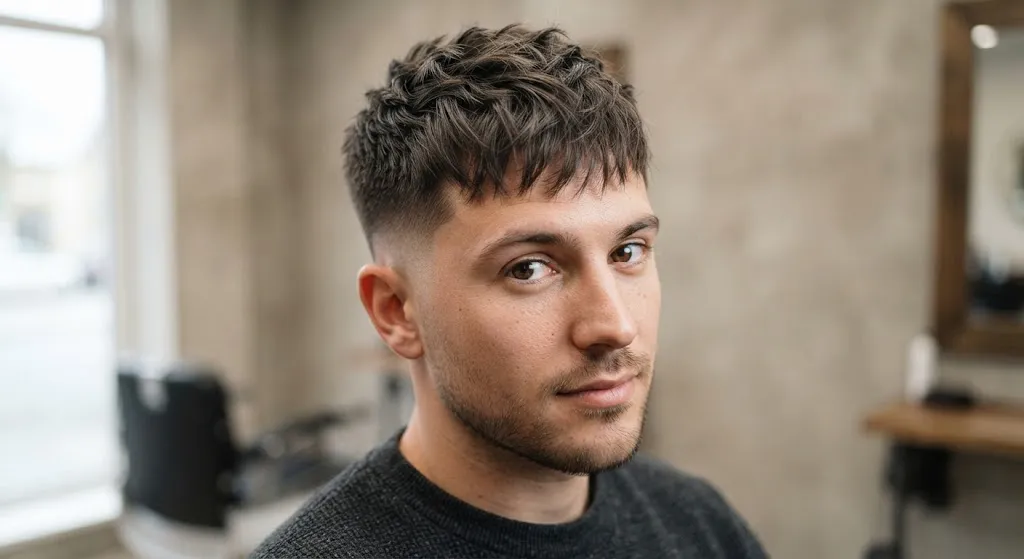
The textured crop continues to be one of the easiest modern hairstyles for men.
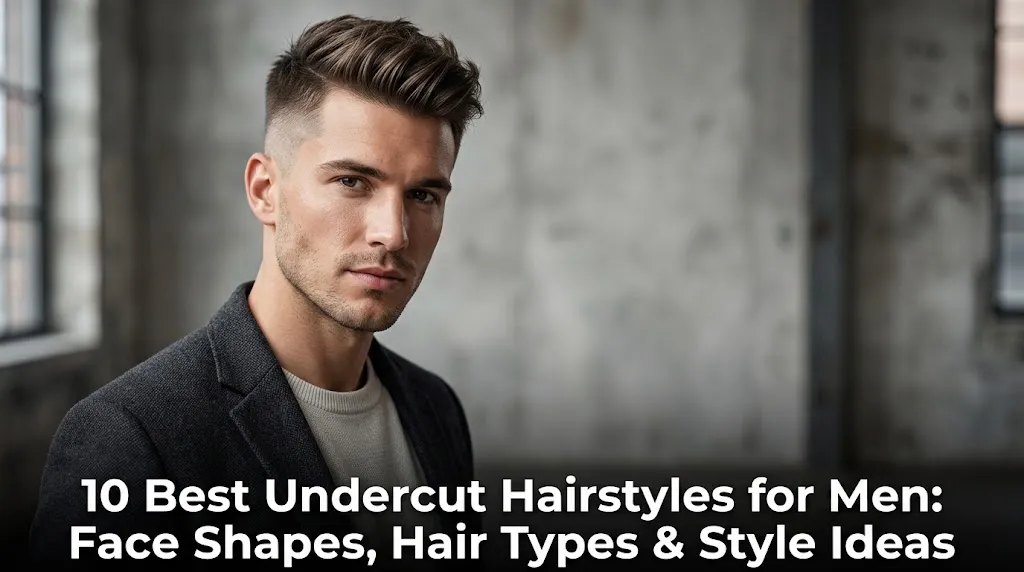
What makes it so appealing is that you don’t need perfectly straight hair or a huge amount of styling skill to make it work. The top is generally kept short to medium in length and given plenty of texture, while the sides can be faded or tapered.
Instead of combing everything neatly into place, you work with the natural movement of your hair.
If you have thick hair, this haircut can be particularly useful because removing some weight and adding texture keeps the hair from looking too bulky. A small amount of matte clay or styling paste can help separate the strands without making the hair look greasy.
The textured crop also works well for guys who want something modern without going for an extreme haircut.
Ask your barber for a textured top with a low, mid, or high fade depending on how much contrast you want.
2. Low Taper Fade
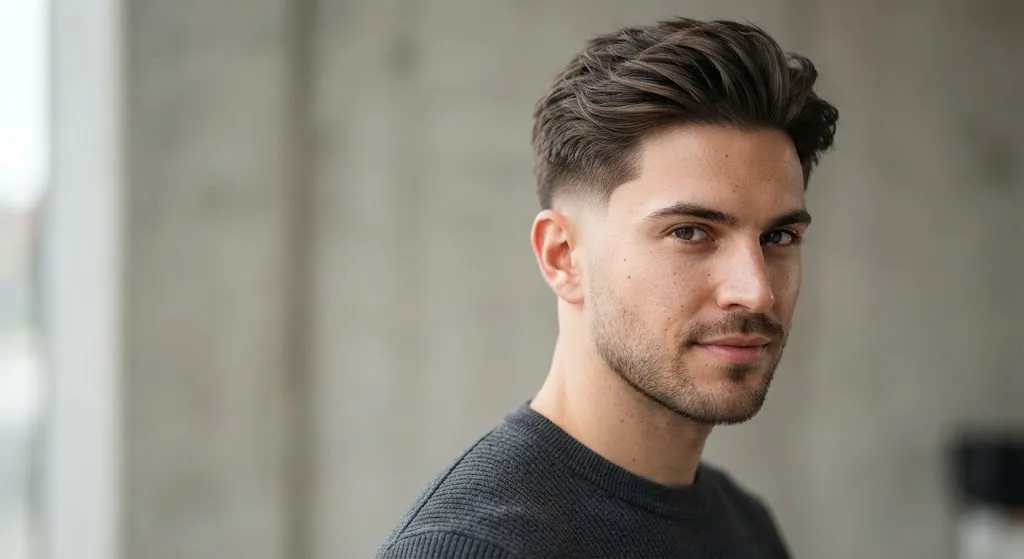
If you want a haircut that looks clean without being too aggressive, the low taper fade is a great choice.
Unlike a high fade, which creates a very noticeable transition around the sides of the head, a low taper keeps the change subtle. The hair gradually gets shorter around the temples and neckline while leaving more length throughout the sides.
That’s what makes this haircut so versatile.
You can combine a low taper with a textured top, curls, a fringe, a side part, or even medium-length hair. It doesn’t completely change your appearance; instead, it cleans up the edges and gives the haircut a more finished shape.
This is one of those hairstyles you can wear to college, work, a formal event, or a casual weekend without feeling like you’ve chosen the wrong haircut for the occasion.
For an especially natural result, ask your barber for a soft taper rather than an extremely sharp fade.
3. Classic Crew Cut
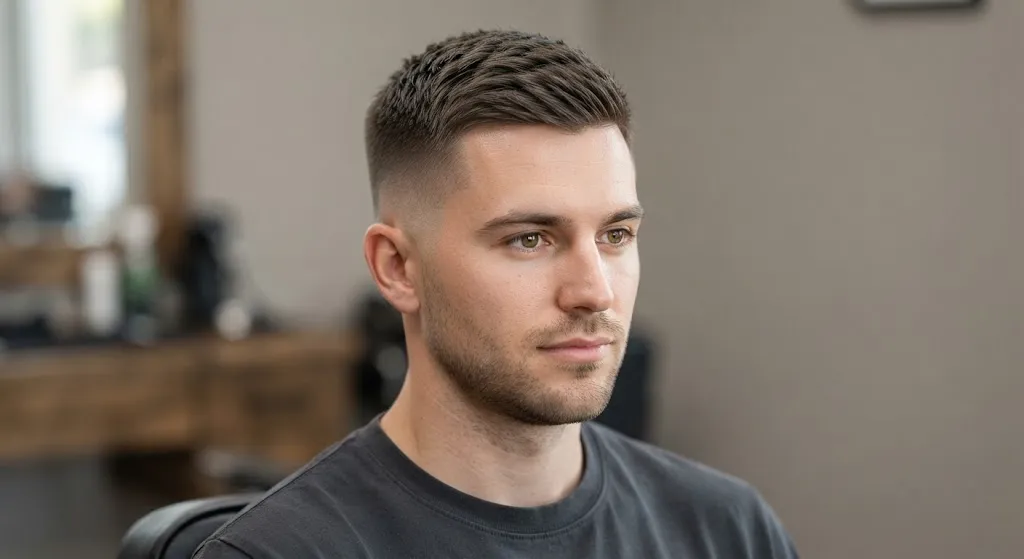
Sometimes the best hairstyle is the one you don’t have to think about.
The crew cut has been around for generations, and there’s a reason it continues to be popular. It’s simple, masculine, practical, and easy to maintain.
The hair is kept relatively short on top and gradually shortened toward the sides and back. You can make the transition very subtle for a traditional appearance or combine it with a fade for a more contemporary finish.
The crew cut is especially useful if you don’t enjoy spending several minutes styling your hair every morning.
A little matte product can add definition, but you can also leave it completely natural.
If you’re someone who likes a clean appearance but doesn’t want a complicated haircut, the crew cut deserves a place on your list.
4. Modern Quiff
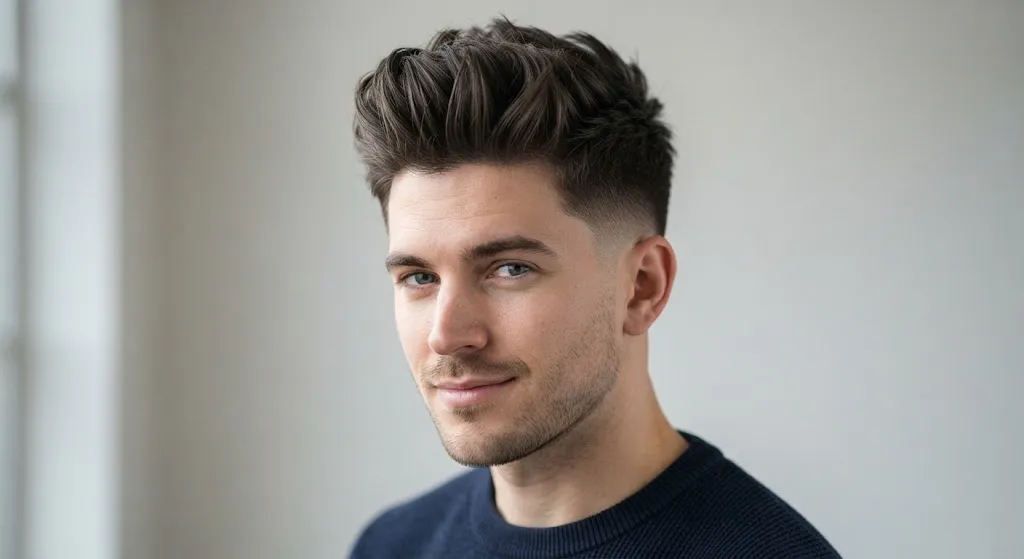
The quiff is perfect when you want a little more volume.
Instead of simply pushing the hair straight back, the quiff lifts the front section upward and slightly backward. This creates height at the front while keeping the overall haircut controlled.
The modern version is usually less stiff than older versions of the style.
You don’t need a mountain of gel to keep every strand frozen in place. In fact, a little movement usually makes the haircut look much better.
Blow-drying the front upward can make a big difference, especially if your hair is naturally straight or slightly wavy. Finish with a small amount of matte clay or styling cream to keep the shape in place.
A quiff can also be adjusted to suit different face shapes. More height can visually lengthen a rounder face, while a softer quiff can work well with stronger facial features.
5. French Crop
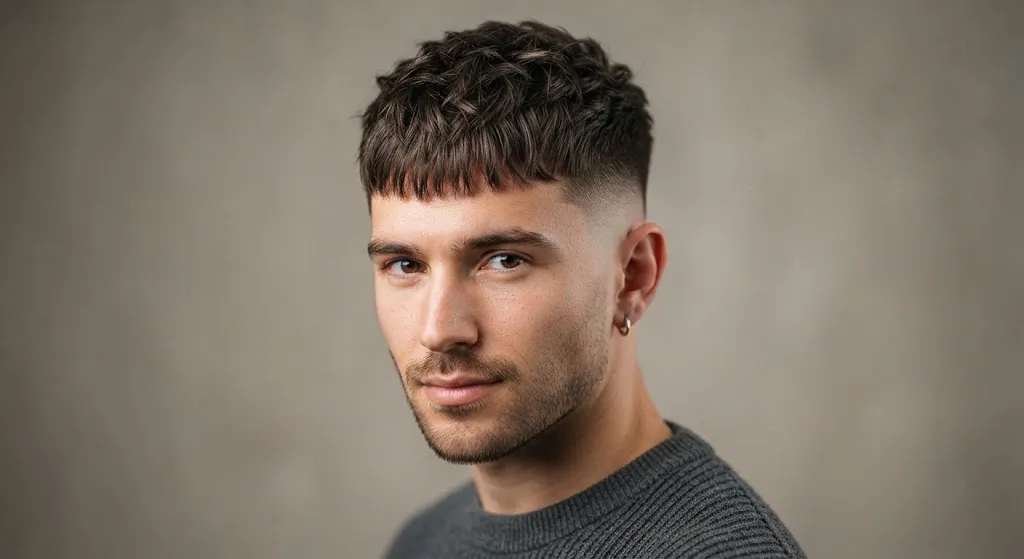
The French crop is another excellent option if you like short hair with a little personality.
The defining feature is the fringe at the front. Instead of pushing the hair away from the forehead, the front section is brought forward, usually creating a short, textured fringe.
The sides can be faded or tapered depending on how dramatic you want the haircut to look.
One of the biggest advantages of this style is how little styling it requires. Once the haircut is shaped correctly, you can often use your fingers and a small amount of styling product to finish it.
It also works particularly well with thick hair because the textured top prevents the haircut from looking like one solid block of hair.
If you want something contemporary but easy to maintain, the French crop is worth considering.
6. Mid Fade With Textured Top
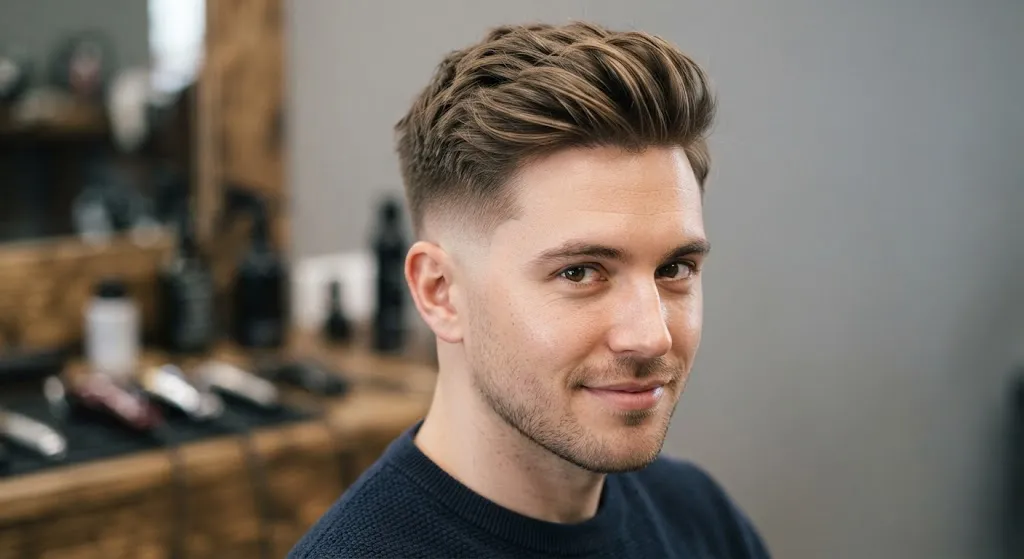
The mid fade gives you more contrast than a low taper without going as extreme as a high fade.
The fade starts around the middle of the sides of the head and gradually blends into the longer hair above it. On top, you can keep the hair textured and slightly messy.
This combination is particularly popular because it gives you a clean outline while allowing the top to retain personality.
If you have thick or wavy hair, ask your barber to add texture rather than simply taking a lot of length off. That way, the hair remains full without becoming difficult to control.
For styling, a matte clay or sea-salt spray can help bring out the texture.
7. Slick Back
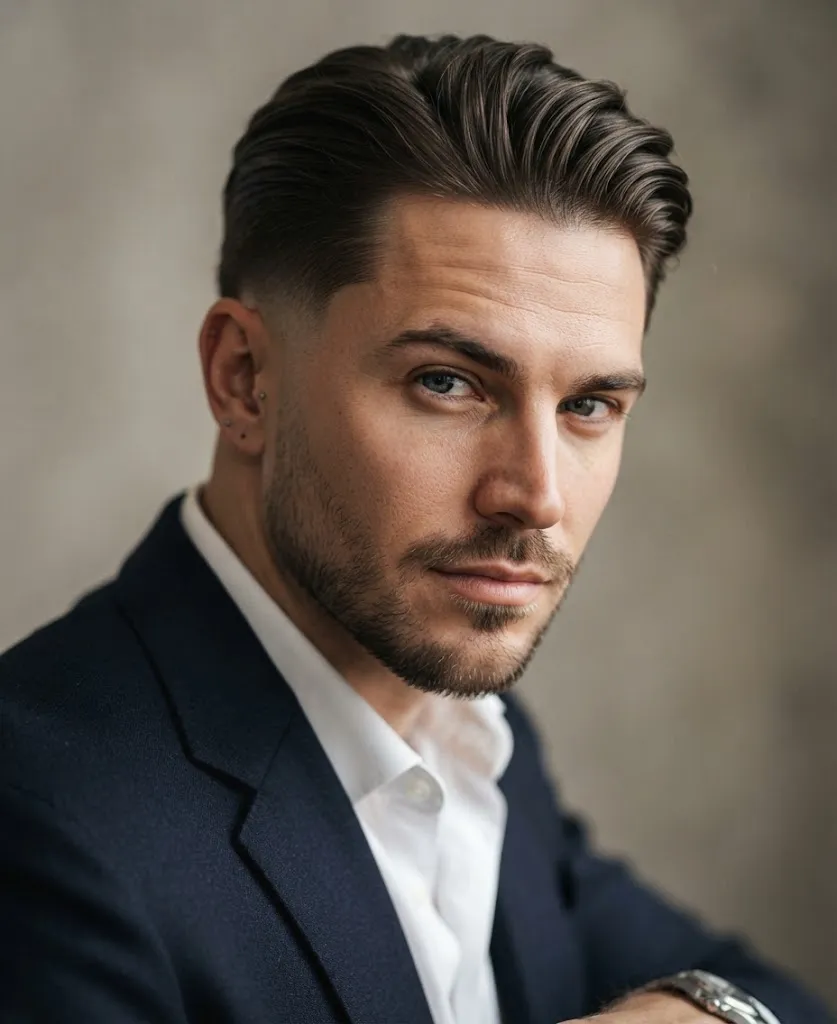
If you prefer a more mature and polished appearance, the slick back remains one of the strongest choices.
The concept is simple: the hair is grown long enough on top to brush backward away from the forehead.
The modern version doesn’t necessarily need to look wet or extremely shiny. A light styling cream can give you control while preserving some natural texture.
For a more classic appearance, you can use pomade and create a smoother finish.
The slick back looks particularly good with medium-to-long hair and can be combined with a taper or undercut for additional contrast.
It’s also a hairstyle that transitions nicely from casual clothing to formal outfits.
8. Curly Taper
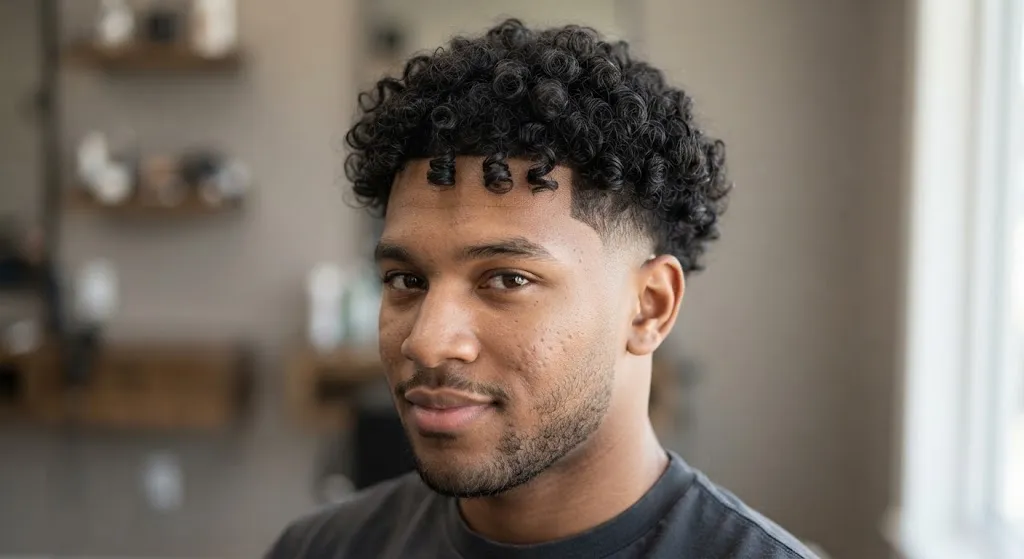
Men with naturally curly hair don’t need to fight their texture.
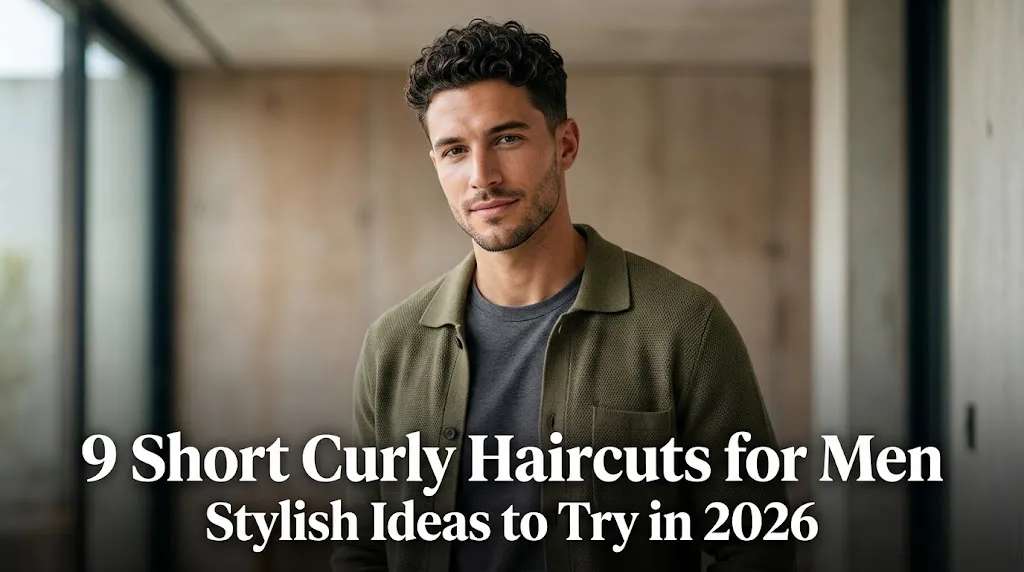
A curly taper allows you to keep your curls prominent while cleaning up the sides and neckline.
The result is a hairstyle that feels natural rather than overly constructed.
The top remains long enough for the curls to form properly, while the taper gradually reduces the hair around the temples and back.
The important part is moisture. Curly hair can become dry and frizzy when it doesn’t receive enough hydration, so a lightweight curl cream can make the hairstyle much easier to manage.
Don’t brush the curls excessively when they’re dry. Instead, work with your natural pattern and use your fingers to shape the hair
9. Buzz Cut
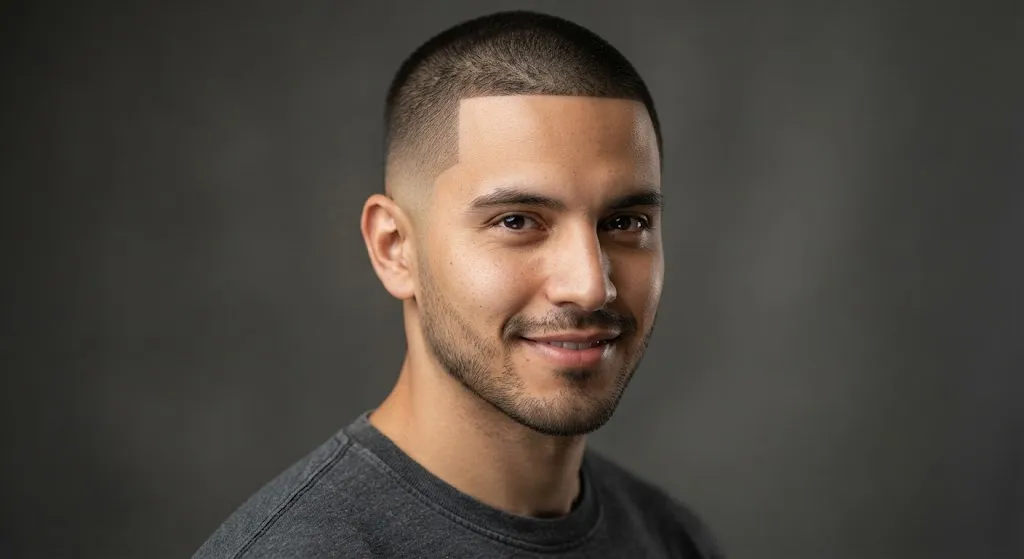
If low maintenance is your priority, it’s hard to beat a buzz cut.
The buzz cut removes most of the styling work from your daily routine. You wake up, shower, dry your hair, and you’re basically done.
But don’t assume every buzz cut looks identical.
Your barber can adjust the length to create different effects. A very short buzz gives a bold appearance, while leaving slightly more length creates a softer result.
You can also combine the cut with a fade around the sides for a more modern look.
Because the haircut exposes more of your head shape and hairline, it’s worth choosing the length carefully rather than simply asking for the shortest setting.
10. Messy Fringe
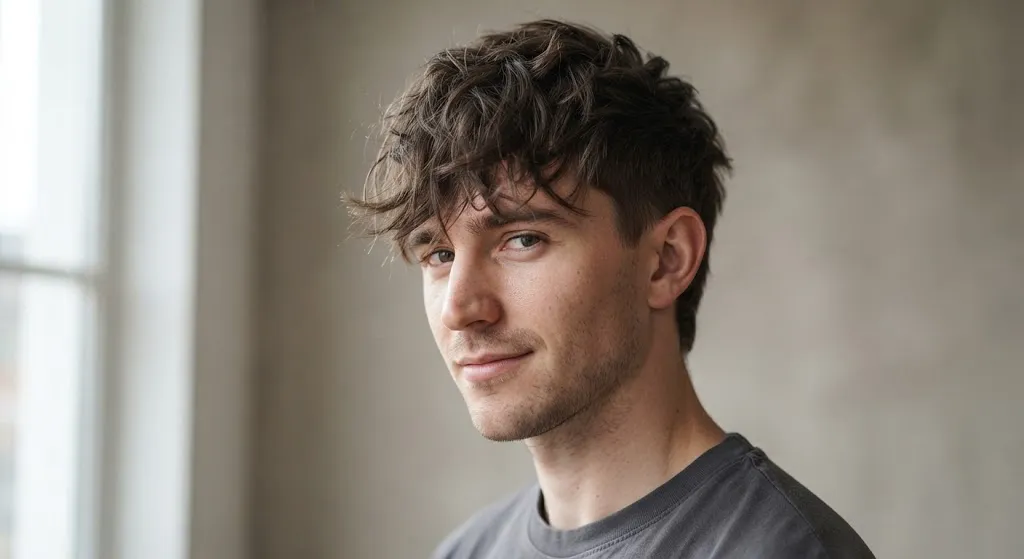
Not every good haircut needs to look perfectly organized.
The messy fringe is designed around movement and natural texture. The hair falls toward the forehead while the strands remain slightly separated and imperfect.
That’s what gives the haircut its relaxed personality.
This style works particularly well with thick, straight, or slightly wavy hair. You can use a small amount of matte paste and work it through the hair with your fingers.
Avoid using too much product because the whole point is to keep the hair looking natural.
The messy fringe is especially good for younger men who want something casual and modern without committing to a highly styled haircut.
11. Modern Mullet
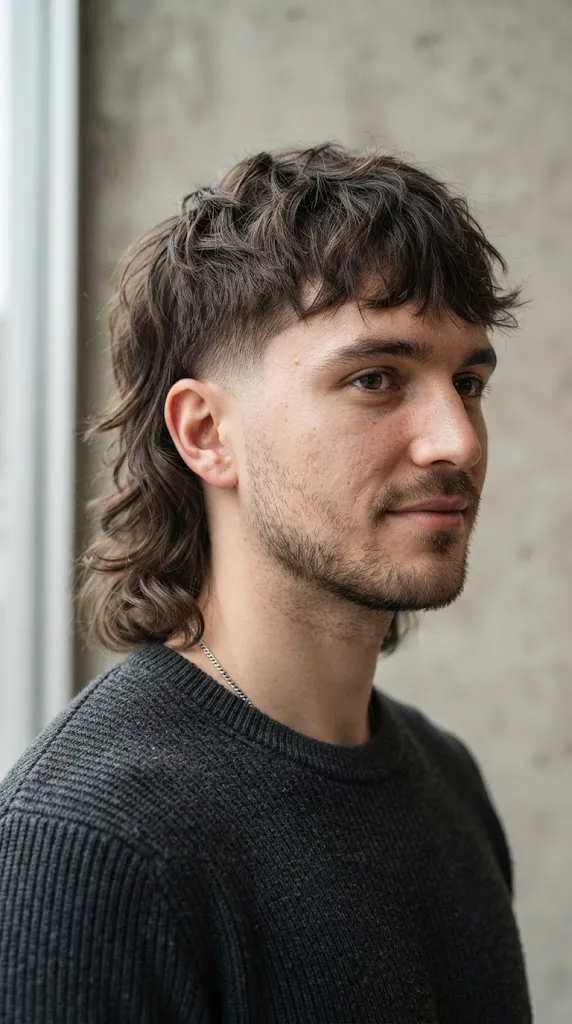
The modern mullet has made a serious comeback, but today’s version is much more wearable than the extreme styles associated with older versions.
The basic idea is simple: the hair is shorter around the front and sides while maintaining additional length toward the back.
Modern barbers often combine the shape with fades, tapers, texture, or layers.
The result can range from subtle and sophisticated to bold and edgy.
If you have naturally wavy or curly hair, the extra length at the back can look particularly good because the texture creates movement.
This isn’t necessarily the safest haircut on the list, but if you want people to notice your hairstyle, it definitely has personality.
12. Medium-Length Flow
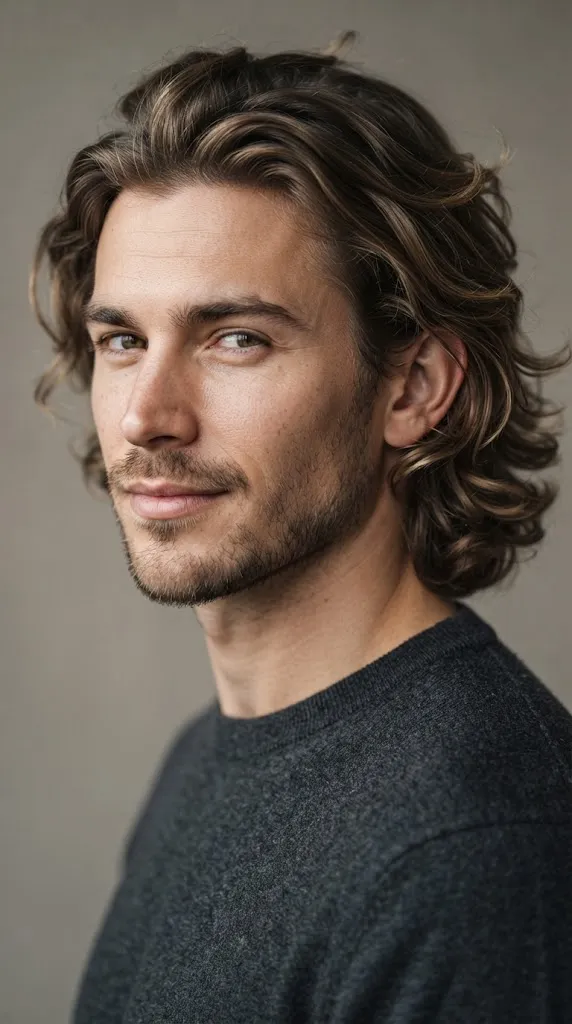
If you don’t want a short haircut, medium-length hair can give you plenty of styling options.
The medium-length flow is about letting your hair move naturally rather than forcing it into a rigid shape.
The hair is generally long enough to fall around the ears and neck, with layers helping it maintain movement.
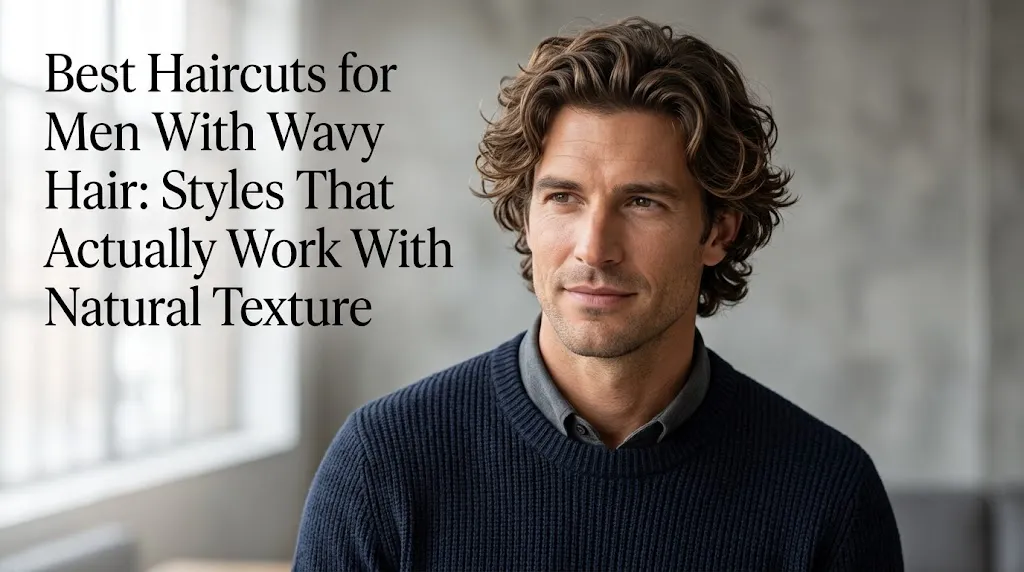
This style can look especially good on naturally wavy hair because the waves create volume without much effort.
The biggest challenge is patience.
Growing your hair out can be awkward for a while, and there will probably be stages where you wonder whether you should just cut it. But once the length reaches the right point and the layers are shaped properly, the result can look effortless.
13. Side Part
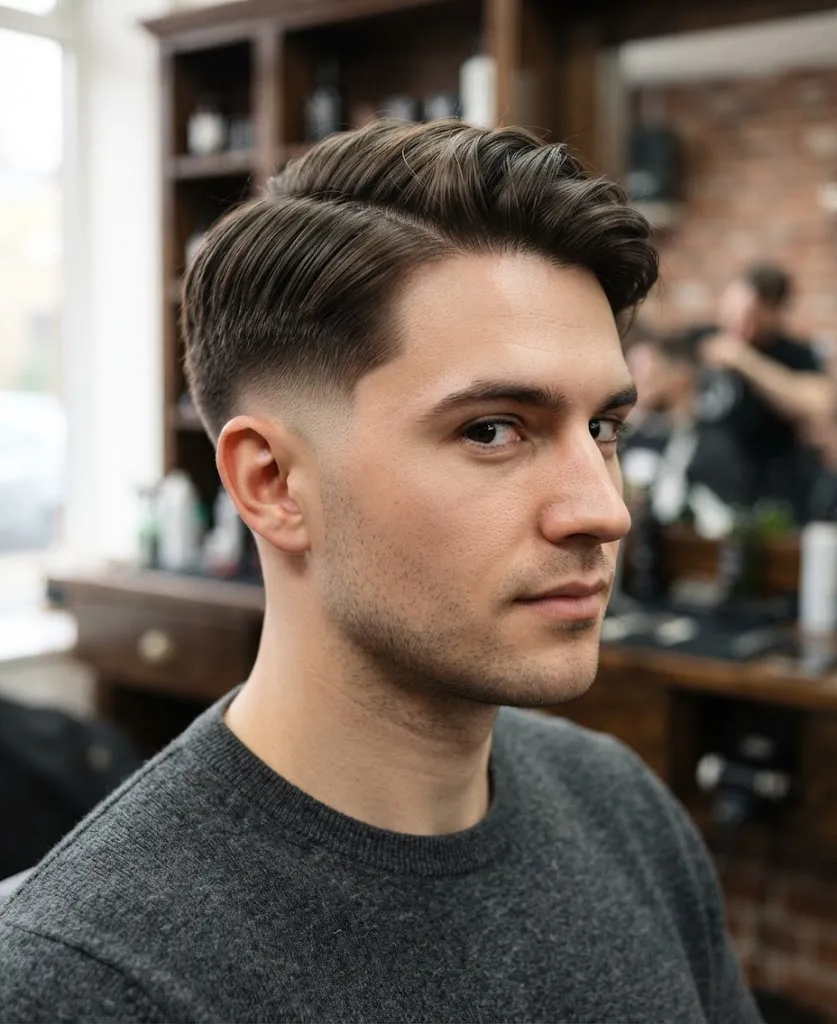
The side part is one of those hairstyles that never really disappears.
It has been worn in different forms for decades, but it continues to work because it’s simple and adaptable.
The modern side part doesn’t have to look overly formal. You can combine a soft side part with a taper and textured top to make it feel much more relaxed.
For a classic finish, use a comb and styling product to create a clean separation. For something more casual, use your fingers and leave a little natural movement.
This haircut can work especially well in professional environments because it looks tidy without appearing overly complicated.
14. Textured Pompadour
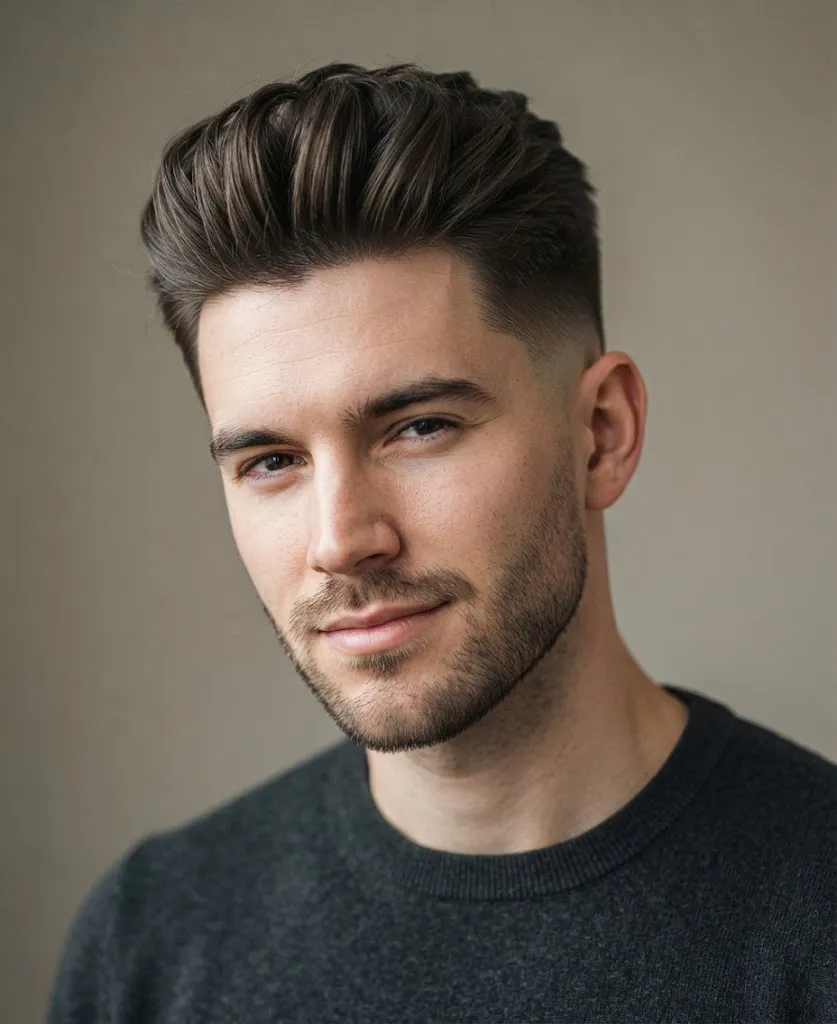
The pompadour is a great option if you enjoy volume.
Unlike a simple quiff, the pompadour generally creates more fullness across the front and top of the head. The sides can be tapered or faded to make the volume stand out.
The modern version doesn’t need to be enormous.
A moderate amount of height combined with natural texture can create a much more wearable everyday hairstyle.
A blow dryer is useful here because it helps build the foundation before you apply styling product.
If you have thick hair, you’re already working with an advantage. If your hair is naturally fine, a volumizing product can help give the style more body.
15. Long Layered Hair
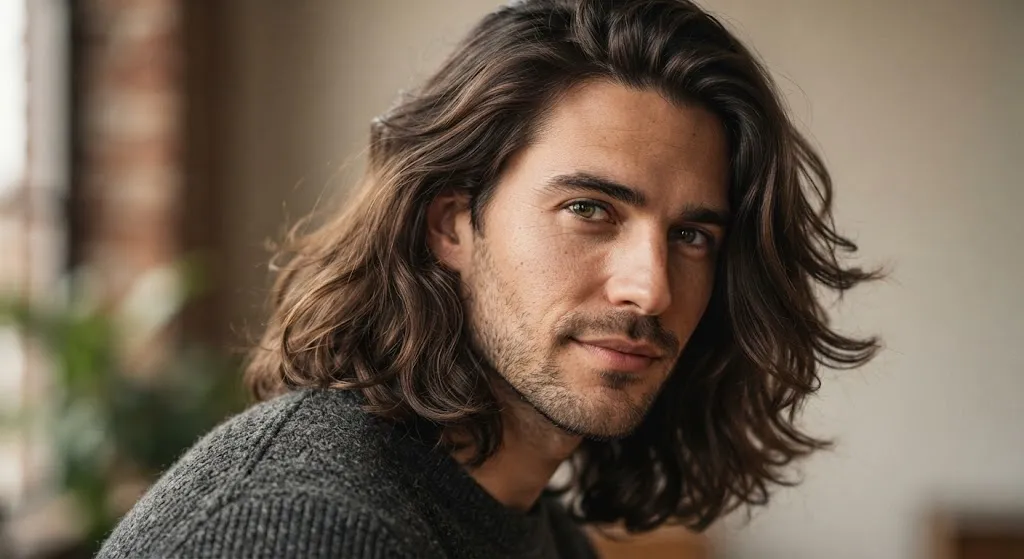
Long hair for men is no longer limited to one specific style.
The key is how you shape it.
Long layered hair can give your hairstyle movement and prevent all the hair from hanging like one heavy block. Layers can also make thick hair easier to manage while adding shape to straight or wavy hair.
You can wear it loose, tuck it behind your ears, tie it into a bun, or use a half-up style when you want your face more visible.
If you’re growing your hair long, regular trims are still important. You’re not cutting away the progress; you’re keeping split ends under control and helping the overall shape develop properly.
For men who enjoy longer hair and don’t mind a little extra maintenance, this can be one of the most versatile hairstyles of all.
How to Choose the Right Hairstyle for You
Looking at hairstyle pictures is helpful, but the photo alone shouldn’t make your decision.
Before you sit in the barber’s chair, think about your own hair.
Consider Your Hair Type
Straight hair can usually handle sleek styles, side parts, slick backs, crops, and quiffs.
Wavy hair gives you natural texture, which can make messy styles, medium-length flows, and textured cuts easier to achieve.
Curly hair has plenty of personality on its own, so styles such as curly tapers and longer layered cuts can work beautifully.
Thick hair gives you lots of styling options, but it can also become difficult to control if the haircut doesn’t remove enough weight.
Fine hair often benefits from texture and volume rather than being aggressively thinned.
Think About Your Face Shape
Your face shape can also influence which haircut looks most balanced.
If your face is rounder, hairstyles with some height on top can create a more elongated appearance.
If you have a longer face, extremely tall hairstyles may exaggerate that length, so a textured crop or medium-length style may create better balance.
Square faces can often handle both short and longer hairstyles because the stronger jawline already provides definition.
But don’t treat face shape as a strict rulebook. Your personal style matters just as much.
Think About Maintenance
This is something many men forget.
A haircut might look fantastic in a photograph, but if it requires 20 minutes of styling every morning and you only have five minutes, you’re probably going to hate it.
Before choosing a style, ask yourself how much effort you’re realistically willing to put in.
If you want almost no maintenance, consider a buzz cut, crew cut, or short textured crop.
If you’re happy spending a few minutes styling, quiffs, side parts, slick backs, and textured pompadours become much easier.
And if you don’t mind the growing process, medium and long hairstyles give you even more options.
Final Thoughts
Men’s hairstyles in 2026 are all about finding something that feels natural to you.
You don’t have to copy a celebrity’s haircut exactly. You don’t have to choose the most complicated fade in the barbershop. And you definitely don’t need to follow every trend that appears on social media.
The best haircut is the one that works with your hair instead of constantly fighting against it.
If you like short and practical styles, the crew cut, buzz cut, textured crop, or low taper are excellent places to start.
If you want something with more volume, try a quiff or textured pompadour.
For naturally curly hair, a curly taper lets your texture become the main feature.
And if you’re willing to grow your hair, the medium-length flow or long layered style can give you plenty of freedom.
Before your next haircut, save two or three pictures that show exactly what you like. Then tell your barber what you want to keep and what you want changed. A good barber can adjust the haircut around your hairline, density, face shape, and lifestyle.
After all, the goal isn’t simply to have a trendy haircut.
It’s to have a hairstyle that makes you look in the mirror and think, “Yeah, this actually feels like me.”
Frequently Asked Questions
What is the best men’s hairstyle for 2026?
There isn’t one hairstyle that works for everyone. Textured crops, low tapers, quiffs, curly tapers, modern mullets, and medium-length styles are all strong choices depending on your hair and personal preference.
Which men’s haircut is easiest to maintain?
Buzz cuts and crew cuts are among the easiest options. A short textured crop can also be relatively low-maintenance because you don’t need to create a complicated shape every morning.
What hairstyle is best for thick hair?
Thick hair works well with textured crops, quiffs, pompadours, medium-length flows, and layered styles. Adding texture or removing some bulk can make thick hair much easier to manage.
What is a good hairstyle for curly hair?
A curly taper is one of the easiest choices because you can keep the natural curls on top while cleaning up the sides and neckline.
How often should men get a haircut?
It depends on the hairstyle. Short fades and tapers usually need more frequent maintenance, often every few weeks, while longer styles can go considerably longer between trims.
Should I show my barber a picture?
Yes. A picture can be much easier than trying to describe a haircut with words. However, remember that your barber may need to modify the style according to your hair type, hairline, density, and face shape.