Thick hair can be a blessing—until it decides to do whatever it wants.
It can look full, healthy, and naturally impressive, but it can also feel bulky, difficult to style, overly wide at the sides, or impossible to control on humid days. Add dryness or frizz to the mix, and even a simple morning routine can turn into a frustrating battle.
A lot of people respond by reaching for more styling products. More clay. More cream. More gel. More hairspray.
But in many cases, that is not the real solution.
When thick hair is cut correctly, unnecessary weight is removed, the shape becomes more controlled, and the hair gets room to move naturally. Instead of fighting against your hair every morning, you can start working with it.
The goal is not necessarily to make thick hair look thinner. The goal is to give it structure, remove unwanted bulk, and create a shape that suits your hair type and lifestyle.
Whether your hair is straight, wavy, or curly, the right cut can make a huge difference.
Read Also : Best Haircuts for Men With a Square Face: Styles That Balance Your Face Shape
Why Thick Hair Can Be Difficult to Manage
Thick hair does not automatically mean unhealthy or problematic hair. In fact, many people would love to have naturally dense hair.
The problem starts when there is simply too much weight in the wrong places.
You might notice that your hair:
- Looks bulky around the sides
- Sits heavily on top of your head
- Becomes difficult to style after a few hours
- Sticks out around the ears
- Develops a “helmet” or boxy appearance
- Gets frizzy in humid weather
- Feels rough or dry
- Takes too long to style
- Requires too much product to stay in place
When several of these problems happen at the same time, it is easy to assume that your hair itself is the problem.
Usually, it is not.
The cut, shape, and weight distribution may be the real issue.
A well-designed haircut can make thick hair feel dramatically lighter without sacrificing the fullness that makes it attractive in the first place.
What Problem Are You Actually Trying to Fix?
Before choosing a haircut, take a minute to figure out what bothers you most.
This sounds simple, but it can completely change the haircut you should ask your barber for.
Not everyone with thick hair needs the same solution.
If Your Hair Feels Too Bulky
If your hair feels heavy or sits like a solid mass on your head, you need to reduce some of that weight.
A textured crop, layered haircut, or another properly textured style can help break up excessive density and give the hair more movement.
The goal is not to remove as much hair as possible. It is to remove weight strategically.
If Your Sides Stick Out
This is one of the most common complaints from men with thick hair.
You might leave the barbershop with a haircut that looks perfect, only to find that your sides start expanding outward a few days later.
A fade or taper can help keep the sides tighter and create a cleaner transition between the hair on top and the sides of the head.
Depending on your preference, you might consider a low taper, mid fade, or another variation that works with your head shape and growth pattern.
If Styling Takes Too Long
A haircut can look fantastic in a photograph and still be completely wrong for your daily routine.
If you do not want to spend 15 or 20 minutes styling your hair every morning, avoid choosing a cut that requires constant maintenance.
A crew cut, short taper, or other shorter style can give you a clean appearance without demanding a complicated routine.
If Frizz Is the Main Problem
Thick wavy and curly hair can become particularly difficult when it is dry or exposed to humidity.
In this case, simply cutting the hair shorter may not solve everything.
The haircut needs to work with the natural texture.
Proper layering, controlled length, and lightweight styling products can help the hair maintain its natural shape without turning into a puff of uncontrolled volume.
If You Hate the “Helmet” Look
You know the look: the hair appears to sit on top of the head as one solid shape.
This usually happens when too much bulk has been left in the haircut without enough texture or layering.
Instead of asking your barber to simply “make it thinner,” explain that you want movement and a more natural shape.
That gives your barber a much clearer idea of what you are trying to achieve.
The Best Haircuts for Thick Hair
There is no single haircut that works for every man with thick hair.
Your face shape, hair texture, growth pattern, lifestyle, and personal style all matter.
Still, some haircuts consistently work well because they give thick hair the structure it needs.
1. Textured Crop
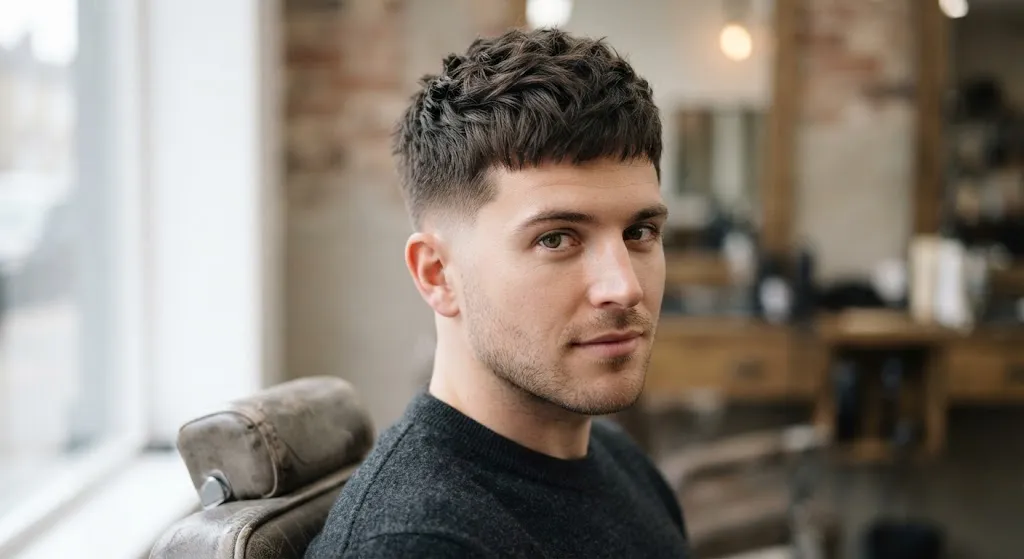
The textured crop is one of the most useful options for thick hair.
Why?
Because it works with the density rather than simply trying to eliminate it.
Texture breaks up the solid appearance of thick hair and allows the top to move naturally. It can also make the haircut look lighter and more modern.
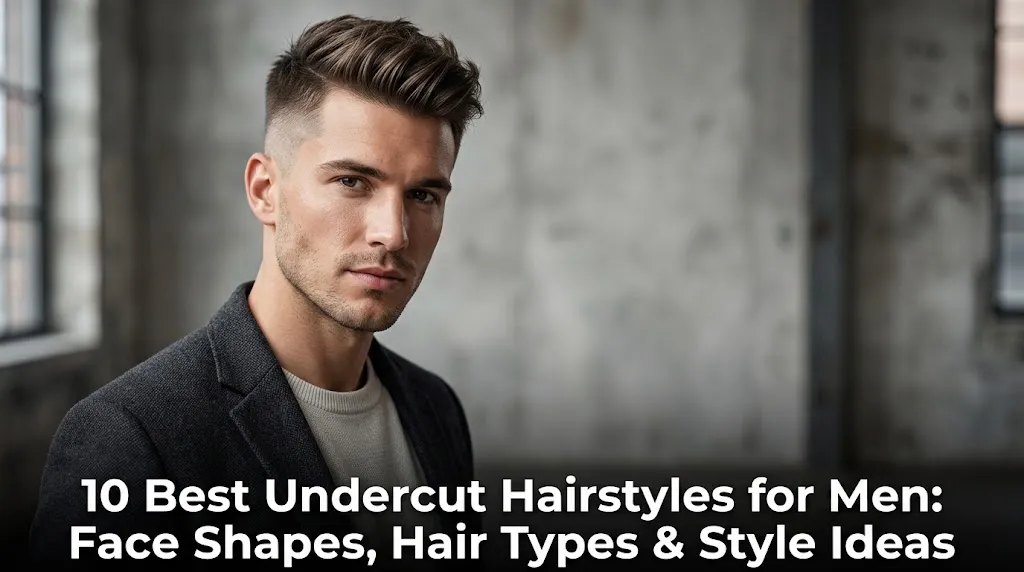
A textured crop can be paired with different types of fades or tapers depending on how tight you want the sides.
If your main complaint is that your hair feels too heavy or looks too blocky, this is one of the first styles worth discussing with your barber.
2. Layered Haircut
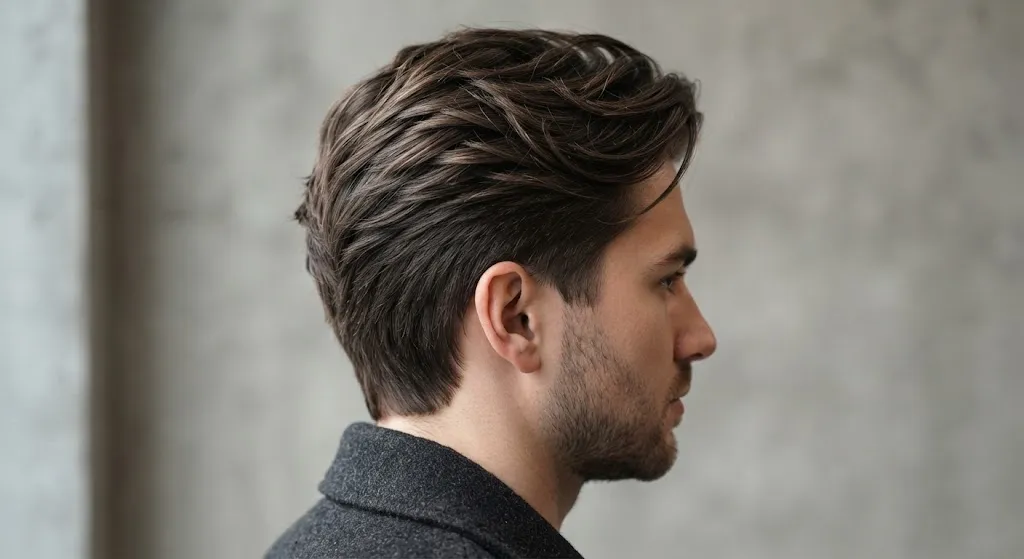
Layers are particularly useful when you want to keep some length while preventing thick hair from becoming too heavy.
Instead of leaving all the density in one solid block, layers distribute the weight throughout the haircut.
This creates movement and helps the hair fall more naturally.
Layering can be especially effective for medium-length and longer thick hair. Without layers, longer thick hair can sometimes appear flat in one area and excessively bulky in another.
A good layered haircut gives the hair a sense of flow.
3. Mid Fade
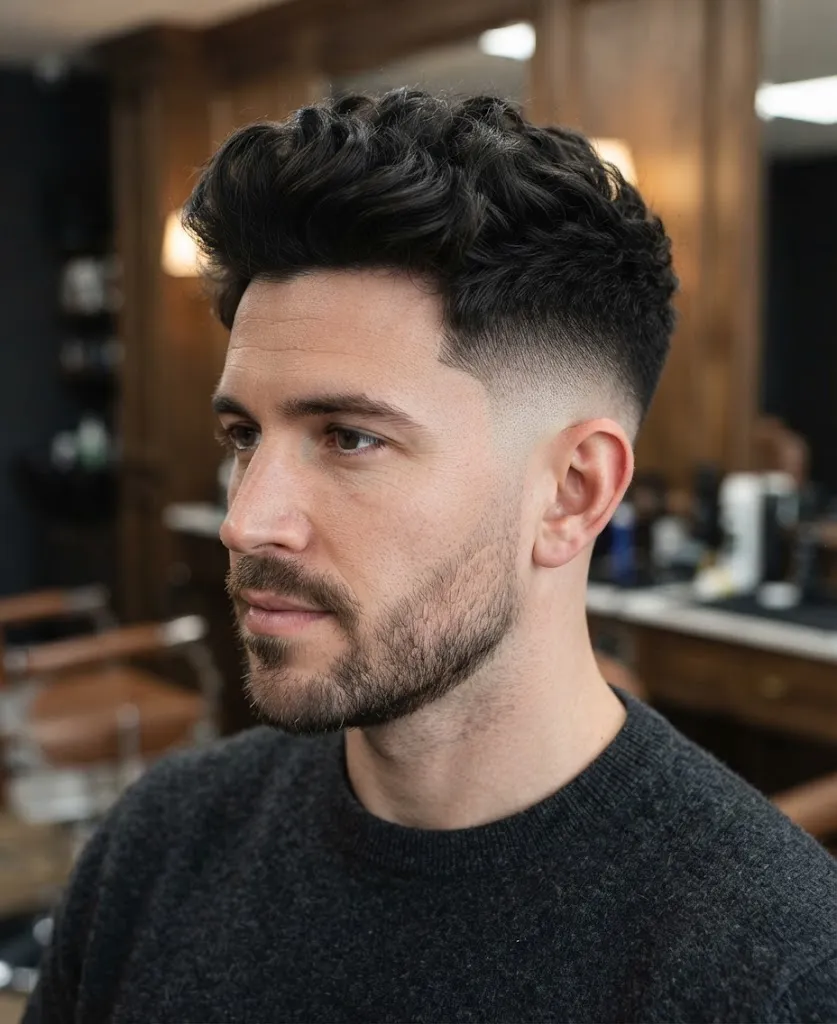
If your biggest problem is the sides sticking out, a mid fade can be an excellent choice.
The fade removes excess density around the sides and creates a cleaner transition into the thicker hair on top.
For men with extremely dense hair, this can make the entire haircut feel more balanced.
The key is making sure the fade works with your head shape and the amount of length you want to keep on top.
A very aggressive fade is not automatically better. Your barber should choose the height and transition based on your proportion
4. Low Taper
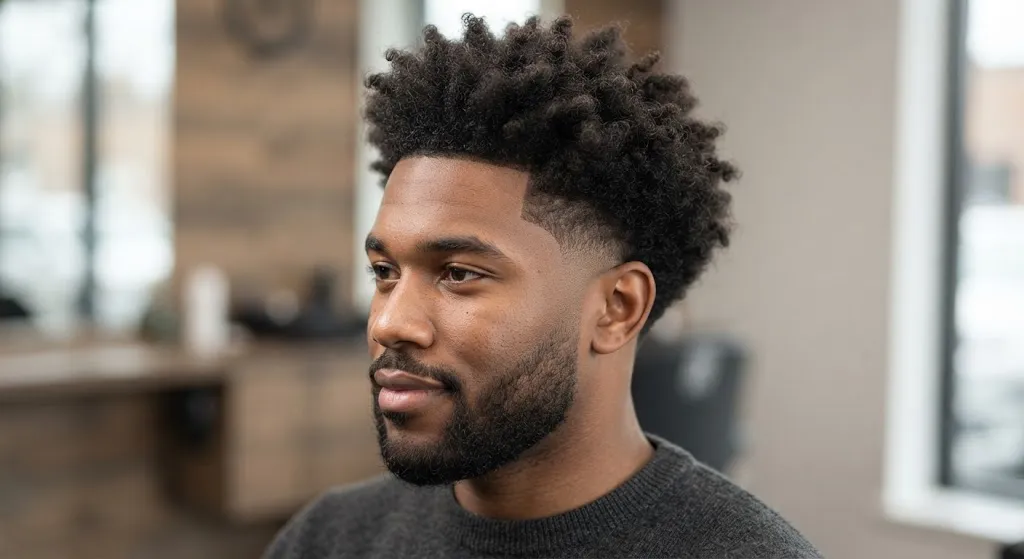
If you want something more subtle than a fade, consider a low taper.
A low taper keeps the overall haircut looking natural while cleaning up areas around the sideburns, ears, and neckline.
It is a particularly good option if you want your hair to remain relatively full but still want the edges to look controlled.
The low taper also grows out naturally, which makes it attractive for people who do not want to visit the barber every couple of weeks.
5. Crew Cut
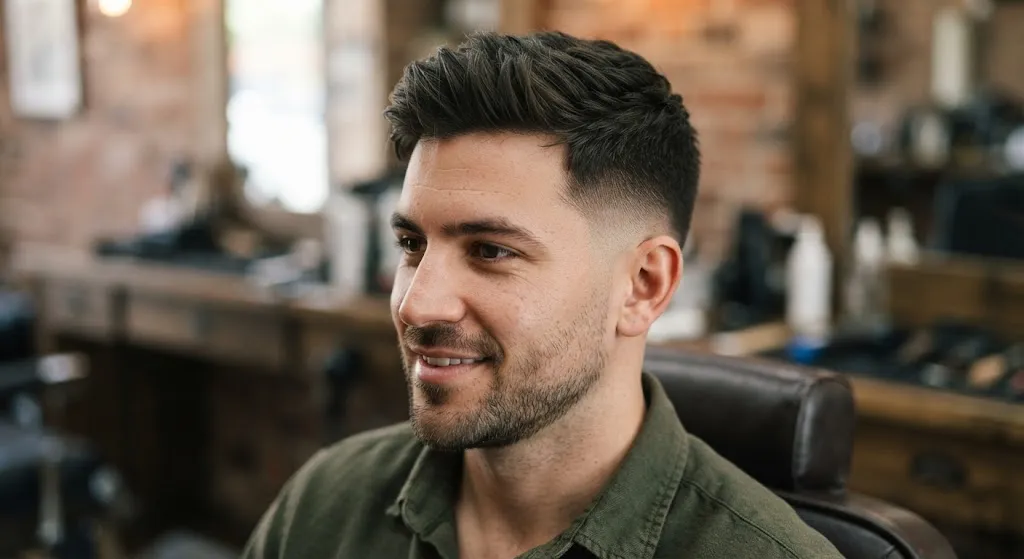
If you want something simple, practical, and easy to maintain, the crew cut deserves serious consideration.
It removes much of the styling work while still giving you a structured, masculine appearance.
For thick hair, the crew cut can also prevent the sides and top from becoming excessively bulky.
It is particularly useful for people who want to spend less time in front of the mirror.
The best version is not necessarily the shortest version. Your barber can adjust the length on top and the sides according to your face shape and hair growth.
6. Short Taper

A short taper is another excellent choice when low maintenance is the priority.
It keeps the sides neat without creating the dramatic contrast of some fades.
For thick straight hair, this can be an especially easy everyday option.
You can leave enough length on top to create texture with your fingers, while the shorter sides prevent the overall shape from becoming too wide.
It is one of those haircuts that can look polished without looking like you spent a long time styling it.
7. Quiff
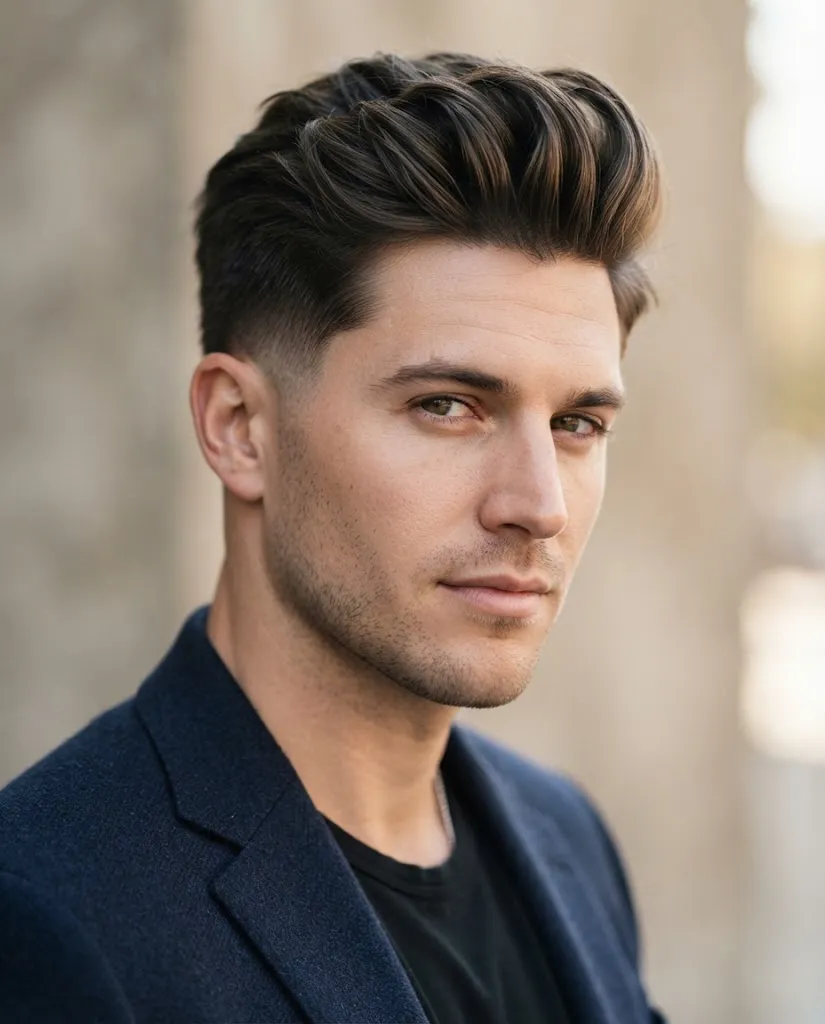
If you actually like having volume, thick hair gives you a major advantage.
A quiff can look excellent because dense hair naturally provides the fullness needed to create height.
But there is an important detail: the weight underneath needs to be controlled.
If the barber simply leaves all the density underneath the quiff, the style can become too heavy and difficult to shape.
The result should have volume without looking like a solid block.
8. Pompadour
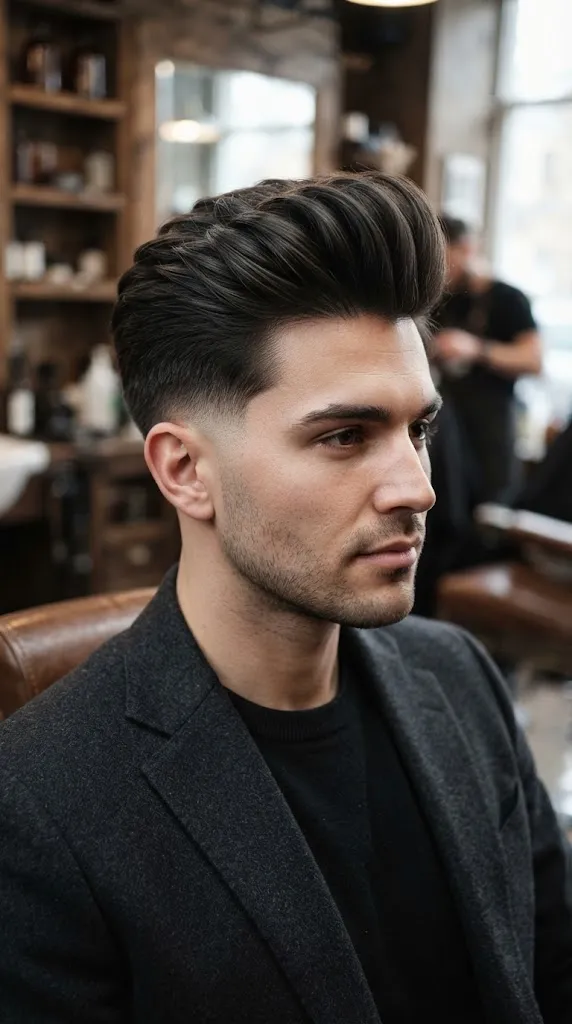
The pompadour is another style that takes advantage of thick hair.
It creates a strong silhouette with volume through the front and top.
However, it requires more styling than a crew cut or short taper.
If you like spending time styling your hair and want something more noticeable, a pompadour can be a great choice.
The important thing is balance.
Too much density underneath can make the haircut feel heavy, while too little structure can cause the style to collapse.
What Should You Tell Your Barber?
Knowing what haircut you want is helpful.
Knowing what problem you want the haircut to solve is even better.
A lot of men walk into a barbershop and simply say, “Give me a fade,” or show a photograph of a hairstyle they like.
There is nothing wrong with that, but it does not tell your barber everything they need to know.
Your hair may behave completely differently from the person in the photograph.
Instead, explain what happens to your hair.
For example:
“My hair is very thick and the sides start sticking out after a few days. I want to keep some length on top, but I want the overall shape to be lighter and easier to control.”
That tells the barber much more.
You can also say:
- “My hair feels too heavy on top.”
- “The sides become too wide.”
- “I want more movement instead of one solid shape.”
- “I want to keep the length but remove some weight.”
- “I don’t want my hair to look overly thinned out.”
- “I want something that is easy to style every morning.”
- “I want the fade to grow out naturally.”
- “My hair is wavy, so I want the cut to work with the natural texture.”
These details help your barber make better decisions.
Should You Ask for Thinning Scissors?
Sometimes, yes—but this is where professional judgment matters.
Thinning scissors and texturizing techniques can remove some visual weight, but they should not be used automatically just because your hair is thick.
The technique needs to match your hair type.
Too much thinning can sometimes create unwanted texture, frizz, or an uneven appearance as the hair grows.
Instead of demanding a specific tool, explain the result you want.
Tell your barber that you want the hair to feel lighter and have more movement.
A skilled barber can decide whether thinning, point cutting, layering, texturizing, or a combination of techniques is appropriate.
How to Style Thick Hair Without Struggling
Once you have the right haircut, styling becomes much easier.
You do not need a bathroom shelf full of products.
In fact, using too many products can make thick hair look heavier.
The goal should be control without sacrificing natural movement.
Start With Damp Hair
After washing your hair, gently towel-dry it.
Do not aggressively rub your hair with the towel.
Rough towel drying can disturb the hair’s surface and contribute to frizz, particularly if your hair is naturally wavy or dry.
Instead, gently squeeze out excess water and allow the hair to remain slightly damp before styling.
Use Less Product Than You Think
This is one of the biggest lessons for thick hair.
Start with a small amount.
You can always add more.
You cannot easily remove an excessive amount of product once it is already distributed throughout your hair.
For many styles, a lightweight matte clay, styling cream, or similar lightweight product can provide enough control without making the hair greasy or stiff.
The exact product depends on your hair type and desired finish.
Be Careful With Heavy Gel
Heavy gel can work for certain hairstyles, but it is not always the best answer for thick hair.
Too much can make dense hair feel stiff and unnatural.
Instead of looking controlled, it can look like every strand has been glued into place.
If you want a natural hairstyle, look for products that provide flexible control.
Use a Blow Dryer Strategically
A blow dryer can make a huge difference.
You do not have to use it to create an elaborate hairstyle.
Simply use it to guide your hair in the direction you want.
For example, if your thick hair naturally falls forward but you want a textured quiff, use the dryer to direct the hair upward and backward while shaping it with your fingers.
This allows you to create structure before adding product.
The result is often better than trying to force completely dry hair into position with a large amount of styling product.
Work With Your Hair, Not Against It
One of the biggest mistakes people make with thick hair is trying to force it into a shape it does not naturally want to take.
If your hair naturally grows forward, completely changing its direction every morning will require more time and more product.
If it naturally has waves, trying to flatten every wave can create unnecessary frustration.
If it naturally has volume, use that volume.
The best haircuts do not completely fight your natural hair pattern.
They organize it.
That is an important distinction.
You want the haircut to make your natural characteristics easier to manage rather than constantly trying to hide them.
Mistakes That Make Thick Hair Look Worse
Even a great haircut can become difficult to manage when a few common mistakes are involved.
1. Getting Everything Cut to One Length
One-length cuts can leave thick hair looking extremely dense.
Without enough variation in length, there is nowhere for the weight to go.
The result can be a blocky or helmet-like shape.
This does not mean every thick-haired man needs aggressive layers. It simply means the haircut needs enough structure to create a balanced silhouette.
2. Removing Too Much Hair
This is the opposite problem.
Some people assume that because their hair is thick, the barber should remove as much as possible.
That can backfire.
If too much density is removed, the hair can lose its natural fullness and sometimes develop an uneven or overly wispy appearance.
The objective is controlled weight removal, not maximum hair removal.
3. Using Too Much Product
More product does not necessarily mean more control.
With thick hair, excessive product can make the hairstyle feel heavy and greasy.
Start small and build gradually.
4. Ignoring Your Natural Hair Type
Thick straight hair, thick wavy hair, and thick curly hair may all require different approaches.
Treating them exactly the same is a recipe for frustration.
5. Waiting Too Long Between Trims
Thick hair can lose its shape quickly because the extra density becomes noticeable as it grows.
You do not necessarily need an expensive haircut every couple of weeks, but regular maintenance can help preserve the shape.
6. Choosing a High-Maintenance Style When You Hate Styling
This is a simple mistake but an incredibly common one.
If you do not enjoy styling your hair every morning, do not choose a hairstyle that depends on extensive daily styling just because it looks good in a photograph.
Choose something that fits your actual life.
The Best Haircut for Thick Straight Hair
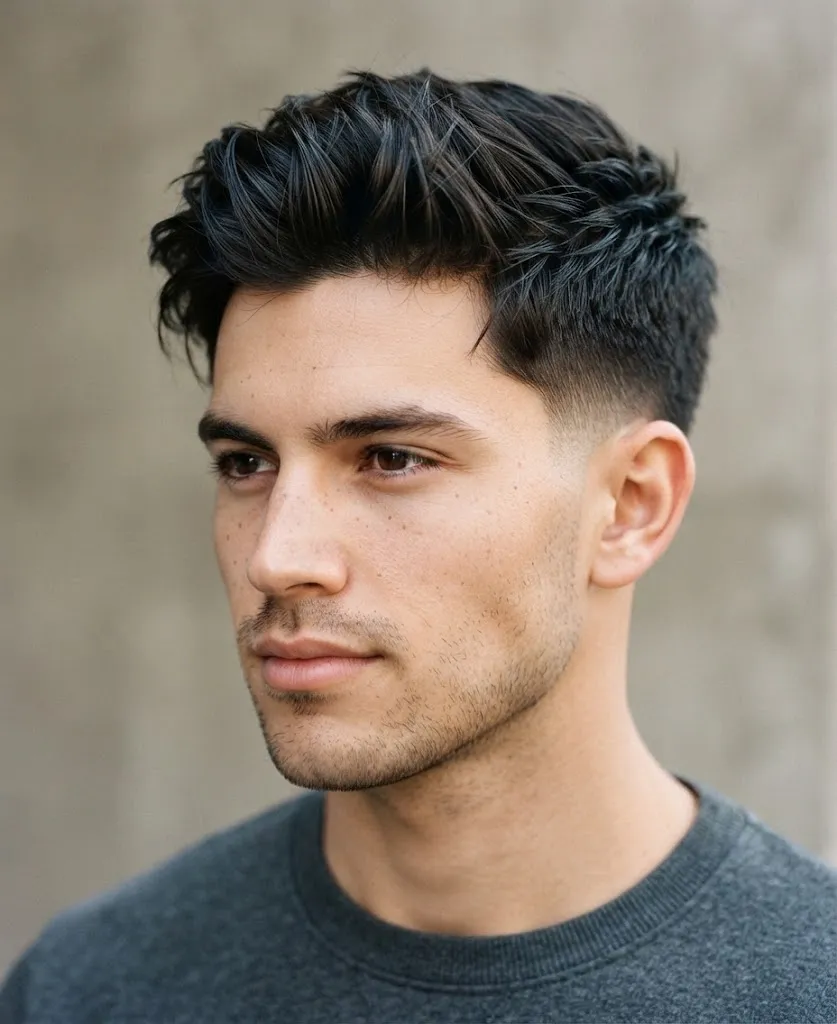
Thick straight hair can look incredibly clean when it is cut correctly.
But because straight hair does not naturally create as much movement as wavy or curly hair, excessive density can make it look very heavy.
That is why texture is particularly important.
A textured crop can work extremely well.
So can a layered haircut, especially if you want to keep more length.
The objective is to create separation between sections of hair.
Instead of having hundreds of strands sitting together as one solid mass, the hair gets more natural movement.
A taper or fade on the sides can also help create contrast and prevent the haircut from becoming too wide.
The Best Haircut for Thick Wavy Hair
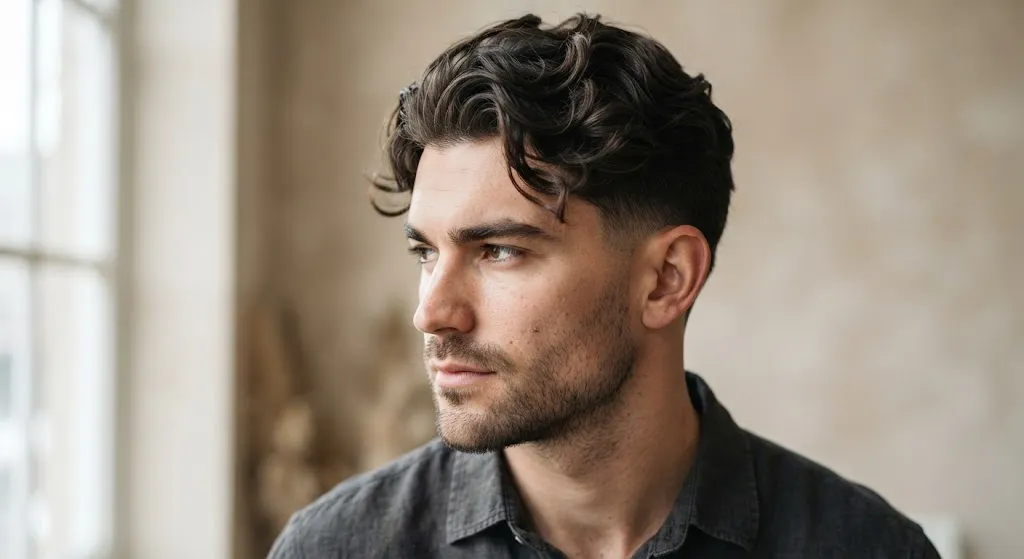
Thick wavy hair can look fantastic because it already has natural movement.
The challenge is controlling the volume without destroying the wave pattern.
This is where layering becomes especially useful.
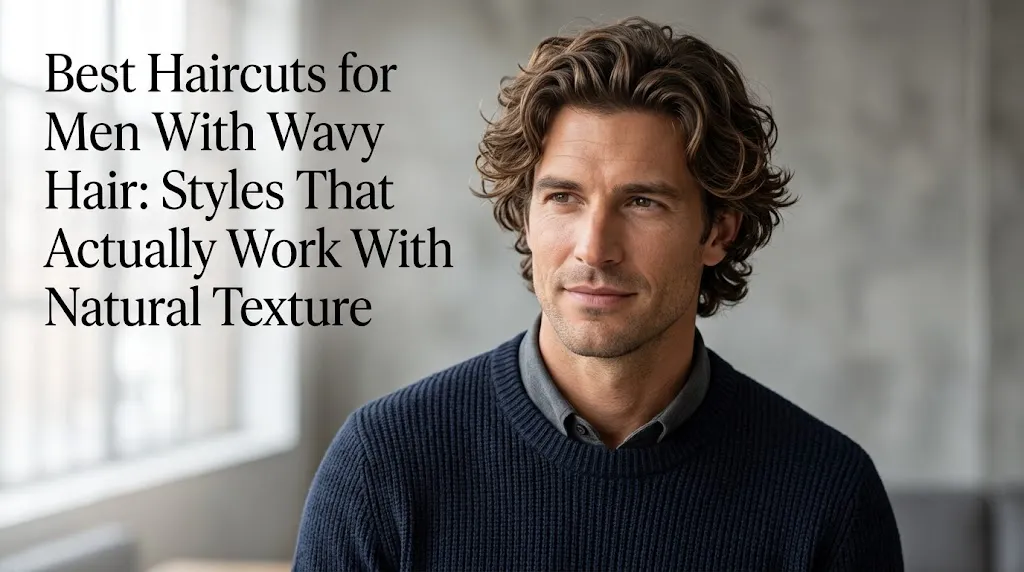
Proper layers can prevent the hair from becoming one large mass while allowing the waves to remain visible.
A taper or fade on the sides can also help keep the overall silhouette under control.
But be careful about removing too much.
Wavy hair needs enough length to maintain its natural pattern.
Cut it too short in the wrong places and you may lose the very texture that makes it attractive.
The Best Haircut for Thick Curly Hair
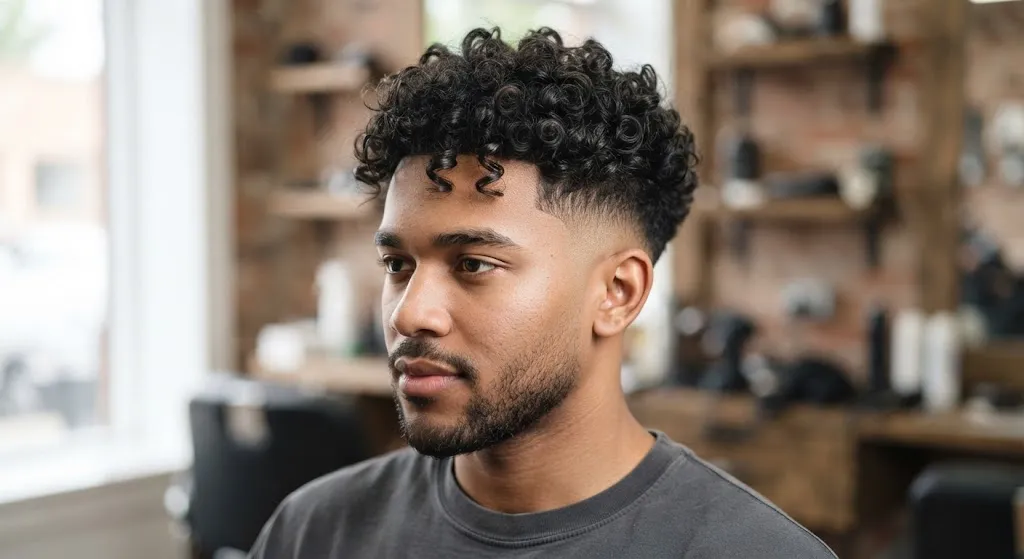
Curly thick hair requires a slightly different strategy.
The goal should be shape and control without destroying the natural curl pattern.
Removing too much length can sometimes make curls spring upward and create even more visible volume.
Instead, the haircut should account for how the curls behave naturally.
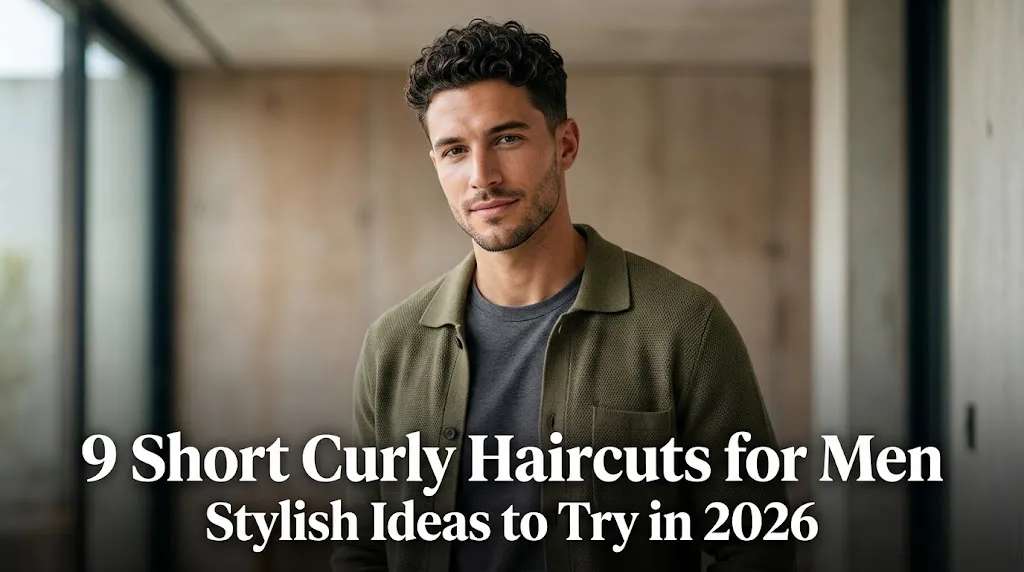
A curly top with faded or tapered sides can create a strong, clean silhouette.
You can keep the curls on top while maintaining tighter sides for contrast.
The result is structured without looking overly controlled.
For curly hair, it is especially important that your barber understands curl behavior and does not simply treat your hair like thick straight hair.
How to Pick the Right Haircut Quickly
If you are standing in the barbershop chair and still cannot decide what to get, start with the problem rather than the haircut name.
Want Low Maintenance?
Choose a crew cut or short taper.
These are practical choices for men who want to look neat without spending much time styling.
Feel Like Your Hair Is Too Bulky?
Try a textured crop or layered haircut.
These styles can remove visual weight while preserving enough density to keep the hair looking full.
Do Your Sides Stick Out?
Consider a fade or taper.
The shorter sides can help control the areas where thick hair tends to expand outward.
Want Volume and a More Styled Appearance?
Try a quiff or pompadour.
Just remember that these styles require more styling and work best when the barber controls the weight underneath.
Want Longer Hair?
Go for proper layering.
Long thick hair without enough structure can become heavy and uneven.
The right layers help the hair move instead of simply hanging as one dense shape.
Your Haircut Should Match Your Lifestyle
This is something people often overlook.
Your perfect haircut is not necessarily the one that looks best in a photograph.
It is the one that looks good on you, with your hair, and within your routine.
If you wake up every morning with five minutes to get ready, a high-maintenance pompadour may not be the smartest choice.
If you enjoy styling your hair and like a more polished appearance, you can take advantage of the natural volume that thick hair provides.
If you work in an environment where a clean and conservative appearance is important, a taper or crew cut may be more practical.
If you prefer a relaxed style, textured layers can give you a more natural appearance.
The haircut should fit your life—not force your life to revolve around your haircut.
How Often Should You Get Thick Hair Trimmed?
There is no universal schedule.
It depends on how quickly your hair grows, the haircut you have, and how precise you want the shape to remain.
Short fades and tapers generally show growth more quickly because the contrast between short and long sections becomes noticeable.
Longer layered hairstyles are often more forgiving.
The important thing is to pay attention to the shape.
If the sides start becoming too wide, the neckline looks messy, or the top begins losing its intended structure, it is probably time for a trim.
Regular maintenance also makes styling easier because you are not constantly trying to recreate a haircut that has already grown out of shape.
The Real Secret to Managing Thick Hair
There is no secret product that suddenly makes thick hair easy.
There is no magical styling trick that works for everyone.
And you probably do not need a bathroom full of expensive products.
The biggest improvement usually comes from understanding how your hair behaves.
Does it grow outward?
Does it become heavy on top?
Does it become frizzy when the weather is humid?
Does it have a natural wave?
Does it need more texture?
Does it need more length?
Does it become difficult to manage after two or three weeks?
Once you understand these things, your haircut becomes much easier to choose.
And when your haircut is working with your hair instead of against it, styling becomes much less complicated.
Final Thoughts
Thick hair does not have to be a daily struggle.
In fact, once it is cut correctly, its natural density can become one of your biggest advantages.
You have the volume that other people try to create with styling products. You have the fullness needed for textured crops, quiffs, pompadours, layered styles, and longer hairstyles. You just need the right structure to control it.
The key is not simply asking your barber to “thin it out.”
Instead, think about what you actually want to change.
If your hair feels too heavy, remove strategic weight.
If your sides stick out, control the sides with a taper or fade.
If your hair looks like a solid block, introduce texture.
If you want to keep length, use layers.
If you want something easy, choose a shorter style.
If you have waves or curls, work with the natural pattern instead of trying to eliminate it.
And perhaps most importantly, do not choose a haircut based only on what looks good on someone else.
Your hair thickness, texture, growth pattern, face shape, and daily routine all matter.
A good haircut should make your life easier.
It should take less time to style. It should hold its shape better. It should feel lighter without looking thin. And it should make your natural hair look intentional rather than something you are constantly trying to control.
The right cut can turn thick hair from something you fight with every morning into something that does most of the work for you.
That is the real goal.
Not less hair.