There’s no universal rule that says every man needs a haircut every two, three, or four weeks.
Some hairstyles look their best when they’re freshly trimmed. Others actually improve as they grow out. And depending on your hair type, lifestyle, and the style you’re wearing, your ideal haircut schedule can be completely different from someone else’s.
Instead of putting yourself on a strict calendar, it makes more sense to pay attention to how your hair behaves.
When your hair starts looking uneven, bulky, difficult to style, or generally less polished, that’s usually your signal that it’s time for a trim.
The goal isn’t to cut your hair simply because a certain number of weeks has passed. The goal is to keep your hairstyle looking intentional, clean, and easy to manage without making unnecessary trips to the barber.
Once you figure out your natural timing, maintaining your haircut becomes much easier.
Read Also : Best Haircuts for Men With a Square Face: Styles That Balance Your Face Shape
Why Does Your Hair Start Looking Messy After a Few Weeks?
A good haircut is built around shape, balance, and proportion.
When you leave the barber, the hair has been carefully cut so that different sections work together. The sides have a certain length, the top has a particular shape, and areas such as the neckline and sideburns are cleaned up.
But your hair doesn’t stay that way.
It keeps growing.
Hair generally grows around half an inch per month on average, although the exact rate varies from person to person. Even a relatively small amount of growth can change the appearance of a short or highly structured hairstyle.
This is especially obvious with fades and very short cuts.
A fresh fade might have a strong contrast between the skin, short sides, and longer hair above. After a couple of weeks, that contrast begins to soften. The haircut may still look good, but it no longer has the same crisp appearance.
Short hairstyles can also start looking uneven as different areas grow at slightly different rates.
Medium-length hair has a different problem. Instead of losing a sharp contrast, it can start becoming heavier and bulkier. Hair that once sat naturally may begin falling forward, outward, or in a completely different direction.
And then there’s styling.
You may notice that your usual amount of product no longer gives you the same result. Your hair might take longer to arrange in the morning, or you may find yourself constantly pushing it back into place.
That feeling of your hair being “off” is important.
It doesn’t necessarily mean your hair is too long. It often means the original balance and structure of the haircut have started to disappe
Haircut Frequency Based on Your Hairstyle
Your hairstyle is probably the biggest factor in determining how often you should visit the barber.
A man with a skin fade will have a very different maintenance routine from someone growing shoulder-length hair.
Here’s a practical breakdown.
Fade, Skin Fade, and Very Short Haircuts: Every 2–3 Weeks
If you wear a skin fade, high fade, low fade, taper fade, buzz cut, or another very short style, you’ll probably notice growth sooner than someone with longer hair.
For these hairstyles, two to three weeks is a common maintenance window.
The reason is simple: these cuts depend heavily on clean transitions and sharp contrast.
When the sides are extremely short, even a small amount of growth can make the haircut appear softer. The neckline and area around the ears can also become noticeable fairly quickly.
That doesn’t mean you have to get a full haircut every two weeks.
Some men prefer a quick cleanup around the edges while leaving the main shape intact. This can be a good way to keep a fade looking fresh without constantly taking length off the top.
Classic Short Hairstyles: Every 3–4 Weeks
Classic styles such as side parts, crew cuts, business cuts, short textured crops, and traditional tapered hairstyles generally have a little more flexibility.
For many men, three to four weeks is a comfortable schedule.
These hairstyles tend to grow out more naturally because they aren’t entirely dependent on extremely sharp contrasts.
A short side part, for example, can still look polished even when the sides have gained some length. A textured crop can also benefit from a little growth because the additional length can create more natural movement.
However, you’ll eventually notice the familiar signs: the sides begin looking heavier, the top becomes harder to control, and the outline around the ears and neckline starts looking less tidy.
That’s usually your cue to book the next appointment.
Medium-Length Hairstyles: Every 4–6 Weeks
Medium-length hairstyles usually give you more freedom.
If you wear a textured quiff, messy fringe, layered cut, curtains, medium-length side sweep, or another longer style, you may be able to wait four to six weeks between haircuts.
In fact, some medium-length hairstyles can look better after a little growth.
The extra length can add movement and texture, allowing the hair to fall more naturally.
The key is knowing whether your particular haircut benefits from growth or starts losing its shape.
If your hair still styles easily and looks intentional, there may be no reason to cut it simply because six weeks have passed.
On the other hand, if the sides become too bulky or the fringe starts becoming difficult to control, it may be time for a trim.
Long Hairstyles: Every 8–12 Weeks
Long hair is a completely different situation.
If you’re growing your hair out, you probably don’t need frequent haircuts simply to maintain length.
Instead, many men can benefit from a trim every 8–12 weeks, depending on the condition of their hair and the style they want.
The purpose of these trims isn’t necessarily to make the hair shorter.
A barber or stylist can remove damaged ends, maintain the overall shape, clean up layers, and prevent the hairstyle from becoming unnecessarily heavy.
If your goal is maximum length, it’s worth communicating that clearly before your appointment.
You don’t want to walk in asking for a trim and leave wondering where several months of growth went.
Does Your Hair Type Change How Often You Need a Haircut?
Absolutely.
Two men can have exactly the same haircut but completely different maintenance schedules because their hair behaves differently.
Texture, density, curl pattern, and growth direction can all affect how quickly a hairstyle appears to grow out.
Straight Hair
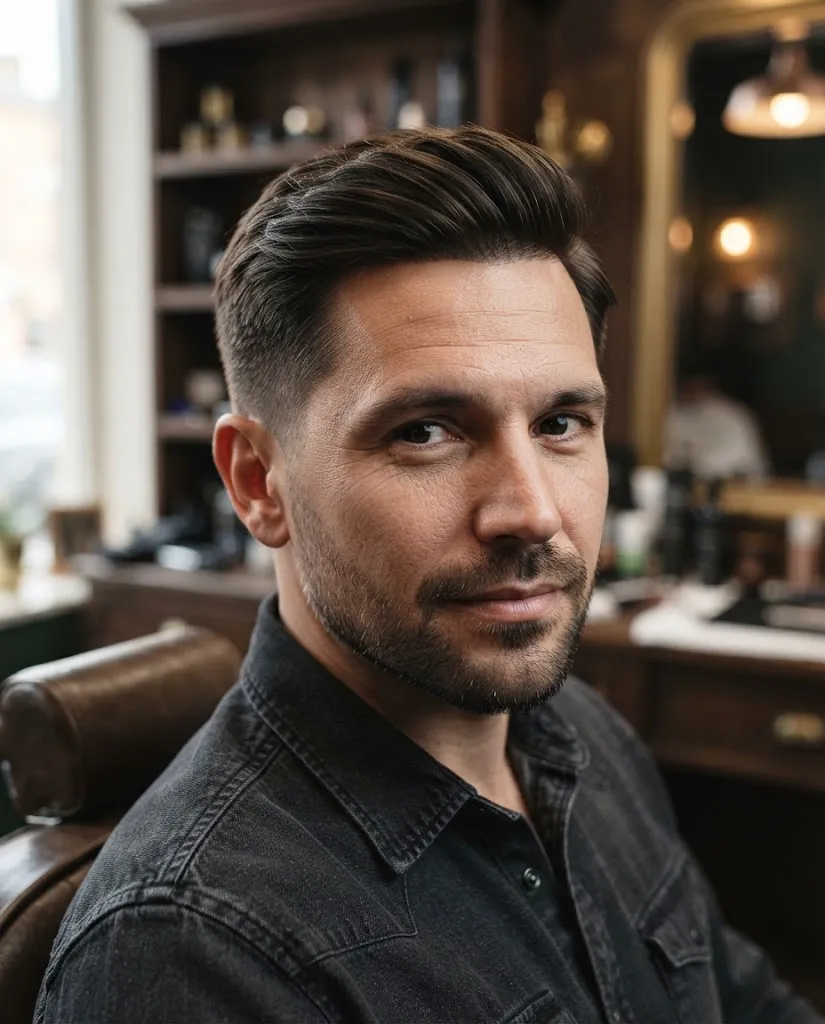
Straight hair tends to make changes in length more obvious.
Because the hair falls relatively flat, uneven sections can be easier to see. A small amount of growth around the sides or top may therefore become noticeable fairly quickly.
This is particularly true for sharp, structured hairstyles.
If you have straight hair and prefer a very clean appearance, you may find yourself needing trims more often than someone with naturally textured hair.
Wavy Hair

Wavy hair is often a little more forgiving.
The natural movement and bends in the hair can disguise small changes in length. Because of this, a slightly grown-out haircut can still look intentional.
That doesn’t mean wavy hair never needs maintenance.
As it grows, the waves can become heavier or start forming differently. If the haircut was designed around a specific shape, too much growth can eventually make it difficult to control.
Still, many men with wavy hair can comfortably stretch their appointments a little longer.
Curly Hair
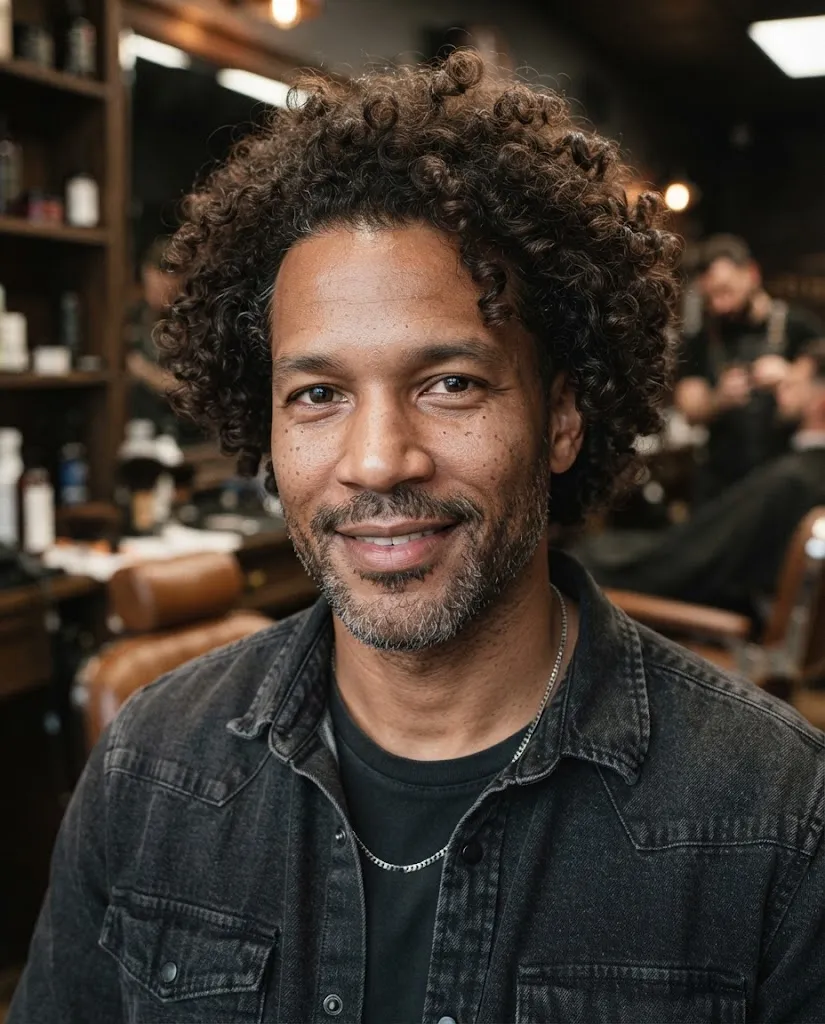
Curly hair can hold its overall shape surprisingly well as it grows.
Because curls create volume and texture, additional length isn’t always immediately obvious. This can allow some men with curly hair to go longer between cuts.
However, curly hair has its own maintenance concerns.
Dryness, split ends, uneven shape, and excess bulk can become problems if you leave it untouched for too long.
Regular trims can help maintain the shape of the haircut while keeping damaged ends under control.
The important thing is to work with your curl pattern rather than trying to force it into a straight-hair maintenance routine.
How Often Should You Cut Your Hair Based on Your Lifestyle?
Your lifestyle matters just as much as your hair.
Someone who wears a suit every day and works in a client-facing environment may want a very different grooming routine from someone who works from home and prefers a relaxed appearance.
If you care about looking polished every morning, more frequent maintenance may make sense.
For example, a professional who wears a sharp taper or side part might prefer visiting the barber every three weeks to keep everything consistently clean.
Someone with a casual textured hairstyle might be perfectly happy waiting five or six weeks.
There’s nothing wrong with either approach.
Your haircut should fit your life rather than becoming another unnecessary obligation.
What About Exercise, Heat, and Humidity?
Your daily routine can also change how your hair looks.
If you exercise frequently, sweat can affect how your hair sits and how quickly it becomes difficult to style.
Spending a lot of time outdoors can expose your hair to heat, humidity, dust, and environmental conditions that affect its texture.
Humidity can be especially noticeable if you have wavy or curly hair because it can increase volume and make the hair behave differently.
None of these things automatically mean you need a haircut.
Instead, they may change how often you feel the need to style or clean up your hair.
This is another reason why there is no perfect haircut schedule for everyone.
Your routine matters.
Clear Signs You Need a Haircut
Rather than counting the days since your last appointment, pay attention to these signs.
1. Your Hairstyle No Longer Holds Its Shape
This is one of the clearest indicators.
If you used to spend five minutes styling your hair and now it takes fifteen minutes just to make it cooperate, your haircut may have grown beyond its ideal shape.
If your hair refuses to sit where it normally does, it may be time for a trim.
2. Your Edges Start Looking Untidy
Sometimes your hair itself still looks fine, but the edges give away how long it has been since your last haircut.
Look at your:
- Neckline
- Sideburns
- Area around the ears
- Temple area
- Hairline
When these areas become noticeably untidy, a quick cleanup can make a surprisingly big difference.
You may not need a complete haircut.
Sometimes a simple edge-up or neckline cleanup is enough to make the entire hairstyle look fresh again.
3. Your Hair Feels Heavier or Bulkier
This is particularly common with medium and thick hair.
You may notice that the hair around your sides begins pushing outward, the top becomes heavier, or the overall shape starts looking wider than you intended.
If your haircut feels physically different from how it did a few weeks earlier, that’s a useful signal.
4. Styling Takes More Effort
Your hair can tell you when it needs attention.
Maybe your pomade used to work perfectly, but now you need twice as much.
Maybe your fringe keeps falling into your eyes.
Maybe your side part disappears after an hour.
Maybe your hair simply refuses to stay where you put it.
These small frustrations are often more useful than a calendar.
If your hairstyle becomes noticeably harder to manage, it’s probably time to consider a trim.
5. You Don’t Feel as Confident
This one is often overlooked.
Grooming isn’t just about measurements and hair length.
If you look in the mirror and feel that something is missing, that matters.
Maybe your haircut no longer feels as sharp. Maybe the sides look too heavy. Maybe the shape doesn’t suit the way you dress anymore.
If you felt more confident immediately after your last haircut and that feeling has gradually disappeared, it may simply be time to bring the shape back.
How to Stay Well-Groomed Without Getting Haircuts Too Often
You don’t necessarily need a full haircut every time you want your hair to look fresh.
A few simple maintenance habits can help you extend the life of your hairstyle.
Clean Up Your Neckline and Sideburns
A messy neckline can make an otherwise good haircut look neglected.
Between full appointments, a barber can clean up the neckline, sideburns, and area around the ears without significantly changing the haircut itself.
This can be especially useful if you wear a fade or short haircut.
Use the Right Styling Product
When your haircut begins growing out, styling products can help you regain some control.
A small amount of matte clay, styling cream, wax, or pomade can help depending on your hair type and desired finish.
The key word is small.
Using too much product can make grown-out hair look heavier and greasy rather than polished.
Start with a small amount, warm it between your hands, and work it through the hair gradually.
Don’t Overwash Your Hair
Keeping your hair clean is important, but washing it excessively can sometimes leave it feeling dry or difficult to manage.
Your ideal washing routine depends on your hair type, scalp, activity level, and products you use.
The goal is simple: keep your hair and scalp clean while avoiding a routine that leaves your hair unnecessarily dry.
Healthy, manageable hair is much easier to style between haircuts.
When Should You Get a Haircut Before an Important Event?
If you have a wedding, interview, date, party, graduation, photoshoot, or another important event coming up, don’t leave your haircut until the last minute.
For many hairstyles, five to seven days before the event is a good starting point.
Why?
Because a brand-new haircut can sometimes look extremely sharp immediately after leaving the barber.
Fades can appear particularly high-contrast when they’re fresh. Very short hairstyles can also look slightly different during the first couple of days.
Giving your hair several days allows the cut to settle.
The edges soften slightly, the hair becomes easier to style, and you get a chance to see exactly how it behaves.
Of course, the timing depends on your hairstyle.
If you regularly wear a skin fade and love the ultra-fresh look, you may prefer something closer to the event.
The important thing is to avoid experimenting right before a major occasion.
If you have an interview or wedding coming up, it’s usually smarter to choose a haircut you already know works for you.
Your barber should know what you normally wear and what you like. That familiarity is valuable when there’s no room for mistakes.
A Simple Haircut Schedule You Can Use
If you want a quick starting point, this is a practical guide:
| Hairstyle | Typical Maintenance |
|---|---|
| Skin fade / very short fade | Every 2–3 weeks |
| Short taper / classic short cut | Every 3–4 weeks |
| Side part / business cut | Every 3–4 weeks |
| Textured medium-length hair | Every 4–6 weeks |
| Layered medium hair | Every 4–6 weeks |
| Long hair | Every 8–12 weeks |
| Growing hair out | Trim as needed, usually every 8–12 weeks |
Remember that these are starting points, not rules.
If your haircut still looks great after five weeks, there is no reason to cut it simply because a chart says you should.
Likewise, if your fade looks noticeably grown out after two weeks, you don’t need to wait another week just because someone told you that haircuts should happen monthly.
Your hair is the better indicator.
The Bottom Line: How Often Should You Really Get a Haircut?
There isn’t one perfect number.
For some men, two weeks is the right timing.
For others, it might be four weeks, six weeks, or even three months.
Your ideal schedule depends on three main things:
Your hairstyle.
Sharp fades and very short cuts usually require more frequent maintenance, while medium and long hairstyles can often go longer.
Your hair type.
Straight, wavy, and curly hair all respond differently as they grow. Texture and density can dramatically change how noticeable new growth becomes.
Your lifestyle.
If you need to look polished every day, frequent trims may be worthwhile. If your lifestyle is more relaxed, you can probably stretch your appointments.
Most importantly, learn to recognize your own hair.
When it starts losing its shape, becoming difficult to style, looking bulky, or developing messy edges, those are much better signals than simply checking the calendar.
A haircut should make your life easier, not give you another schedule to worry about.
Once you understand how your hair naturally grows and how your preferred hairstyle changes over time, you can create a routine that keeps you looking sharp without spending more time or money at the barber than necessary.
And sometimes, the best haircut schedule is simply this:
Get a haircut when your hair starts telling you it needs one.
Final Words
Getting a haircut isn’t about following a strict calendar. It’s about understanding your hair and knowing when it needs a little attention.
Some men will look their best with a fresh cut every two or three weeks, while others can comfortably wait a month, six weeks, or even longer. Your hairstyle, hair type, lifestyle, and personal preference all play a part.
The easiest approach is to pay attention to the signs. If your hair starts losing its shape, becoming difficult to style, looking bulky, or making the edges around your ears and neckline look untidy, it may be time to visit your barber.
At the same time, don’t feel pressured to cut your hair simply because a certain number of weeks has passed. If your hairstyle still looks good and feels easy to manage, there’s no reason to change it.
Ultimately, the best haircut routine is the one that works for you. Once you understand how quickly your hair grows and how your particular style changes over time, you can maintain a clean, confident look without unnecessary trips to the barber.
Pay attention to your hair, work with its natural growth, and get the cut when it actually needs one.