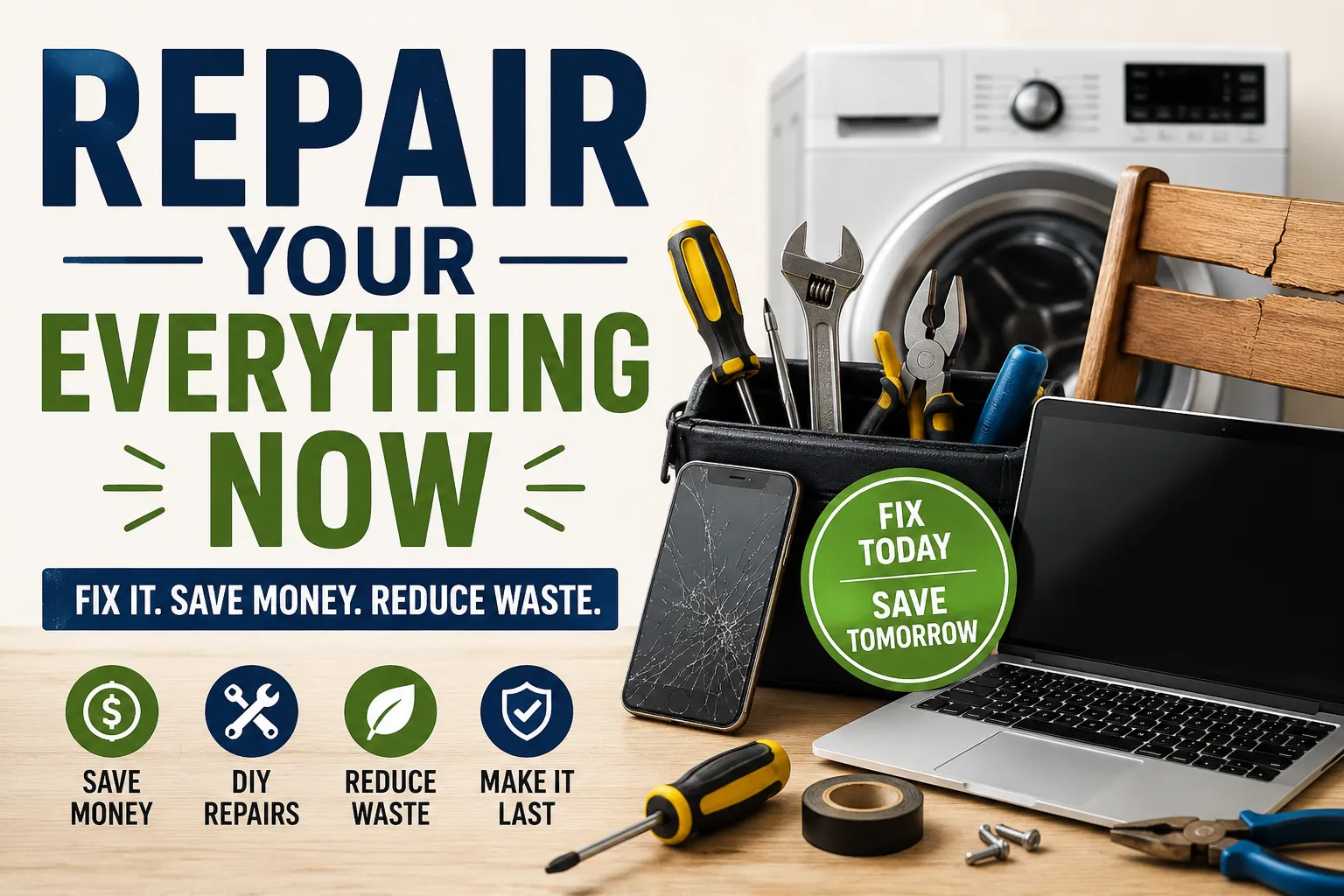
Have you ever thrown something away simply because it stopped working?
Maybe it was a smartphone with a cracked screen, a washing machine making strange noises, a laptop that suddenly became slow, or a chair that had seen better days. Replacing everyday items can quickly become expensive—and in many cases, it may not even be necessary.
The better option? Repair what you already own before buying something new.
The idea behind Repair Your Everything Now is simple: give your belongings a second chance. With the right tools, knowledge, and approach, many broken or worn-out items can be repaired, restored, and returned to useful condition.
Repairing can save money, reduce household waste, protect natural resources, and help you get more value from the products you already own.
Why Repair Instead of Replace?
When something breaks, replacing it can seem like the easiest solution. Many people assume that repairs are complicated, expensive, or not worth the effort. But that isn’t always the case.
A relatively small repair can sometimes restore an item to excellent working condition.
Here are some of the biggest reasons to choose repair:
- Save money: Repairing one component can cost far less than purchasing a replacement.
- Extend product life: A repair can add months or even years to an item’s useful life.
- Reduce waste: Repairing keeps usable products out of landfills.
- Protect the environment: Manufacturing new products requires energy and raw materials.
- Learn valuable skills: Basic repair knowledge can help you solve future problems yourself.
Instead of immediately asking, “What should I buy?”, consider asking, “Can I fix what I already have?”
Common Things You Can Repair
Almost every part of your home can benefit from a repair-first mindset. From electronics to furniture, many common problems have relatively simple solutions.
Electronics
Electronics are among the most frequently replaced items, but a device doesn’t necessarily need to be discarded because one component has failed.
Common electronic repairs include:
- Replacing a cracked smartphone screen
- Upgrading a laptop battery
- Repairing a charging port
- Replacing a damaged keyboard
- Fixing speakers or microphones
- Upgrading laptop RAM or storage
If the main device is still functional, replacing a single damaged component can be considerably cheaper than buying an entirely new device.
Home Appliances
Appliances can also develop problems that don’t necessarily mean the entire machine has reached the end of its life.
For example:
- A washing machine may have a clogged pump.
- A refrigerator may need a new door seal.
- A dishwasher may simply have a blocked filter.
- A microwave may have a damaged switch.
- A vacuum cleaner may need a replacement belt.
Regular cleaning and maintenance can also prevent many of these issues from becoming expensive repairs.
Furniture
Don’t underestimate the value of repairing old furniture.
A loose chair, scratched table, or damaged cabinet doesn’t automatically belong in the trash. Simple repairs can dramatically improve both appearance and functionality.
You can:
- Tighten loose screws
- Replace damaged hinges
- Repair cracks in wooden furniture
- Reupholster worn chairs
- Refinish scratched tables
- Repair loose furniture joints
With a little effort, an old piece of furniture can look and feel almost new again.
Essential Tools for Everyday Repairs
You don’t need a professional workshop to handle basic household repairs. A small, reliable toolkit can solve many everyday problems.
Consider keeping these essentials at home:
- Screwdriver set
- Adjustable wrench
- Pliers
- Utility knife
- Measuring tape
- Hammer
- Super glue
- Electrical tape
- Multi-bit drill
- Flashlight
As your repair skills grow, you can gradually add specialized tools.
The important thing is to have the basics available when a small problem appears. A loose screw is much easier to fix when you don’t have to search for a tool first.
When Should You Repair?
Not every item is worth repairing. Knowing when to repair and when to replace is an important part of making smart financial decisions.
Repair may be a good choice when:
- The repair costs less than half the price of replacement.
- Replacement parts are readily available.
- The item is otherwise in good condition.
- The repair will improve safety or performance.
- The product still meets your needs.
On the other hand, replacement may make more sense when repair costs are higher than the item’s value, replacement parts are unavailable, or the item has become unsafe.
The goal isn’t to repair everything at any cost. The goal is to make practical decisions that save money and reduce unnecessary waste.
DIY Repairs vs. Professional Repairs
One of the biggest questions people face is whether to repair something themselves or hire a professional.
DIY Repairs
Many simple repairs can be safely completed at home if you have the right tools and instructions.
DIY repairs can offer several advantages:
- Lower costs
- Faster results
- Valuable hands-on experience
- Greater confidence
- Useful skills for future problems
Examples include changing cabinet handles, tightening furniture joints, replacing simple hardware, or upgrading compatible laptop components.
Before attempting any repair, however, make sure you understand the risks and follow reliable instructions.
Professional Repairs
Some repairs should be left to trained professionals.
Professional assistance is particularly important for jobs involving:
- Electrical wiring
- Gas appliances
- Complex smartphone motherboard repairs
- Air-conditioning systems
- Major structural damage
When safety is involved, saving money should never come before protecting yourself and your home. A qualified technician can diagnose the problem properly and complete the repair safely.
Maintenance Can Prevent Future Repairs
The best repair is sometimes the one you never need.
Regular maintenance can prevent small problems from becoming major failures. A few minutes of care can potentially add years to the life of your belongings.
Simple maintenance habits include:
- Cleaning appliance filters regularly
- Updating computer software
- Keeping electronics free of dust
- Lubricating moving parts when appropriate
- Checking plumbing for leaks
- Tightening loose screws
- Inspecting appliances for unusual sounds or damage
Don’t wait until something completely stops working. Paying attention to warning signs can help you catch problems while they’re still small and affordable to fix.
Money-Saving Repair Tips
If your goal is to save as much money as possible, a little planning can make repairs even more affordable.
Compare Repair Costs
Don’t automatically accept the first repair quote you receive. Compare estimates when possible, especially for expensive repairs.
Choose Quality Replacement Parts
The cheapest replacement part isn’t always the best deal. Poor-quality components may fail quickly and force you to pay for another repair.
Reliable replacement parts can provide better long-term value.
Use Manufacturer Guides
Whenever possible, consult official manuals, repair documentation, and instructions. Accurate information can help you avoid mistakes and unnecessary damage.
Don’t Ignore Small Problems
A tiny leak, loose screw, strange noise, or small crack may seem harmless today—but ignoring it could turn it into a much more expensive problem later.
Addressing minor issues early is one of the simplest ways to save money.
Learn Basic Repair Skills
You don’t need to become a professional technician. Learning a few basic skills can make a huge difference.
Online tutorials, repair guides, books, community workshops, and hands-on practice can teach you how to handle common problems and potentially save significant amounts of money over the years.
The Environmental Benefits of Repair
Repair isn’t only good for your wallet. It’s also good for the planet.
Every time you repair an item instead of throwing it away, you help reduce the amount of waste going to landfills. Repairing also reduces the demand for new products and the resources required to manufacture them.
Electronics, appliances, furniture, and other consumer goods require raw materials, energy, transportation, and packaging. Extending the life of products can reduce the need for these resources to be used again and again.
That’s why repair is more than a financial decision. It’s a practical step toward a more sustainable lifestyle.
Make Repair Your First Choice
The next time something breaks, don’t immediately reach for your wallet.
Stop and ask:
Can I repair this?
Maybe the answer will be yes. Maybe you’ll discover that the problem is much smaller than you expected. And even when a professional is needed, repairing an item may still be more affordable and environmentally friendly than replacing it.
The Repair Your Everything Now mindset is about making better choices with the things you already own. It’s about saving money, learning useful skills, reducing waste, and getting the maximum value from your belongings.
Start small. Tighten that loose screw. Replace that worn-out part. Fix that damaged chair. Clean that appliance filter.
Before you replace it, try to repair it.
You may be surprised by how much you can restore, how much money you can save, and how much longer your everyday belongings can last.